



கம்பராமாயணம் 2848 · ஆரணிய 5.34
பாடல் · The poem
Tap a word to see its gloss in the commentary and where else it occurs.
பொருள் · Meaning in Tamil
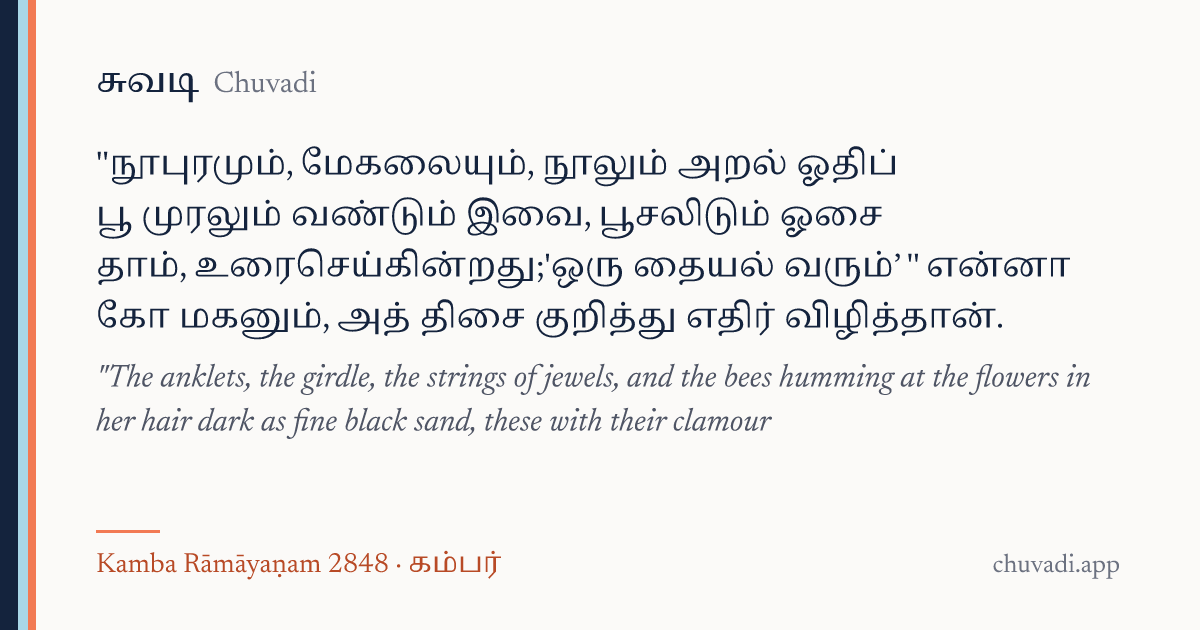
நூபுரமும் மேகலையும் நூலும் அறல் ஓதிப் பூ முரலும் வண்டும் இவை பூசலிடும் ஓசை - காற்சிலம்பும், இடை அணியும், நூலிற் கோத்த அணிகலன்களும் கருமணல் போன்ற கூந்தலில் சூடும் மலரில் மொய்க்கும் வண்டுகளும் ஆகிய இவை ஆரவாரம் செய்யும் ஓசை; ஒருதையல் வரும் என்னா உரை செய்கின்றது - ஒரு பெண் வருகிறாள் என்று சொல்கிறதாக; கோமகனும் அத்திசை குறித்து எதிர் விழித்தான் - சக்கரவர்த்தி திருமகனாம் இராமனும் அவ்வோசை வந்த திக்கைக் குறித்து எதிர் நோக்கினான். தாம் - அசை.
மேகலை - இடையில் அணியும் மணிகள் கோத்த பல வடங்களையுடைய ஓர் அணிகலன். நூல் - பூணூல் போன்று அணியும் பொன் மாலை என்பர். பூசல் - பேரொலி. 'பூசல் வண்டரற்றும் கூந்தல் பொய்ம்மகள்' (2778) என வருதல் காண்க. அணிகலன்களின் ஒலியும் வண்டின் ஒலியும் ஒரு பெண் வருகின்றாள் என்பதைக் கட்டியம் கூறின. உரை செய்தல் - குறிப்பித்தல் எனலுமாம்.
நூல் - ஆகுபெயர். பேசாததைப் பேசுவது போலக் கூறியது. மரபுவழுவமைதி.
ஆங்கிலம் · English translationAI
Translation
- "The anklets, the girdle, the strings of jewels, and the bees humming
- at the flowers in her hair dark as fine black sand, these with their clamour
- are announcing that a woman is coming," he thought,
- and the prince turned to look toward that direction.
What the poem says
Irāmaṉ hears her before he sees her. The jingling of her anklets, girdle and jewelled strings, together with the buzz of bees drawn to the flowers in her hair, rings out like a herald announcing a woman's approach.
The poet speaks of these sounds as if they could talk, a convention allowed in poetry. Hearing them, the prince looks up toward where they come from.