



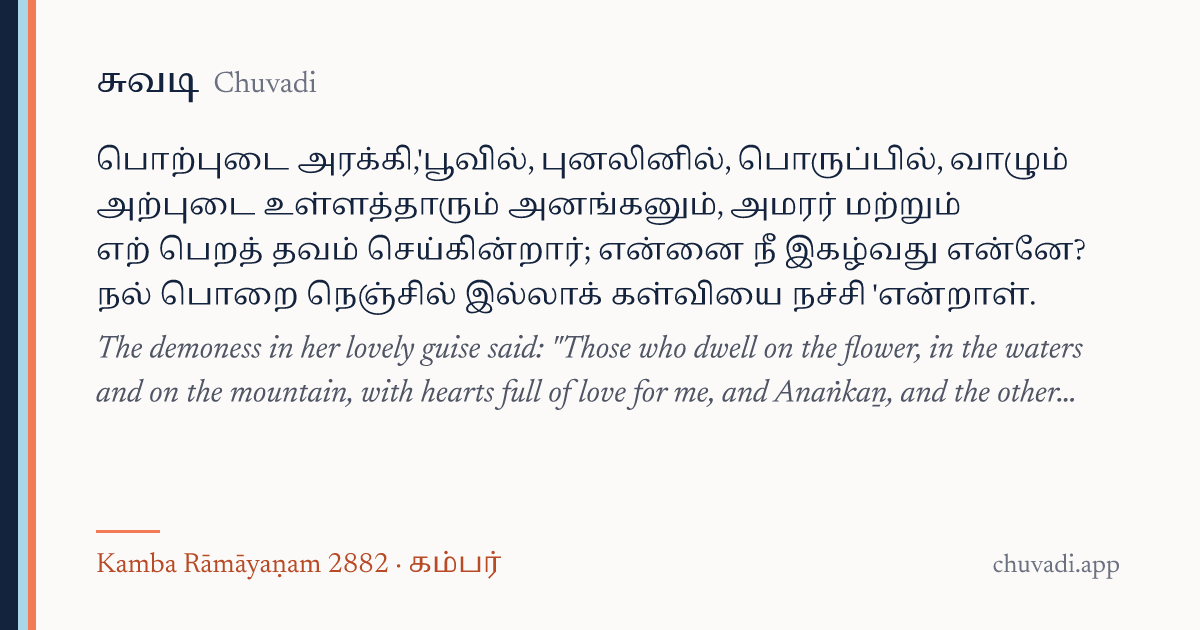
கம்பராமாயணம் 2882 · ஆரணிய 5.68
பாடல் · The poem
Tap a word to see its gloss in the commentary and where else it occurs.
பாட வேறுபாடு · Project Madurai reads
பொருள் · Meaning in Tamil
பொற்புடை அரக்கி - அழகிய வடிவைக் கொண்ட அரக்கியாம் சூர்ப்பணகை; பூவில் புனலினில் பொருப்பில் வாழும் அற்புடை உள்ளத்தாரும் அனங்கனும் மற்றும் அமரர் - தாமரை மலரிலும் பாற்கடலிலும் கயிலை மலையிலும் வாழ்கின்ற என்பால் அன்பு கொண்ட மனமுள்ள நான்முகன், திருமால், சிவன் ஆகியோரும் மன்மதனும் பிற தேவர்களும்; எற்பெறத்தவம் செய்கின்றார் - என்னை மணக்கத் தவம் செய்து வருகின்றனர்; நல்பொறை நெஞ்சில் இல்லா கள்வியை நச்சி - நன்மை தரும் பொறுமையை மனத்தில் கொள்ளாத இவ்வரக்கியை விரும்பி; என்னை நீ இகழ்வது என்னே என்றாள் - என்னை நீ புறக்கணிப்பது எக்காரணம் பற்றியோ? எனக் கேட்டாள்.
மூவரையும் தேவரையும் கருதாமல் உன்னை நாடி வந்த என்னை நீ புறக்கணிப்பது சரியன்று எனச் சூர்ப்பணகை இராமனுக்கு உணர்த்த விரும்பினாள். பூவில் என்பதற்கு நிலவுலகில் வாழும் மாந்தரும், புனலில் என்பதற்கு நீரர மக்களும், மலையில் என்பதற்கு மலையில் வாழும் வித்தியாதரரும் எனப் பொருள் கூறுவாரும் உளர். சீதையை நல்பொறை நெஞ்சில் இல்லாக் கள்வி எனக் கூறியது இராமன் உளத்தில் அவளது தீய பண்பைக் கூறி விலக்க நினைத்ததாம். இதனால் தானே கள்வி என்பதையும் உணர்த்தி நிற்கிறாள். இதுவே நாடக அங்கதமாகும். அற்பு - அன்பு என்பதன் திரிந்த வடிவம்.
ஆங்கிலம் · English translationAI
Translation
- The demoness in her lovely guise said: "Those who dwell on the flower, in the waters and on the mountain,
- with hearts full of love for me, and Anaṅkaṉ, and the other gods,
- do penance to win me; why do you scorn me,
- desiring this thief, whose heart has no goodness or patience?"
What the poem says
Cūrppaṇakai boasts that Brahmā on his lotus, Viṣṇu in the milk ocean, Śiva on his mountain, Kāma the bodiless god of love, and all the other gods do penance in the hope of winning her. Why, then, does Irāmaṉ scorn her for this "thief"?
In calling Cītai a thief and an impatient woman, she once again describes herself. The commentary calls this dramatic irony.