



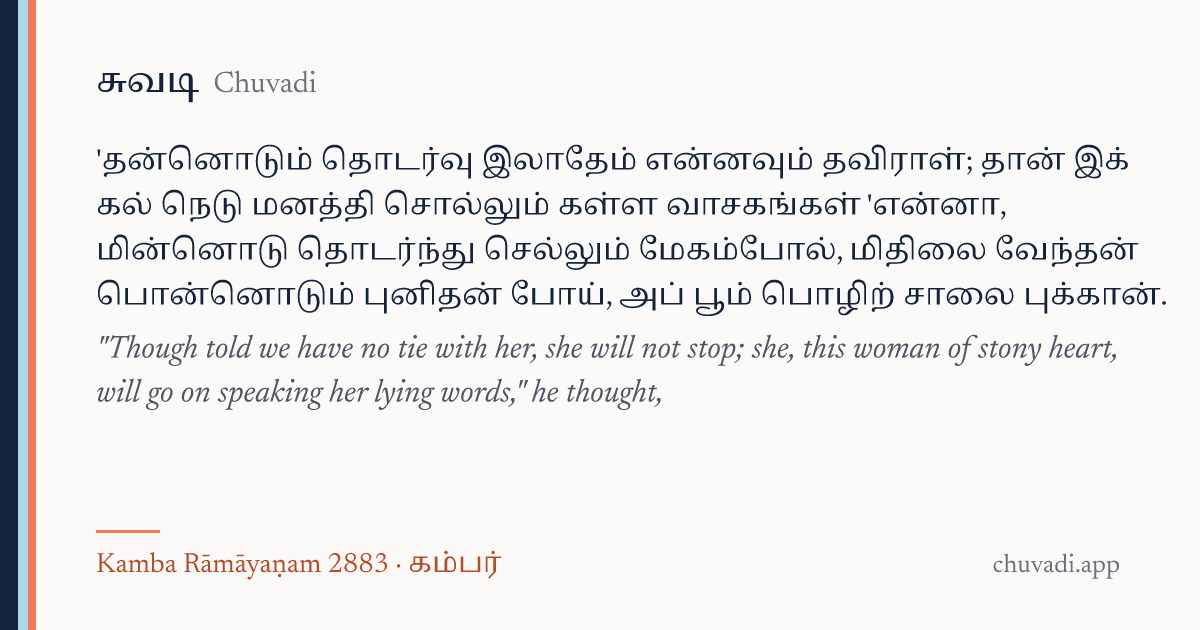
கம்பராமாயணம் 2883 · ஆரணிய 5.69
பாடல் · The poem
Tap a word to see its gloss in the commentary and where else it occurs.
பொருள் · Meaning in Tamil
இக்கல் நெடு மனத்தி தன்னொடும் - இந்தக் கல் போன்ற கடின மனம் கொண்ட இவளோடும்; தொடர்வு இலாதேம் என்னவும் தவிராள் - எத்தகைய தொடர்பும் இல்லாதவர் எனக் கூறியும்; தான் - இவள் தானும், கள்ள வாசகங்கள் சொல்லும் என்னா - வஞ்சகச் சொற்களை இவள் மேலும் சொல்லுவாள் என்று எண்ணி; புனிதன் - தூயோனாம் இராமன்; மின்னொடு தொடர்ந்து செல்லும் மேகம் போல் - மின்னல் பின்னே தொடர மேகம் முன்னே செல்வது போல், மிதிலை வேந்தன் பொன்னொடும் போய் அப்பூம் பொழிற் சாலை புக்கான் - மிதிலை மன்னனாம் சனகனின் மகள் சீதையுடன் சென்று அந்த அழகிய சோலையிலுள்ள பன்ன சாலைக்குள் புகுந்தான்.
கல் நீரிலே கிடப்பினும் அதன் ஈரத்தைப் பெறாதிருக்கும். அது போல் அரக்கரும் இரக்கமற்ற பண்பினராம். 'வைகலும் நீருட்டைப்பினும் கல்லிற்கு மெல்லென்றல் சால அரிதாகும் - அஃதே போல வைகலும் நல்லறம் கேட்பினும் கீழ்கட்குக் கல்லினும் வல்லென்னும் நெஞ்ச' (அற நெறிச் சாரம் 51) என்ற பாடலின் கருத்தை இத்துடன் ஒப்பிடலாம்.
தொடர்பு இலாதேம் - குலம், கல்வி, பிறப்பு, பண்பு முதலிய எவ்வகையிலும் தொடர்பு இல்லாதவர்கள். கள்ள வாசகங்கள் - வஞ்சகச் சொற்கள். மின்னலும் மேகமும் இணைந்த கருத்தினை ஒட்டி முன்னரே 'பருவக்கால மஞ்சிடை வயங்கித் தோன்றும் பவளத்தின் வல்லி' (2797) என வருதல் காண்க. மிதிலையை மிதி என்ற மன்னன் ஆண்டதால் அந்நகருக்கு இப்பெயர் வந்தது. பொன் - தன்மையாலும் அருமையாலும் சுடச் சுட ஒளிர்வதாலும் சீதைக்கு ஒப்பாயிற்று. பிற மாதரைச் சிந்தையாலும் தீண்டாததால் இராமன் புனிதன் எனப்பட்டான். இதில் உவமை அணி உளது.
ஆங்கிலம் · English translationAI
Translation
- "Though told we have no tie with her, she will not stop; she, this
- woman of stony heart, will go on speaking her lying words," he thought,
- and like a cloud that moves with the lightning following, the pure one
- went with the golden daughter of Mithilā's king into the hut in the flowering grove.
What the poem says
Irāmaṉ sees there is no reasoning with her. Although he has told her he has nothing in common with her, she keeps lying, and her heart is as hard as a stone that never softens however long it lies in water. He takes Cītai into the leaf hut.
The pair are compared once more to a dark cloud with lightning following it. Irāmaṉ is called "the pure one" because he never let himself look at another man's wife, or any woman but his own, even in thought.