



கம்பராமாயணம் 2884 · ஆரணிய 5.70
பாடல் · The poem
Tap a word to see its gloss in the commentary and where else it occurs.
பாட வேறுபாடு · Project Madurai reads
பொருள் · Meaning in Tamil
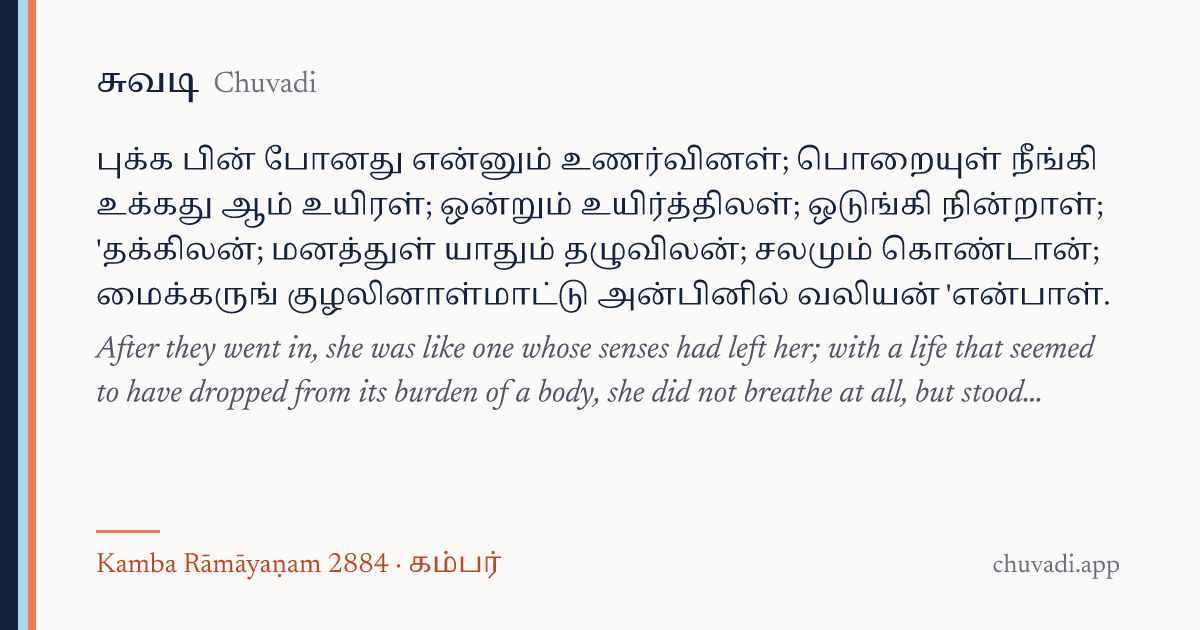
புக்கபின் - (இராமனும் சீதையும் பன்னசாலையுள்) சென்ற பின்னர்; போனது என்னும் உணர்வினள் - போயிற்று என்று கூறுதற்குரிய அறிவு நீங்கியவளாய்; பொறையுள் நீங்கி உக்கது ஆம் உயிரள் - உடம்பிலிருந்து நீங்கி உதிர்த்து விட்டதான உயிர் உடையவளாய்; ஒன்றும் உயிர்த்திலள் ஒடுங்கி நின்றாள் - சிறிதும் மூச்சு விடவும் மாட்டாமல் ஒடுங்கி நின்று; தக்கிலன் மனத்துள் யாதும் தழுவிலன் - மனத்தில் தகுதிக் குணமில்லாதவனும் (காமுற்ற என்னிடம்) யாதொரு உதவி செய்யாதவனுமாகி, சலமும் கொண்டான் - தணியாச் சினம் கொண்டுள்ளான்; மைக்கருங் குழலினாள் மாட்டு அன்பினில் வலியன் என்பாள் - மை போன்ற கரிய கூந்தலுடையவளிடத்து (இவன்) அன்பு காட்டுவதில் உறுதியுள்ளவன் என்று எண்ணியவளாம்.
பொறை - சுமை போலுள்ள உடல், உயிரைப் பொறுத்துக் கொண்டுள்ள உடல் எனலும் ஆம். தக்கிலன் - தகவிலன் (திருக்கோவையார் 376 கொளு). சலம் - தணியாச் சினம். அன்பினில் வலியன் - தளராத அன்புடையவன் எனலுமாம். இராமன் பன்ன சாலைக்குள் சென்றவுடன் அறிவு ஒழிய, உயிர்ப்பு ஒடுங்க, செயல் அடங்க, உயிர் நீங்கினாற் போன்று மூர்ச்சித்துப் பின் தெளிந்து பலவாறு எண்ணினாள். இது சூர்ப்பணகையின் உடலும் மனமும் பட்ட துன்பத்தைக் காட்டும். காமவேதனை மிக்க சூர்ப்பணகைக்கு வலிமையற்ற நிலையில் தன் உடம்பும் தாங்கமாட்டாத பெரும் சுமையாகத் தோன்றியதால் உடம்பைப் பொறை என்று குறித்தார்.
ஆங்கிலம் · English translationAI
Translation
- After they went in, she was like one whose senses had left her; with a life
- that seemed to have dropped from its burden of a body, she did not breathe at all, but stood shrunken;
- "He is unworthy; he holds nothing in his heart for me; he has grown stubborn;
- he is firm in his love for the woman with hair black as kohl," she thought.
What the poem says
When Irāmaṉ and Cītai disappear into the hut, Cūrppaṇakai stands as if dead, without breath or sense. Her body, which her life once carried, feels like a burden it has dropped.
When she comes to, she blames Irāmaṉ: he is unworthy, he has no feeling for her, and he is stubbornly devoted to the dark-haired Cītai. The commentary notes how both her body and her mind are in torment.