



கம்பராமாயணம் 2887 · ஆரணிய 5.73
பாடல் · The poem
Tap a word to see its gloss in the commentary and where else it occurs.
பொருள் · Meaning in Tamil
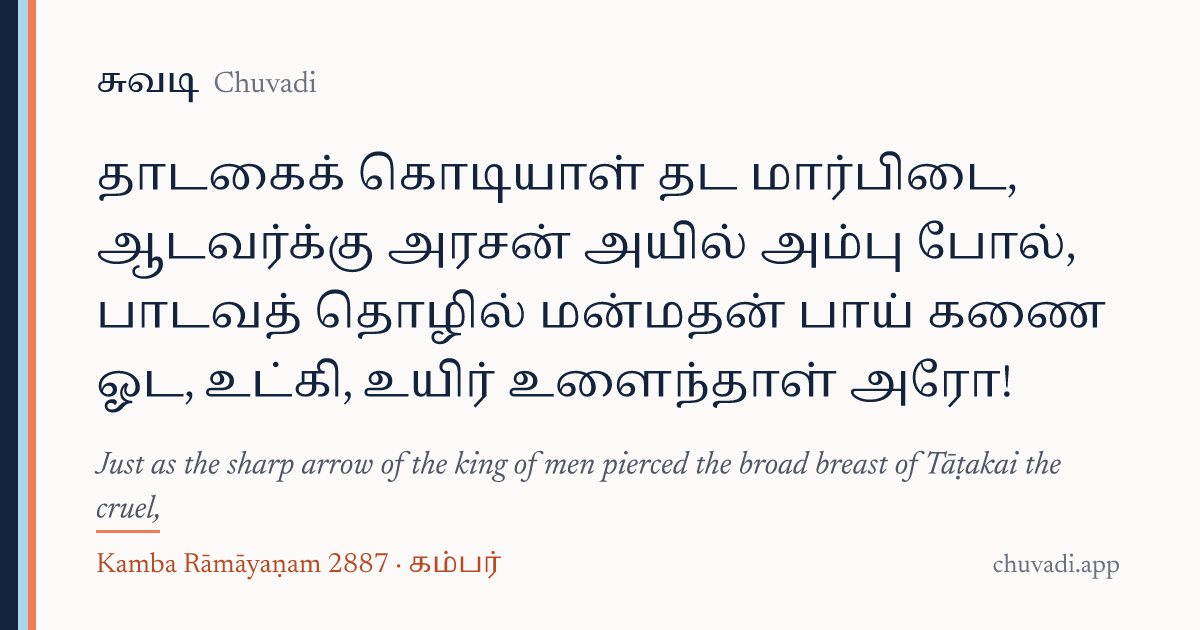
தாடகைக் கொடியாள் - தாடகை எனும் கொடிய அரக்கியின்; தடமார்பிடை - பெரிய மார்பினிடத்து; ஆடவர்க்கு அரசன் அயில் அம்பு போல் - ஆண்களுக்கு எல்லாம் அரசனாம் இராமனின் கூர்மையான அம்பு சென்று பாய்ந்தது போன்று; பாடவத் தொழில் மன்மதன் பாய்கணை ஓட - திறமிக்க காமப் போர் வினை புரியும் மன்மதனின் பாய்கின்ற அம்புகள் (சூர்ப்பணகை) மார்பில் தைக்க; (அதனால்) உட்கி உயிர் உளைந்தாள் - அஞ்சி உயிர் வருந்தினாள். அரோ - அசை.
கொடியாள் - இராவணனின் வெற்றிக் கொடி போன்றவள் எனலுமாம். இராமபாணம் தாடகையைக் கொன்ற போது 'தலைகள் தோறும் முடியுடை அரக்கற்கு, அந்நாள், முந்தி உற்பாதம் ஆக, படியிடை அற்று வீழ்ந்த வெற்றி அம்பதாகை ஒத்தாள்' (390) என்ற வரிகளால் இதன் விளக்கம் கிட்டும். ஆடவர்க்கு அரசன் - புருடோத்தமன். அயில் அம்பு - அரத்தால் அராவிக் கூராக்கிய அம்பு ஆம். பாடவம் என்ற சொல்லுக்கு வல்லமை, களிப்பு, இன்பம், பெருமை எனப் பல பொருள் கூறலாம். இதற்கு மதிப்பு எனக் கூறும் பழையவுரை. மன்மதன் - மனத்தைக் கலக்கி வருத்துபவன் என்ற பொருளுக்கு ஏற்ப 'உட்கி உயிர் உளைந்தாள்' என்பார். தாடகை மீது இராமன் செலுத்திய அம்பு போல் மன்மதன் சூர்ப்பணகை மீது தன் அம்புகளைச் செலுத்தினான்.
காப்பிய நிகழ்ச்சியே உவமையாக இங்கு வந்தது சுவையை மிகுவிக்கிறது. உயிர் உளைந்தாள் - வழுவமைதி.
ஆங்கிலம் · English translationAI
Translation
- Just as the sharp arrow of the king of men
- pierced the broad breast of Tāṭakai the cruel,
- so the flying arrows of Maṉmataṉ, skilled in his art,
- went through her, and she shrank in fear, her life in torment.
What the poem says
The arrows of Maṉmataṉ, the god of love, strike Cūrppaṇakai's breast just as Irāmaṉ's arrow once struck the demoness Tāṭakai, whom he killed as a boy while protecting Vicuvāmittiraṉ's sacrifice.
Comparing her to an earlier episode of the epic adds an ominous note. Cūrppaṇakai is a demoness of the same kind, and her meeting with Irāmaṉ will also end badly for her.