



கம்பராமாயணம் 2886 · ஆரணிய 5.72
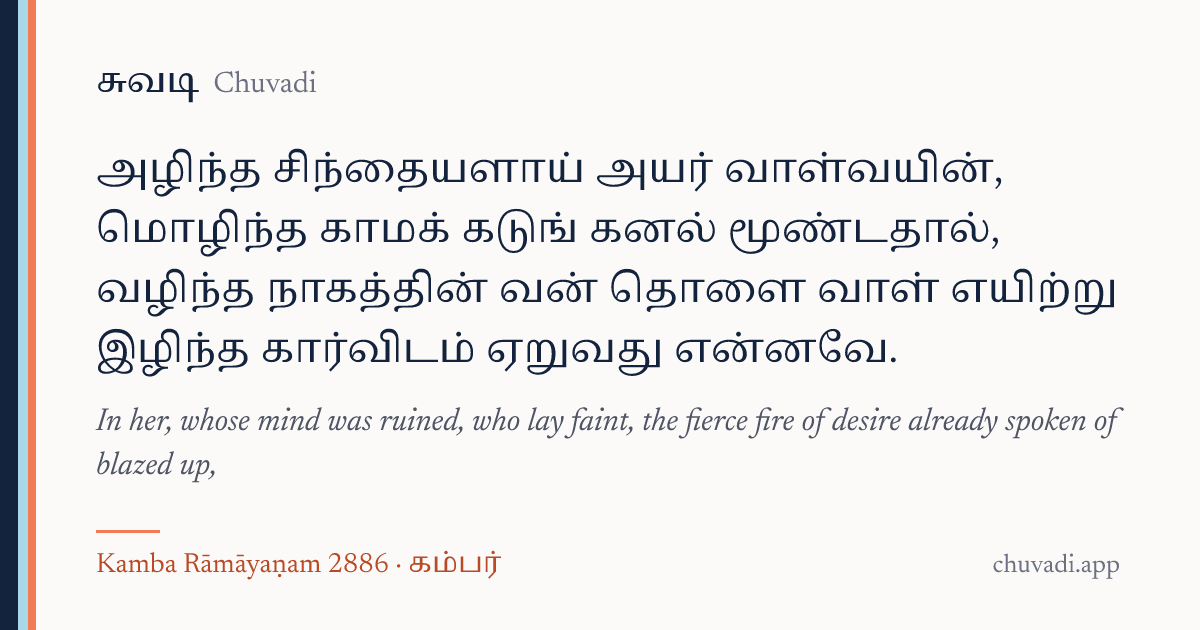
பாடல் · The poem
Tap a word to see its gloss in the commentary and where else it occurs.
பொருள் · Meaning in Tamil
வழிந்த நாகத்தின் வன் தொளை வாள் எயிற்று - மேலே வெளிப்பட்டுப் பெருகிய நாகப்பாம்பின் வலிய தொளையுள்ள ஒளி பொருந்திய நச்சுப் பல்லிலிருந்து; இழிந்த கார்விடம் ஏறுவது என்ன - இறங்கிய கரிய நஞ்சு தலைக்கு ஏறியது போல; அழிந்த சிந்தையளாய் அயர் வாள் வயின் - அழிந்து போன மனமுடையவளாய் சோர்வுற்ற சூர்ப்பணகையினிடத்து; மொழிந்த காமக் கடுங் கனல் மூண்டது - முன்கூறிய காமமாம் பெருநெருப்பு மிகுந்து எரிந்தது. ஆல், ஏ - அசைகள்.
சூர்ப்பணகை கொண்ட காமத் தீ மூண்டெரிந்தது என்பதை நாலடியாரில் காணும் 'ஊருள் எழுந்த உருகெழு செந்தீக்கு நீருள் குளித்தும் உயலாகும் - நீருட் குளிப்பினும் காமம் சுடுமே குன்றேறி ஒளிப்பினும் காமம் சுடும்' (90) என்ற பிறன்மனை நயவாமை அதிகாரத்திலுள்ள பாடலுடன் ஒப்பிடத் தகும். சூர்ப்பணகை பிறள் கணவனை நயந்தமை இங்கு எண்ணத்தக்கது. 'நாகத்தின் வன்தொளை வாள் எயிறு' என்பதற்கு ஏற்ப முன்னர் அயோத்தியா காண்டத் தைலம் ஆட்டு படலத்தில் (1921) 'மான அரவின் வாய்த் தயவளை வான்தொளைவாள் எயிற்றின் வழி ஆன கடுவுக்கு' எனக் காட்டுவார். நஞ்சின் கொடுமையைக் காமத்துடன் ஒப்பிட்டுக் காட்டும் வகையில் இப்படலத்திலே 'நஞ்சு நக்கினர் போல நடுங்குவாள்' (2817) என மீண்டும் உரைப்பார்.
ஆங்கிலம் · English translationAI
Translation
- In her, whose mind was ruined, who lay faint,
- the fierce fire of desire already spoken of blazed up,
- like the black poison that flows down from the strong, hollow, gleaming fang
- of a cobra and rises to the head.
What the poem says
Cūrppaṇakai's lust spreads through her like cobra venom, which flows from the hollow fang and climbs to the head.
The commentary cites a quatrain from the Nālaṭiyār, in its chapter on not desiring another's spouse: one can escape a fire by plunging into water, but desire burns even underwater. The comparison fits, since Cūrppaṇakai desires another woman's husband. Kampaṉ uses the image of poison for her again later in the episode.