



கம்பராமாயணம் 2890 · ஆரணிய 5.76
பாடல் · The poem
Tap a word to see its gloss in the commentary and where else it occurs.
பொருள் · Meaning in Tamil
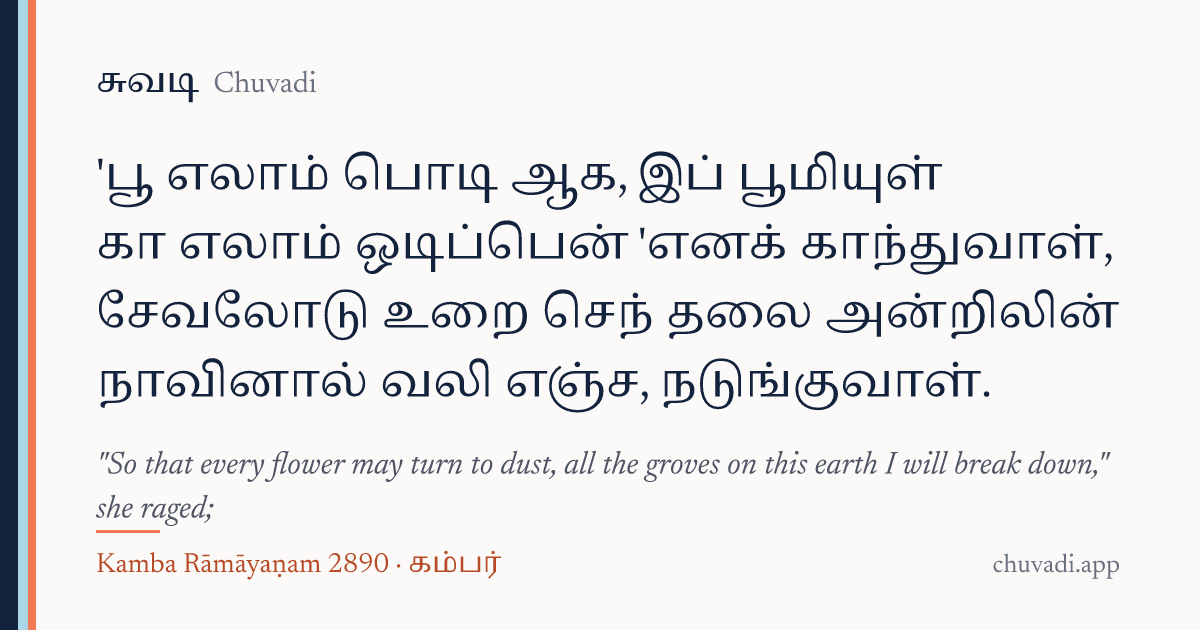
பூ எலாம் பொடி ஆக - மலர்கள் யாவையும் காய்ந்து பொடியாய் உதிரும்படி; இப்பூமியுள் கா எலாம் ஒடிப்பென் எனக் காந்துவாள் - இந்த நிலவுலகில் உள்ள சோலைகளையெல்லாம் ஒடித்து அழிப்பேன் என்று சினம் கொள்வாள்; சேவலோடு உறை செந்தலை அன்றிலின் நாவினால் - (ஆனால்) தன் ஆணோடு சேர்ந்து தங்கும் சிவந்த தலையையுடைய அன்றில் பறவையின் (மகிழ்ந்த) நாவின் குரலால்; வலி எஞ்ச நடுங்குவாள் - தன் பலம் குறைய அஞ்சி நடுக்கம் கொண்டாள் (சூர்ப்பணகை)
பூவெலாம் பொடியாக நினைப்பதற்குக் காரணம் மன்மதன் பூக்களாம் அம்புகளைக் கொண்டு தன்னை வருத்துவதால் அவை இல்லாமல் செய்ய எண்ணினாள். உலகில் பூக்களை இல்லாமல் செய்ய அவை மலரும் சோலைகளையே இல்லாமல் அழிக்க முனைகிறாள். சோலையாம் காரணத்தை அழித்தால் காரியமாம் பூக்கள் மலர்ந்து தனக்குத் துன்பம் செய்யா என எண்ணும் எண்ணம் இதில் வெளிப்படுகிறது. இங்குச் 'செந்தலை அன்றில்' என்றுரைப்பதற்கேற்பக் குறுந்தொகையும் (160) 'நெருப்பினன்ன செந்தலை அன்றில்' எனக் குறிக்கும். அன்றில் பறவை எப்போதும் ஆணும் பெண்ணும் கூடியே இருக்கும். பிரிவு நேரில் சில முறை கூவித் தன் துணையை அழைக்கும். அப்போதும் அது வராவிடில் வாழாது என்பர். வட மொழியில் இப்பறவையைக் 'கிரெளவுஞ்சம்' என்பர். மிதிலைக் காட்சிப் படலத்தில் மாலை வரச் சீதை வருந்திப் புலம்பும் போது 'அன்றில் ஆகி வந்தாயோ?' என்பாள் (547). உண்டாட்டுப் படலத்திலும் ஒரு பெண் 'எனக்கு அன்றிலோடு ஒத்தி என்று அழுது சீறினாள்' என வரும் (989).
ஆங்கிலம் · English translationAI
Translation
- "So that every flower may turn to dust, all the groves on this earth
- I will break down," she raged;
- but at the cry of the red-headed aṉṟil bird that lives with its mate,
- her strength failed and she trembled.
What the poem says
Flowers are the love god's arrows, so Cūrppaṇakai vows to destroy every grove on earth and remove the cause along with its effects. But the call of the aṉṟil bird stops her.
The aṉṟil is a red-headed bird, the krauñca of Sanskrit poetry, that never leaves its mate and is said to die if separated from it. Its cry is a classic torment for lovers who are apart; Cītai suffered from it in Mithilā, and so did a woman in the drinking-party canto.