



கம்பராமாயணம் 2893 · ஆரணிய 5.79
பாடல் · The poem
Tap a word to see its gloss in the commentary and where else it occurs.
பொருள் · Meaning in Tamil
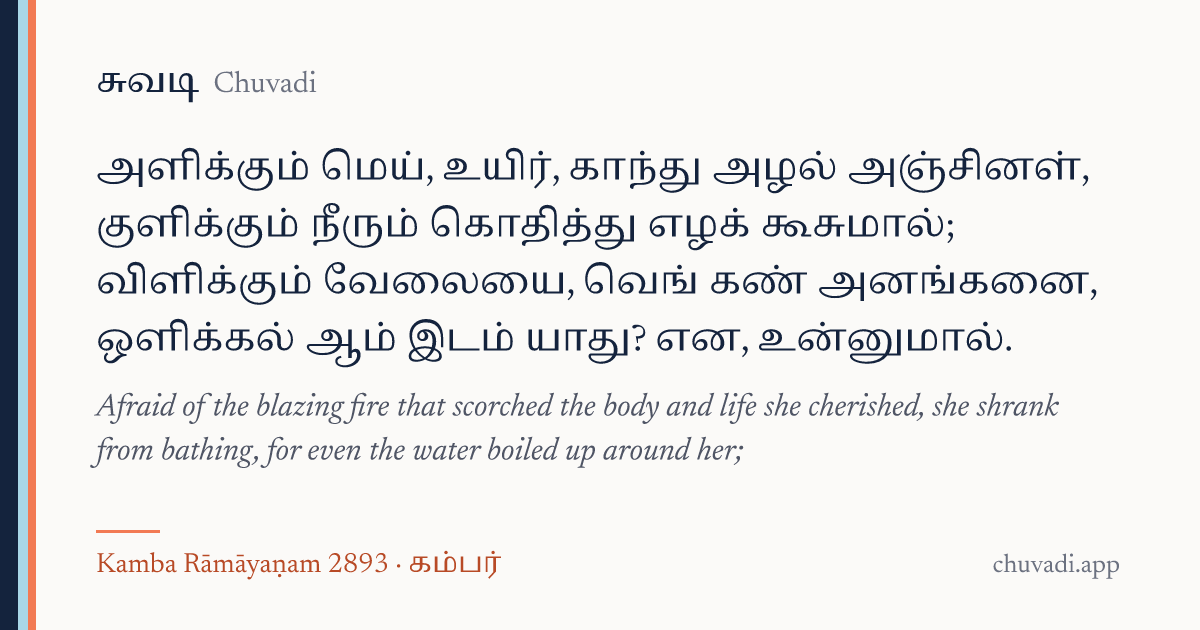
அளிக்கும் மெய் உயிர் காந்து அழல் அஞ்சினள் - அன்போடு காக்கப்படும் உடம்பையும் உயிரையும் சுட்டெரிக்கும் நெருப்பைக் கண்டு பயந்தவளாக; குளிக்கும் நீரும் கொதித்து எழக் கூசுமால் - அவ்வெப்பம் தணியத் தான் குளிப்பாளாக அந்த நீரும் தன் காம வெப்பத்தால் கொதித்துப் பொங்கி வரக் குளிப்பதற்குக் கூச்சம் அடைவாள்; விளிக்கும் வேலையை - பேரொலியால் தன்னைத் துன்புறுத்தும் கடலை; வெங்கண் அனங்கனை - கொடிய மன்மதனை: ஒளிக்கல் ஆம் இடம் யாது என உன்னும் - மறைத்து வைக்கும் இடம் எது எனக் கருதுவாள்; ஆல் - அசை.
காந்து அழல் பற்றிய விளக்கம் அடுத்த பாடலில் (2811) 'வெந்து காந்த வெதும்புறு மேனியாள்' எனக் காணலாம். விளித்தல் பேரொலி செய்தல். 'வளைவாய்க் கிள்ளை மறைவிளி பயிற்றும்' எனும் பெரும்பாணாற்றுப்படை வரி (300) இத்துடன் எண்ணத்தக்கது. முன்னர் இக்காண்டத்திலேயே 'சிந்தையில் உறைபவற்கு உருவம் தீய்ந்ததால்' (2743) எனக் குறித்தமை காண்க. அதனால் அநங்கன் - உருவற்றவன் ஆனான். மன்மதன், சிவனால் எரியுண்ட கதை ஈண்டு நினைத்தற்குரியது. இங்குச் சூர்ப்பணகை காமத் தீயால் வேகின்றமை குறிப்பு. காமத்தீ சுட்டெரிப்பதை 'வீரமில் கேள்வனுறீஇய காமத் தீ நீருட் புகினும் சுடும்' (கலி. /44. 061-02) என்ற வரிகளுடன் ஒப்பிடற்குரியது.
ஆங்கிலம் · English translationAI
Translation
- Afraid of the blazing fire that scorched the body and life she cherished,
- she shrank from bathing, for even the water boiled up around her;
- the roaring sea and Anaṅkaṉ of the cruel eye:
- "Where can I hide them away?" she wondered.
What the poem says
Cūrppaṇakai's lust burns so hot that even bath water would boil when she touched it, so she is afraid to bathe. She tries to think of somewhere to hide the roaring sea and the cruel love god so that they cannot torment her.
The love god is called Anaṅkaṉ, "the bodiless one", because Śiva burned his body to ashes with a glance from his third eye.