



கம்பராமாயணம் 29 · பால 2.9
பாடல் · The poem
Tap a word to see its gloss in the commentary and where else it occurs.
பாட வேறுபாடு · Project Madurai reads
பொருள் · Meaning in Tamil
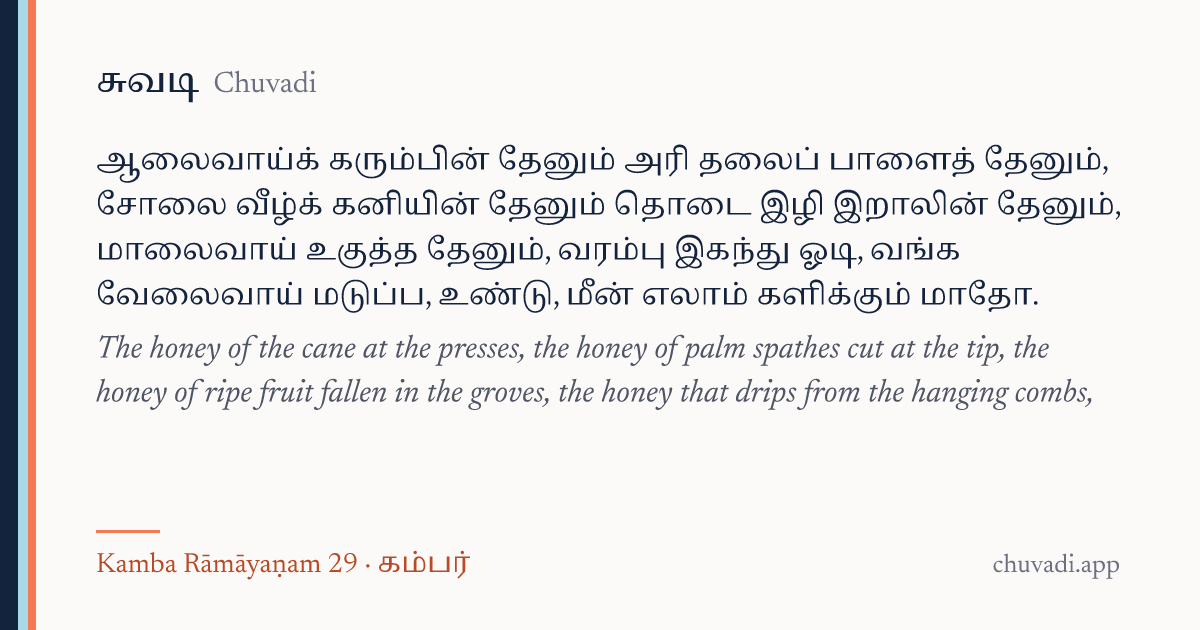
ஆலைவாய்க் கரும்பின் தேனும் - கரும்பாலைகளிலிருந்தும் பெருகும் தேன் போன்ற கருப்பஞ்சாறும்; அரிதலைப் பாளைத் தேனும் - கள் இறக்குவோர் அரிந்த பாளையிலிருந்து வடியும் கள்ளும் சோலைவீழ்க் கனியின் தேனும் - சோலைகளில் பழுத்த பழங்களின் சாறும்; தொடை இழி இறாலின் தேனும் - தொடுக்கப்பட்ட இடத்தினின்று வழிகின்ற தேனடைத் தேனும் - மாலை வாய் உகுத்த தேனும் - மலர் மாலைகளிலிருந்து வடியும் தேனும்; (ஆக இவையெல்லாம்); வரம்பு இகந்து ஓடி - எல்லை மீறிப் பெருகி ஓடி; வங்க வேலைவாய் மடுப்ப - கப்பல்கள் இயங்கும் கடலிலே போய்ச் சேர; மீன் எலாம் உண்டு களிக்கும் - (கடலிலே வந்து கலக்கின்ற அவற்றை) மீன்களெல்லாம் பருகிக் களிக்கும்.
ஆங்கிலம் · English translationAI
Translation
- The honey of the cane at the presses, the honey of palm spathes cut at the tip,
- the honey of ripe fruit fallen in the groves, the honey that drips from the hanging combs,
- the honey shed by garlands: all overflow their bounds and run, and as they pour
- into the ship-filled sea, all the fish drink and grow merry.
What the poem says
Kōcalam is so rich in sweetness that its juices overflow. Sugarcane juice from the presses, toddy from the cut palm flowers, the juice of fallen fruit, honey from the combs and nectar from the garlands all spill over their bounds. They run down into the sea where ships sail, and there even the fish drink them and grow tipsy with delight. The word "honey" is used for every one of these sweet liquids.