



கம்பராமாயணம் 2901 · ஆரணிய 5.87
பாடல் · The poem
Tap a word to see its gloss in the commentary and where else it occurs.
பொருள் · Meaning in Tamil
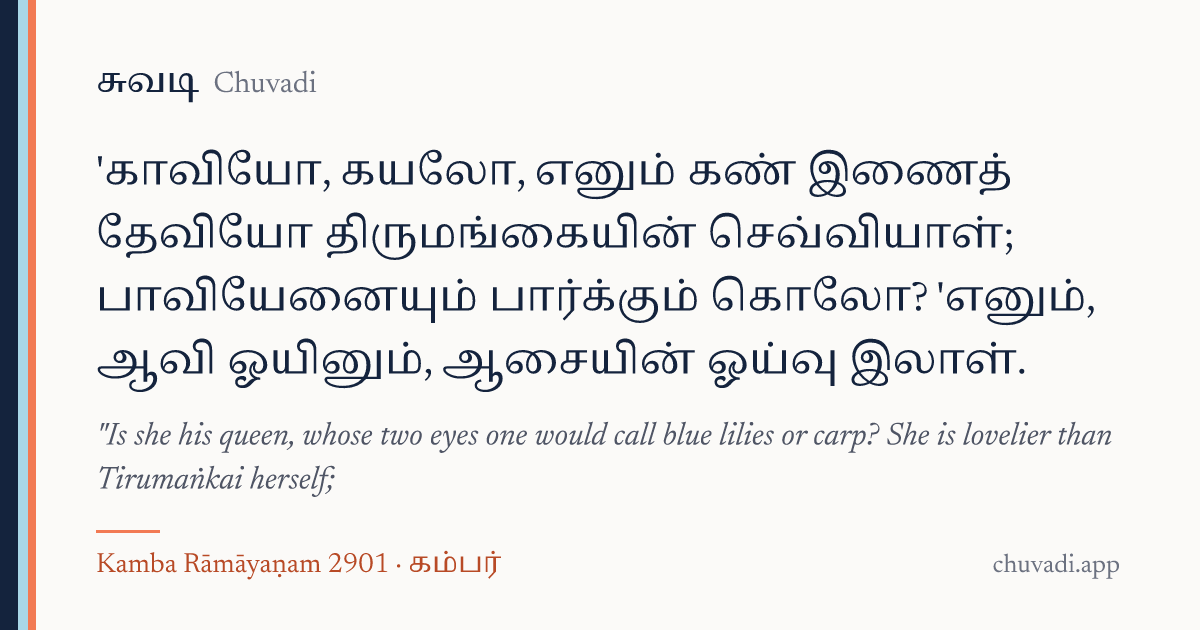
ஆவி ஓயினும் ஆசையின் ஓய்வு இலாள் - தன் உயிர் ஓய்ந்து அழிந்தாலும் தான் இராமன் மேல் கொண்ட ஆசையிலிருந்து நீங்காத சூர்ப்பணகை; காவியோ கயலோ எனும் கண்ணிணைத் தேவியோ - நீலமலரோ கயல்மீனோ என்று கூறத்தக்க இருகண்களையுடைய அவன் மனைவியோ; திருமங்கையின் செவ்வியாள் - இலக்குமியை விட அழகுள்ளவளாக இருக்கிறாள்; (அதனால்) பாவியேனையும் பார்க்கும் கொலோ எனும் - பாவியாகிய என்னையும் அவன் கண்ணெடுத்துப் பார்ப்பானோ என்று கூறி வருந்துவாள்.
ஆவி ஓயினும் ஆசையின் ஓய்வு இலாள் என்ற கருத்திற்கு ஒப்பாக நளவெண்பாவில் 'பூவின் வாய் வாளிபுகுந்த வழியே யென் ஆவியார் போனாலும் மவ்வழியே - பாவியேன் ஆசை போகா தென்றழிந்தாள்' (நள : 1.96) என்ற பாடல் உள்ளது. கண்ணுக்குக் காவியும் கயலும் உவமையாக வருவது காவிய மரபாகும்.
'திருமங்கையில்' என ஒப்புப் பொருளாகக் கொள்வதும் உண்டு. பாவியும் - இழிவு சிறப்பும்மை. கொலோ - கொல் ஐயப்பொருளிலும் ஓ எதிர் மறைப் பொருளிலும் வந்தன.
ஆங்கிலம் · English translationAI
Translation
- "Is she his queen, whose two eyes one would call blue lilies or carp?
- She is lovelier than Tirumaṅkai herself;
- will he ever look at a sinner like me?" she says,
- she whose desire does not fail though her life is failing.
What the poem says
Even as her strength drains away, Cūrppaṇakai's desire does not weaken. She now admits that the woman with eyes like blue lilies or darting carp may be Irāmaṉ's wife, and more beautiful than Lakṣmī. In despair she calls herself a sinner and wonders whether he will ever look at her.
The commentary compares a line in the Naḷaveṇpā: the heroine's life may leave by the wound the love god's flower-arrow made, but her desire will not leave with it.