



கம்பராமாயணம் 2919 · ஆரணிய 5.105
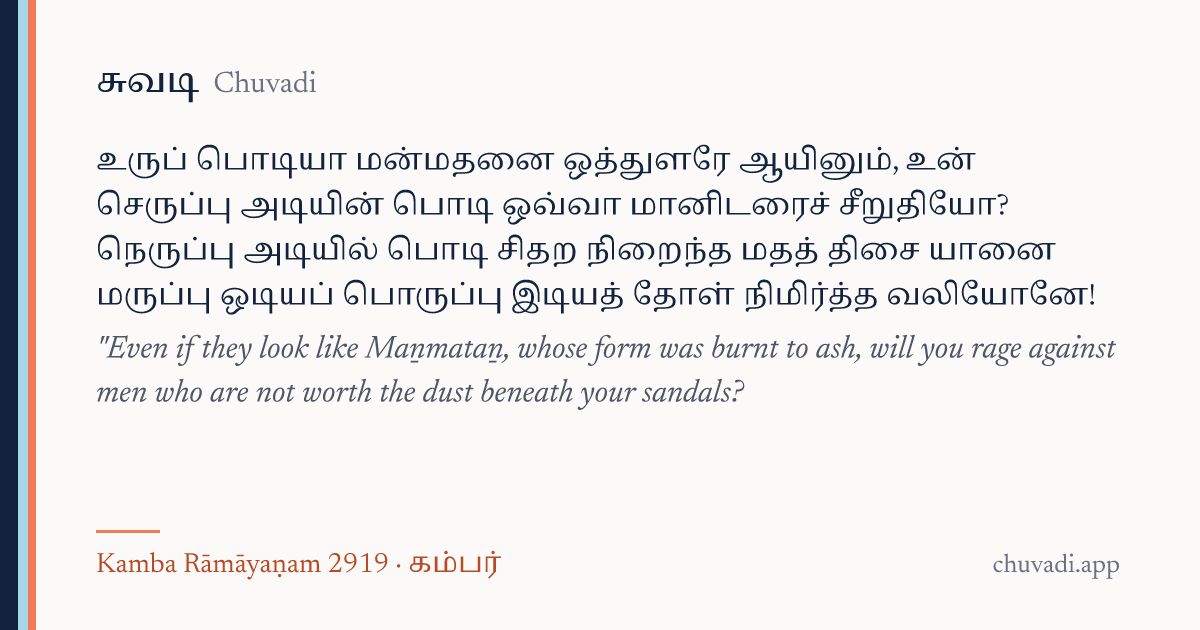
பாடல் · The poem
Tap a word to see its gloss in the commentary and where else it occurs.
பாட வேறுபாடு · Project Madurai reads
பொருள் · Meaning in Tamil
அடியில் நெருப்புப் பொடி சிதற - (கால்களைப் பதிய வைத்து நடக்கும்போது) அக்கால்களால் எழுப்பப்படும் துகள் நெருப்புப் பொறி சிந்தவும்; நிறைந்த மதத் திசை யானை மருப்பு ஒடிய - மிகுந்த மதநீர் பொழியும் திக்கு யானைகளின் கொம்புகள் ஒடியவும்; பொருப்பு இடிய - மலைகள் இடிந்திடவும்; தோள் நிமிர்த்த வலியோனே - இருபது தோள்களையும் நிமிர்த்துப் போர் புரிந்த வலிமை கொண்ட இராவணனை; உருப் பொடியா மன்மதனை ஒத்துளரே ஆயினும் - சிவன் கோபத்தால் உருவம் நீறாக்கப் பெற்ற மன்மதனைப் போன்று உள்ளவர்களே ஆனாலும்; உன் செருப்பு அடியின் பொடி ஒவ்வா மானிடரைச் சீறுதியோ - உன்னுடைய செருப்பின் கீழே உள்ள துகளுக்கு ஒப்பாகாத மனிதர்களை நீ கோபிப்பாயோ? (கோபிக்க மாட்டாய்).
உருப்பு ஒடியா மன்மதன் எனவும் பொருள் கூறுவர். உருப்பு ஒடியா - கொடுமை செய்வதில் குறையாத என்பது அதன் பொருள். நெருப்பு ஓடிய எனப் பாடம் கொண்டு அக்கினி தேவன் தோல்வியுற்று எனப் பொருள் கூறுவர்.
இராமலக்குவரைச் 'செருப்பு அடியின் பொடி ஒவ்வா மானிடர்' எனக் கூறலாமா எனக் கேட்டவர்க்குக் கம்பரின் மகன் அம்பிகாபதி கவியுளம் காணும் வகையைக் கூற, நாதமுனிகள் இதனைக் கவிக் கூற்றாகக் கொள்ளாமல் இராமலக்குவரால் ஏமாற்றமும் உறுப்புக் குறையுமடைந்த சூர்ப்பணகை அவர்களிடத்துக் கொண்ட வெறுப்பால் இவ்வாறு கூறினாள் என்பர். மேலும் செரு படி எனக் கொண்டு யுத்த பூமியில் ஒரு துகளுக்கு ஒப்பாகாத மானுடர் என்று கொள்ளவும் இடமுளது. எனவே இது கவித்திறன் அன்றி அபசாரமன்று என அவர் அருளினார் என்பது கதை. (விநோதரச மந்திரி வீராசாமி செட்டியார், பதிப்பு டி.ர. பாலகிருஷ்ணன், சென்னை 1969 ப. 192).
ஆங்கிலம் · English translationAI
Translation
- "Even if they look like Maṉmataṉ, whose form was burnt to ash, will you
- rage against men who are not worth the dust beneath your sandals?
- You mighty one, who lifted your shoulders so that sparks of fire flew from the dust beneath your feet,
- the tusks of the rutting elephants of the quarters broke, and mountains crumbled!"
What the poem says
Cūrppaṇakai mocks Irāmaṉ and Ilakkuvaṉ. They may be as handsome as the love god, but they are not worth the dust under her brother's sandals. Surely Irāvaṇaṉ, whose tread throws sparks, who broke the tusks of the elephants of the directions and shattered mountains, will not hold back from such petty foes.
A well-known story says some objected to the poet calling Irāmaṉ "not worth the dust of a sandal." The answer given was that these are the words of a mutilated, bitter character, not the poet's own view.