



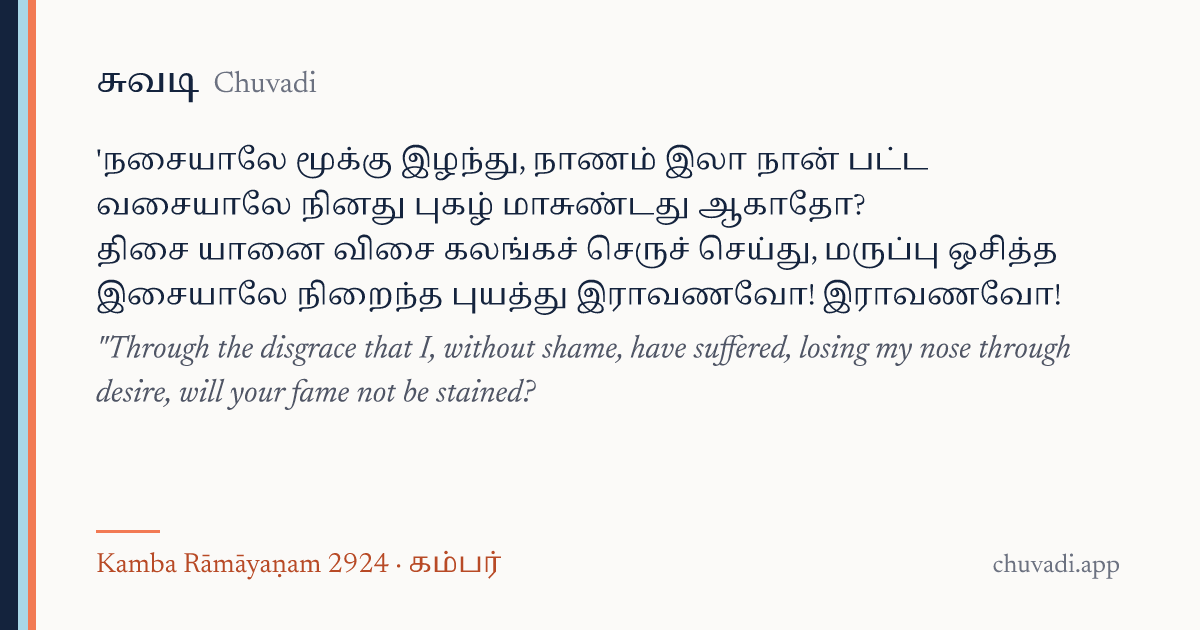
கம்பராமாயணம் 2924 · ஆரணிய 5.110
பாடல் · The poem
Tap a word to see its gloss in the commentary and where else it occurs.
பொருள் · Meaning in Tamil
திசை யானை விசை கலங்கச் செருச் செய்து மருப்பு ஒசித்த - திக்குகளிலுள்ள யானைகள் கலக்கமுற்று ஓயப்போர் செய்து அவற்றின் கொம்புகளை ஒடித்த; இசையாலே நிறைந்த புயத்து இராவணவோ இராவணவோ - புகழாலே நிறைவுற்ற தோள்களையுடைய இராவணனே! இராவணனே!!; நசையாலே மூக்கு இழந்து நாணம் இலா நான் பட்ட வசையாலே - ஆசை காரணமாய் என் மூக்கைப் பறி கொடுத்த நான் வெட்கமில்லாமல் அடைந்துள்ள பழியினால்; நினது புகழ் மாசுண்டது ஆகாதோ - உன்னுடைய கீர்த்தியும் களங்கம் அடைந்தது ஆகாதோ? (ஆகும்).
எட்டுத்திக்குகளில் காவலுக்காக நிறுத்தப் பெற்ற யானைகளோடு போரிட்டு அவற்றின் கொம்புகளை ஒடித்துத் தன் புகழை நிறுவிய இராவணன் தங்கையின் மூக்கையும் காதையும் மானிடர் பறிக்க அதனால் இகழ்ச்சி உண்டாவதா எனக் கேட்பதால் அம்மானுடரை இராவணன் அடக்க வேண்டும் என்ற சூர்ப்பணகை ஆசை வெளிப்படுகிறது. 'நசை' என்பது அவள் இராமன் மீது கொண்ட ஆசையைக் குறிப்பிட்டாலும் சீதையை இராவணன் அடைய வேண்டி அவளை எடுத்து வரமுற்பட்ட ஆசையைக் கருத்தில் கொண்டது பின்னர்ப் புலப்படும் (2881, 3147). இவ்வாறு கூறுவதால் இவ்விடத்திலும் சூர்ப்பணகை தன்னைப் 'பொய்ம்மகள்' (2778) என்பதை நிறுவுகின்றாள்.
ஆங்கிலம் · English translationAI
Translation
- "Through the disgrace that I, without shame, have suffered, losing my nose through desire,
- will your fame not be stained?
- You whose shoulders are full of the glory of fighting the elephants of the quarters
- until their strength was shaken and of breaking their tusks, Irāvaṇaṉ! Irāvaṇaṉ!"
What the poem says
Cūrppaṇakai tells Irāvaṇaṉ that her disgrace stains his own glory, which he won by defeating the elephants of the eight directions. By this she means to provoke him into avenging her.
She admits that desire cost her her nose, but the commentary notes that she will later twist the story, telling Irāvaṇaṉ that she was mutilated while trying to win Cītai for him. Even in her agony she remains a liar.