



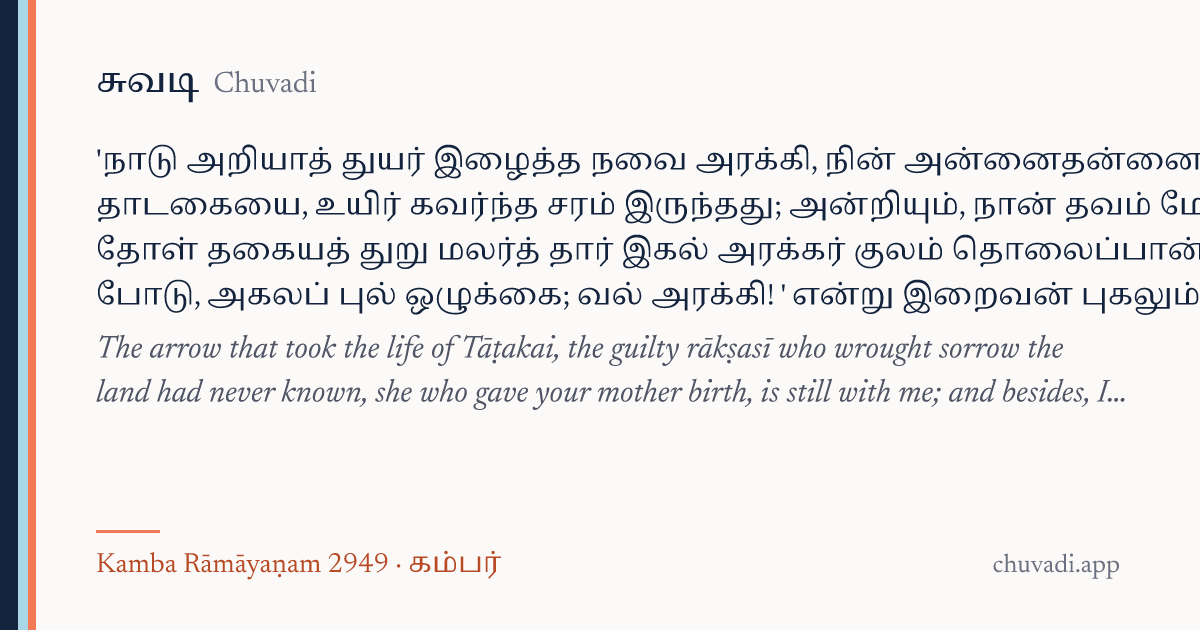
கம்பராமாயணம் 2949 · ஆரணிய 5.135
பாடல் · The poem
Tap a word to see its gloss in the commentary and where else it occurs.
பொருள் · Meaning in Tamil
வல் அரக்கி - கொடிய அரக்கியே!, நாடு அறியாத் துயர் இழைத்த நவை அரக்கி - உலகம் படாத துன்பத்தைச் செய்யும் குற்றமுள்ள இராக்கதப் பெண்ணாகிய; நின் அன்னை தன்னை நல்கும் தாடகையை - உன் தாயாம் கேகசியைப் பெற்ற தாடகையை; உயிர் கவர்ந்த சரம் இருந்தது - உயிரைப் பறித்த அம்பு உள்ளது; அன்றியும் நான் தவம் மேற் கொண்டு - மேலும் நான் தவத்தை இயற்றி; தோள் தகையத் துறு மலர்த் தார் இகல் அரக்கர் குலம் தொலைப்பான் தோன்றி நின்றேன் - தோள் வலிமையுடையவரான நெருங்கிய பூமாலை அணிந்தவர்களும் பகைமை கொண்டவருமான இராக்கதரின் குலத்தை அழிக்க வேண்டிப் பிறந்துள்ளேன்; புல் ஒழுக்கை அகலப்போடு - தீய நடத்தையைத் தூரவிட்டிடு; என்று இறைவன் பின்னும் புகலும் - என்று சொல்லி இராமன் மீண்டும் சொல்வான்.
நவை அரக்கி என்பதைச் சூர்ப்பணகையை நோக்கி விளித்ததாகவும் கொள்வர். நின் அன்னை தன்னை நல்கும் தாடகை - சூர்ப்பணகையின் தாயாம் கேகசியைப் பெற்ற தாடகை எனப் பொருள் தரினும் நேரடியாக அவள் கேகசியைப் பெறவில்லை ஆயினும், இராவணன் முதலியோர் தாடகையைப் பாட்டி என முறை கொண்டாடியதும் தாடகை மைந்தராம் சுபாகு மாரீசர்களை மாமன்மார் என முறை கொண்டாடியதும் ஆம். ஒற்றுமை நயம் கருதி இவ்வாறு கூறச் செய்தது எனலாம். புல்லொழுக்கு - சூர்ப்பணகையின் காமமும் சீதையைக் கவர முயன்றதும் ஆம். பாடு அகல எனப் பாடம் கொண்டு அகலப்பாடு என மாற்றி உரை காண்பாரும் உளர் தகைய அழகுடைய எனலுமாம்.
ஆங்கிலம் · English translationAI
Translation
- The arrow that took the life of Tāṭakai, the guilty rākṣasī who wrought sorrow the land had never known, she who gave your mother birth,
- is still with me; and besides, I have taken up penance
- and stand here, born to wipe out the race of hostile rākṣasas whose strong shoulders wear dense flower garlands;
- cast far away your base conduct, cruel rākṣasī!" So the lord spoke, and spoke again.
What the poem says
Irāmaṉ at last answers Cūrppaṇakai sternly. He reminds her that the arrow that killed Tāṭakai, whom her family counted as a grandmother, is still in his quiver, and declares that he has come into the world to destroy the whole rākṣasa race.
He orders her to give up her shameful behaviour, meaning both her lust and her attempt on Cītai. The commentary explains that Tāṭakai was not literally her grandmother, but Irāvaṇaṉ's family called her so, and called her sons Mārīcaṉ and Cupāku their uncles.