



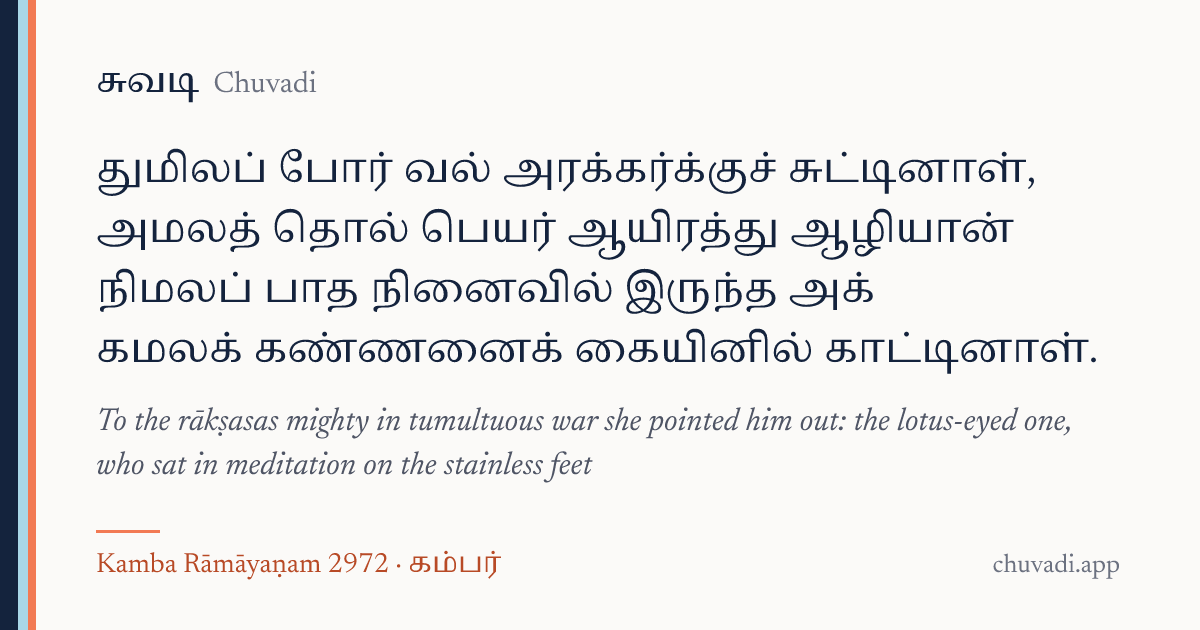
கம்பராமாயணம் 2972 · ஆரணிய 6.15
பாடல் · The poem
Tap a word to see its gloss in the commentary and where else it occurs.
பாட வேறுபாடு · Project Madurai reads
பொருள் · Meaning in Tamil
அமலத் தொல் பெயர் ஆயிரத்து - குற்றமற்ற பழமை வாய்ந்த ஆயிரந் திருநாமங்களையுடைய; ஆழியான் - சக்கரப் படையேந்திய திருமாலின்; நிமலப் பாத நினைவில் இருந்த - குற்றமற்ற திருவடிகளைத் தியானித்த நிலையில் இருந்த; அக் கமலக் கண்ணனை - செந்தாமரை மலர் போன்ற கண்களையுடைய அந்த இராமனை; துமிலப் போர் வல் அரக்கர்க்கு - ஆரவாரத்தோடு போர் செய்வதில் வல்ல அந்த இராக்கதர்களுக்கு; கையினில் சுட்டினாள் காட்டினாள் - (சூர்ப்பணகை) தன் கையால் சுட்டிக் காண்பித்தாள்.
ஆழியான் - சக்கராயுதம் கொண்ட திருமால்; இங்கே அரங்கநாதன் : இராமன் குல தெய்வம். இராமன் அரங்கநாதனைத் தியானித்து வணங்கினான். 'கோதறு தவத்துத் தம்குலத்துளோர் தொழும், ஆதியஞ் சோதியை அடி வணங்கினான்' (1208) - 'ஐயனும் அச்சொற் கேளா ஆயிரம் மௌலியானைக் கைதொழுது' - (1576) என்று கூறப்பட்டுள்ள செய்திகளையும் 'பணி அரங்கப் பெரும்பாயற் பரஞ்சுடரை யாம் காண, அணி அரங்கம் தந்தானை அறியாதார் அறியாதார் (638) என்று கூறப்பட்டுள்ள செய்தியையும் இணைத்து நோக்கினால், இராமன் வழிபட்டது அரங்கநாதப் பெருமானையே என்பது தெளிவாகும்.
அமலப் பெயர்: தன்னை உச்சரித்தவரின் கருமங்களையொழிக்கும் திருநாமம். துமிலம் : பேராரவாரம், போர்க்குழப்பம்.
இப்பாடல் இராமனின் தவநிலையையும் அரக்கரின் அவநிலையையும் ஒருமிக்கக் கூறியவாறு காணலாம்.
ஆங்கிலம் · English translationAI
Translation
- To the rākṣasas mighty in tumultuous war she pointed him out:
- the lotus-eyed one, who sat in meditation on the stainless feet
- of the Lord of the discus, whose ancient, pure names are a thousand,
- she showed him to them with her hand.
What the poem says
Cūrppaṇakai points out Irāmaṉ to the rākṣasa warriors. He is sitting in meditation on the feet of Tirumāl, the discus-bearing god of a thousand holy names.
The commentary identifies this deity as Araṅkanātaṉ, the reclining Vishnu of Srirangam, family god of Irāmaṉ's line, citing other verses of the epic. The verse sets Irāmaṉ's calm devotion beside the rākṣasas' noisy approach, and the irony is that he is himself the god he worships.