



கம்பராமாயணம் 2984 · ஆரணிய 6.27
பாடல் · The poem
Tap a word to see its gloss in the commentary and where else it occurs.
பாட வேறுபாடு · Project Madurai reads
பொருள் · Meaning in Tamil
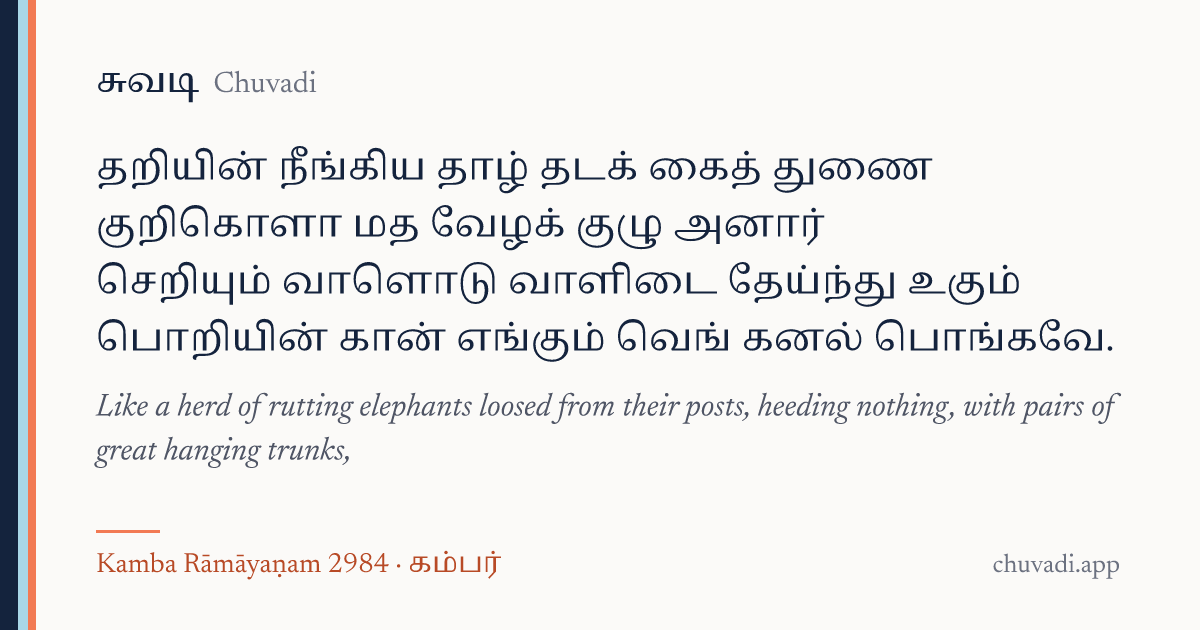
தறியின் நீங்கிய - (மதத்தால்) கட்டுத்தறியிலிருந்து வெளிப்பட்டவையும்; குறிகொளா - (எவரையும்) ஒரு பொருட்டாக மதியாதவையுமான; தாழ் தடக்கைத் துணை - தாழ்ந்து தொங்குகின்ற பெரிய இரண்டு துதிக்கைகளையுடைய, மதவேழக் குழு அனார் - மதங் கொண்ட யானைக் கூட்டத்தை ஒத்தவர்களாகிய அரக்கர்களின்; செறியும் வாளொடு வாள் - அடர்ந்த வாளாயுதங்கள் ஒன்றோடு ஒன்று; இடை தேய்ந்து - நடுவிலே உராய்தலால்; உகும் பொறியின் - வெளிச் சிந்தும் தீப் பொறிகளால்; கான் எங்கும் - அந்த வனம் எங்கும்; வெம் கனல் பொங்க - கொடிய நெருப்பு ஓங்கியெழவும்; ஏ - ஈற்றசை
அரக்கப் படை வீரர்க்குத் தறியின் நீங்கிய தாழ் தடக்கைத் துணை மத வேழங்கள் உவமையாம். இந்தப் பாடல், தேர்ப் படையைத் தொடர்ந்து சென்ற அரக்கப் படை வீரர்களின் செறிவையும் அவர்கள் ஏந்திய வாட்படைகளின் மிகுதியையும் விளக்கியது. தறி - தூண். தன்னைக்கட்டியுள்ள தறியைக் கடுங்கோபத்தால் முறித்துத் தள்ளிவிட்டுத் தடையின்றி வெளிச் செல்வது மதயானையின் இயல்பு.
ஆங்கிலம் · English translationAI
Translation
- Like a herd of rutting elephants loosed from their posts, heeding nothing,
- with pairs of great hanging trunks,
- they came, and as their crowded swords ground against one another,
- the sparks that flew made fierce fire blaze all through the forest.
What the poem says
The rākṣasa foot soldiers march so close behind the chariots that their swords scrape together, and the sparks set the forest ablaze.
They are compared to rutting elephants that have broken free of their tethering posts and fear nothing. Their two long arms are the hanging trunks: since an elephant has only one trunk, the poet has to give the comparison a pair.