



கம்பராமாயணம் 3003 · ஆரணிய 6.46
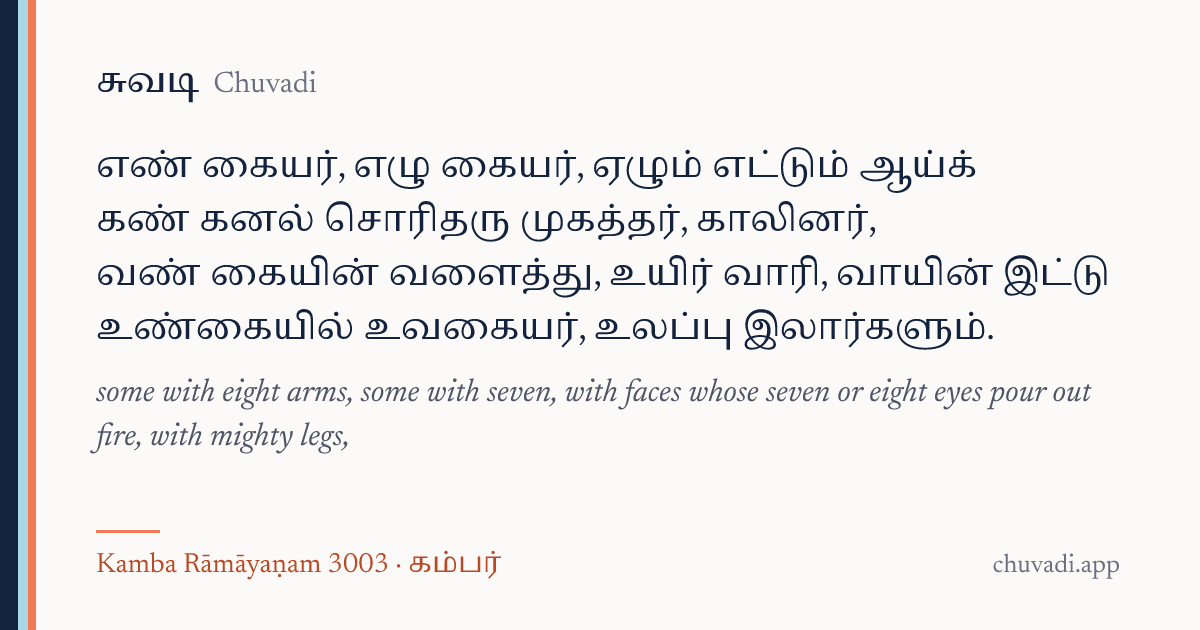
பாடல் · The poem
Tap a word to see its gloss in the commentary and where else it occurs.
பொருள் · Meaning in Tamil
எண் கையர் - எட்டுக் கைகளை உடையவர்கள்; எழு கையர் - ஏழு கைகளை உடையவர்கள்; ஏழும் எட்டுமாய்க் கண் கனல் சொரி தரு முகத்தர் - ஏழு, எட்டு என்று எண்ணிக்கை கொண்ட கண்களில் நெருப்பினைச் சொரியும் முகங்களை உடையவர்கள்; காலினர் - (வலிமையான) கால்கள் உடையவர்கள்; உயிர் - எதிர்ப்படும் உயிரினங்களை; வண் கையின் வளைத்து - வலிமை கொண்ட தங்கள் கைகளால் வளைத்துப் பிடித்து; வாரி - வாரியெடுத்து; வாயில் இட்டு உண்கையில் - வாயிலே இட்டு உண்பதிலே; உவகையர் - மகிழ்ச்சிகொள்பவர்கள்; உலப்பு இலார்கள் - எண்ணி முடியாத அளவுக்கு மிகுந்தவர்கள்.
இயல்பான உருவமைப்புக்கு மாறாகக் கைகள் பல, கண்கள் பல, முகங்களும் பல கொண்டவர்கள் அரக்கரில் பலர். இராவணனுக்கு மட்டுமே பத்துத் தலைகள் என்று கருத வேண்டா என்பது குறிப்பு. உணர்வொழுங்கில் மட்டுமன்றி உருவக் கோணலும் பல கொண்ட இனம், அரக்கர் இனம். முன் பாடலில் (29/9) பல வகை விகார முகங்கள் கொண்டோராக அரக்கரை வருணித்ததையும் இங்கு நினைவில் கொள்க. முன் பாடல் இறுதியிலும் இப்பாடல் இறுதியிலும் வரும் உம்மைகள் உரையசையாக விடுக்கப்பட்டன; எண்ணும்மையாகவும் கொண்டு பொருள் காணலாம்.
ஆங்கிலம் · English translationAI
Translation
- some with eight arms, some with seven, with faces
- whose seven or eight eyes pour out fire, with mighty legs,
- who rejoice in seizing living beings in their strong hands, scooping them up
- and stuffing them in their mouths to eat, past all counting.
What the poem says
Continuing from the last verse: some warriors have seven or eight arms and faces with seven or eight eyes spitting fire.
They delight in grabbing any living thing they meet, scooping it up and eating it, and there are countless numbers of them. Irāvaṇaṉ is not the only rākṣasa with a monstrous body; deformity of form, like deformity of mind, runs through the whole race.