



கம்பராமாயணம் 3053 · ஆரணிய 6.96
பாடல் · The poem
Tap a word to see its gloss in the commentary and where else it occurs.
பொருள் · Meaning in Tamil
விரி நீர் கடைந்தார் - பரந்த பாற்கடலைக் கடைந்த தேவாசுரர்கள்; வெருவு உற - அச்சங்கொள்ளும்படி, மீது எழு கடு ஆம் என - (அக் கடலிலிருந்து) மேலெழுந்த நஞ்சு போல; கொடியார் - கொடுமையுள்ளவர்களான; படைத் தலை வீரர்கள் பதினால்வரும் - அந்த அரக்கர் படைத் தலைவர்களான வீரர்கள் பதினான்கு பேரும்; உடைந்தார்களை - தம்முள் தோற்றோடியவர்களை; நகை செய்தனர் - இகழ்ந்து சிரித்துக் கொண்டு; உருள் தேரினர் - வலிமையான சக்கரத்தையுடைய தேர்களில் ஏறியவர்களும்; அயில்வாள் மிடைந்தார் - வேலும் வாளும் பொருந்தியவர்களும்; நெடுங் கடல் தானையர் - பெரிய கடல் போன்ற சேனையைச் சூழ்ந்தவர்களும்; மிடல் வில்லினர் - வலிய வில்லேந்தியவர்களுமாய், உடனாய் அடைந்தார் - ஒன்றாக வந்து (இராமனுள்ள இடத்தைக் சேர்ந்தார்கள்.
கடைந்தார் என்றமையால் விரிநீர் என்பது பாற்கடல் எனக் கொள்ளப்பட்டது. படைத் தலைவர்க்குப் பாற்கடலில் எழுந்த விடம் உவமையாயிற்று. கடல் தானையர் என்றமையால் அவர்களோடு வந்த அரக்கர் படைக்குக் கடல் உவமையானது. படைத் தலைவர் பதினால்வர் கரனுடன் வந்தவர்.
ஆங்கிலம் · English translationAI
Translation
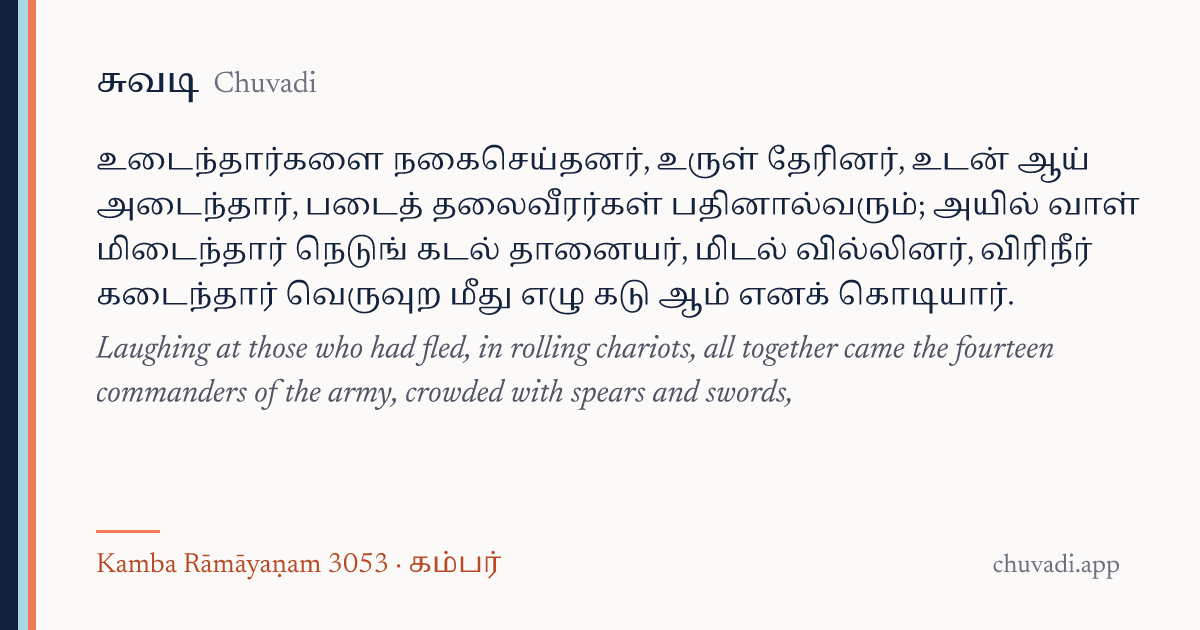
- Laughing at those who had fled, in rolling chariots, all together
- came the fourteen commanders of the army, crowded with spears and swords,
- with armies like the long sea, with mighty bows, cruel
- as the poison that rose up and terrified those who churned the wide waters.
What the poem says
Now the fourteen commanders who came with Karaṉ advance together in their chariots, jeering at the soldiers who ran away. They bristle with spears and swords and mighty bows and lead armies as vast as the sea.
They are as deadly as the poison that rose from the Ocean of Milk and terrified the gods and demons who were churning it.