



கம்பராமாயணம் 3080 · ஆரணிய 6.123
பாடல் · The poem
Tap a word to see its gloss in the commentary and where else it occurs.
பாட வேறுபாடு · Project Madurai reads
பொருள் · Meaning in Tamil
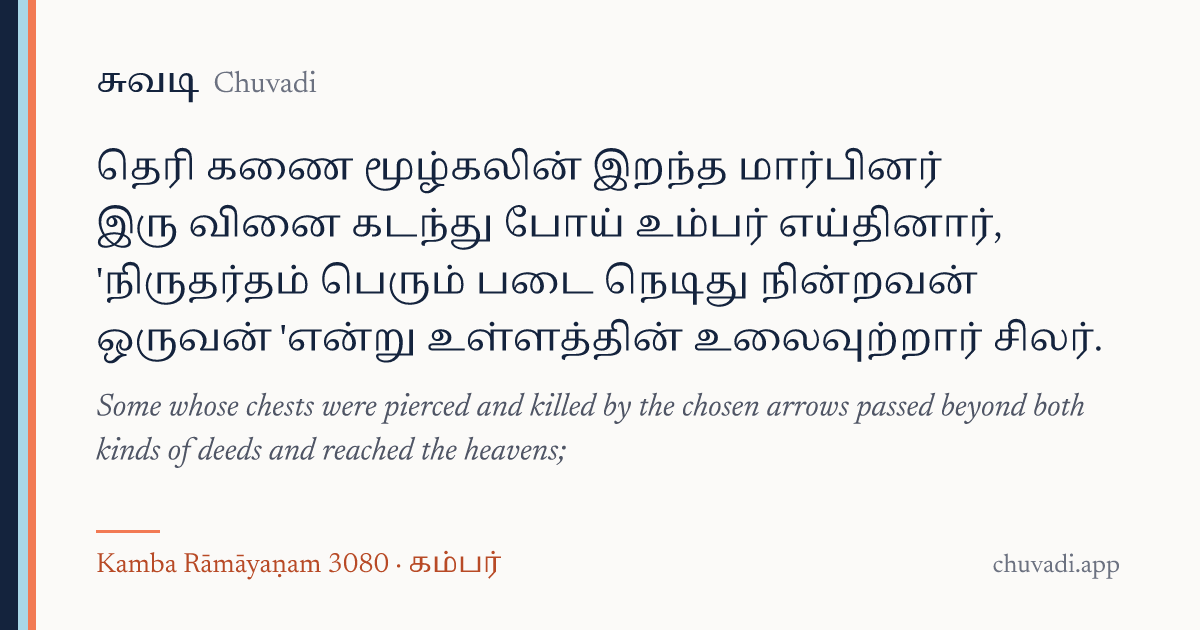
தெரி கணை மூழ்கலின் - இராமனால் தேர்ந்தெடுக்கப்பட்ட அம்புகள் தைத்துப் பாய்தலால்; திறந்த மார்பினர் சிலர் - பிளக்கப்பட்ட மார்புகளையுடைய சில அரக்கர்கள்; இருவினை கடந்து போய் - தம்முடைய நல்வினை தீவினை மாய; உம்பர் எய்தினார் - மேலுலகம் அடைந்த சில அரக்கர்கள்; 'நிருதர் தம் பெரும்படை நெடிது - அரக்கர்களுடைய பெரிய சேனையோ மிக நீண்டது; நின்றவன் - (இவர்களை எதிர்த்து) நின்ற இராமபிரானோ; ஒருவன்' என்று - துணையற்ற ஒருவனே' என்று கருதி; உள்ளத்தின் உலைவு உற்றார் - மனத்தில் அச்சங் கொண்டார்கள்.
அரோ: ஈற்றசை.
ஆங்கிலம் · English translationAI
Translation
- Some whose chests were pierced and killed by the chosen arrows
- passed beyond both kinds of deeds and reached the heavens;
- thinking, 'The great army of the demons is vast, and the one who stands against it
- is a single man,' they were troubled in their hearts.
What the poem says
Some demons, their chests split open by Irāmaṉ's arrows, are freed from the effects of both their good and evil deeds and rise to heaven.
Yet even from there they look down anxiously: the demon army is immense and Irāmaṉ stands against it entirely alone. Now on the side of the gods, they worry for him.