



கம்பராமாயணம் 3088 · ஆரணிய 6.131
பாடல் · The poem
Tap a word to see its gloss in the commentary and where else it occurs.
பாட வேறுபாடு · Project Madurai reads
பொருள் · Meaning in Tamil
அவ்வழி - அந்தப் போர்க் களத்தில்; தேர் அழிந்து - தனது தேர் அழியப் பெற்று; திரிசிரா எனும் பேர் அழிந்ததனினும் - திரிசிரன் என்ற தன் காரணப் பெயர் அழிந்ததனாலும்; மறம் பிழைத்திலன் - வீரம் நீங்காதவனாம்; வார் அழிந்து உமிழ் சிலை - (அவ்வரக்கன்) நீளம் குறைந்து (வளைந்து) அம்புகளை வெளியிடும் தன்மையுள்ள (தன்) வில்லிலிருந்து; வான நாட்டுழி - ஆகாயத்திலிருந்து; கார் இழிந்தாலென - கரிய மேகங்கள் பொழிந்தது போல; கணை வழங்கினான் - அம்பு மழை பொழிந்தான்.
தன் தேரும் மூன்று தலைகளுள் இரண்டு தலைகளும் அழிந்துங்கூட அஞ்சாமல் வீரத்தோடு வானத்தில் நின்று அம்பு சொரிந்தான் திரிசிரன் என்பது. 'திரிசிராவெனும் பேர் அழிந்து': மூன்று தலைகளைக் கொண்டமையால் அமைந்த காரணப் பெயர் பொருந்தாமல் போன நிலையைக் குறித்தது.
ஆங்கிலம் · English translationAI
Translation
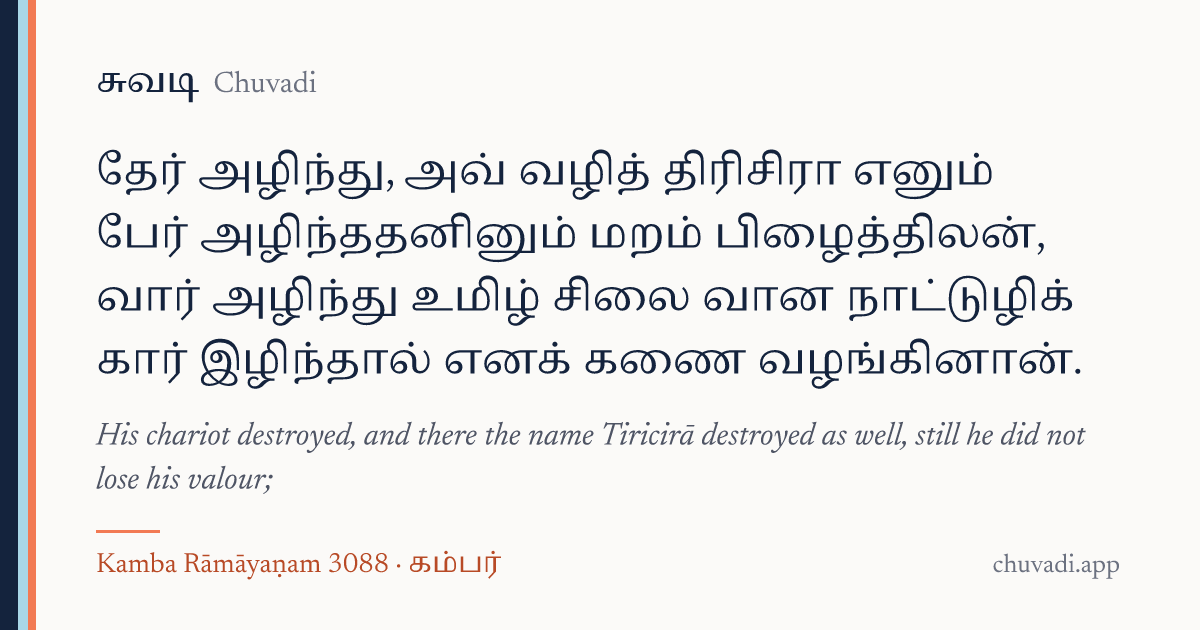
- His chariot destroyed, and there the name Tiricirā
- destroyed as well, still he did not lose his valour;
- from his bow that shortens as it bends and spits arrows, he loosed shafts
- as if dark clouds had poured down from the land of the sky.
What the poem says
Tiricirā has lost his chariot and two of his heads, so his very name, 'Three-heads', no longer fits him. Still he does not lose his courage.
Standing in the sky, he bends his bow, which shortens as it is drawn, and pours arrows down like dark rain clouds.