



கம்பராமாயணம் 310 · பால 6.4
பாடல் · The poem
Tap a word to see its gloss in the commentary and where else it occurs.
பாட வேறுபாடு · Project Madurai reads
பொருள் · Meaning in Tamil
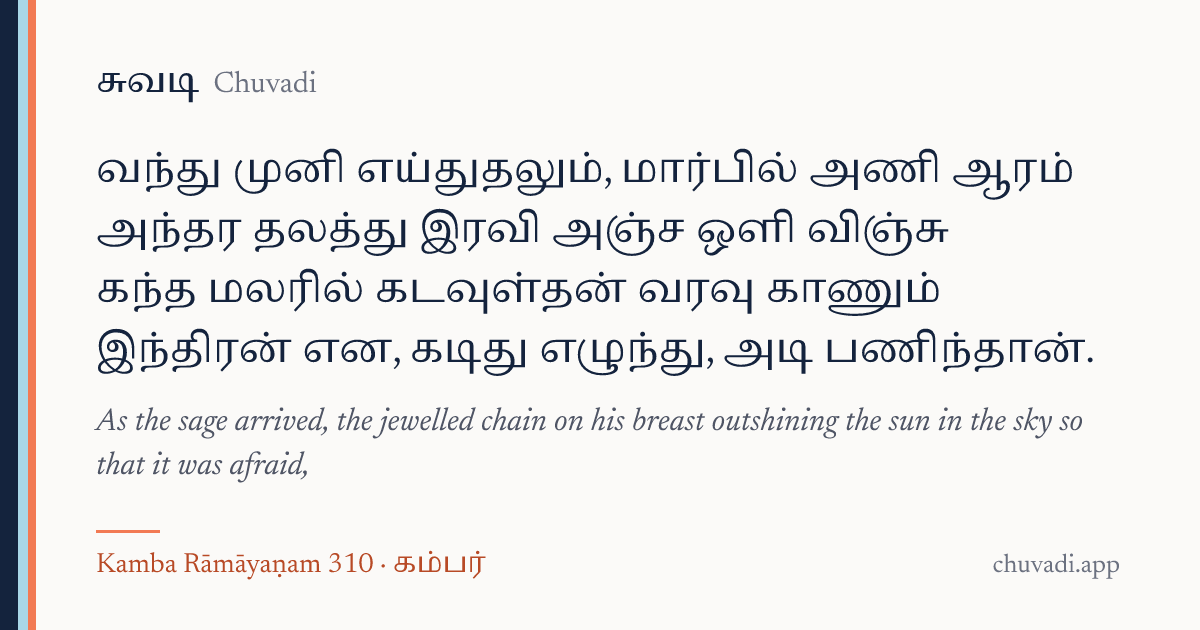
முனி வந்து எய்துதலும் - விசுவாமித்திர முனிவன் மண்டபத்தை அடைந்ததும்; மார்பில் அணி ஆரம் - (தயரதன்) மார்பில் அணிந்த மணிமாலை; அந்தர தலத்து இரவி - வானத்திலே ஒளிரும் சூரியனும்; அஞ்ச ஒளி விஞ்ச - தோல்வியுறும்படி ஒளி மிகுந்திருக்க; கந்தம் மலரில் கடவுள் தன் - மணம் மிகுந்த தாமரை மலரில் வாழும் பிரமனுடைய; வரவுகாணும் இந்திரன் என - வரவினைக் கண்ட இந்திரனைப் போல; கடிது எழுந்து அடிபணிந்தான் - விரைவில் எழுந்து முனிவனது திருவடிகளை வணங்கினான்.
எய்துதல்: அடைதல். ஆரம்: மாலை. அந்தரதலம்: ஆகாயம். அஞ்ச: தோல்வியுற (அஞ்சல்: தோல்வி) விஞ்சல்: மிகுதல். கந்தம்: மணம். கடிது: விரைந்து. முந்திய பாடல்களில் தயரதனை இந்திரனுக்கும், விசுவாமித்திரனைப் பிரமனுக்கும் ஒப்பக் கூறியதற்கேற்ப, இப்பாடலில், “பிரமன் வரவைக் கண்டு எழுந்து அடிபணியும் இந்திரனைப் போல முனிவரது வரவுணர்ந்த மன்னன் எழுந்து அடிபணிந்தான்” என்று முடித்துக் கூறியதனைக் காண்கிறோம். இது முதல் மூன்று பாடல்கள் சந்த விருத்தங்கள்.
ஆங்கிலம் · English translationAI
Translation
- As the sage arrived, the jewelled chain on his breast
- outshining the sun in the sky so that it was afraid,
- like Intiraṉ who sees the coming of the god
- on the fragrant flower, he rose swiftly and bowed at his feet.
What the poem says
Tacarataṉ springs up from his throne and bows at Vicuvāmittiraṉ's feet, just as Intiraṉ rises to greet Brahmā, the god seated on the lotus. The necklace on the king's chest outshines the sun.
The comparison completes the pairing set up in the previous verses. The next three verses are in the cantam metre.