



கம்பராமாயணம் 311 · பால 6.5
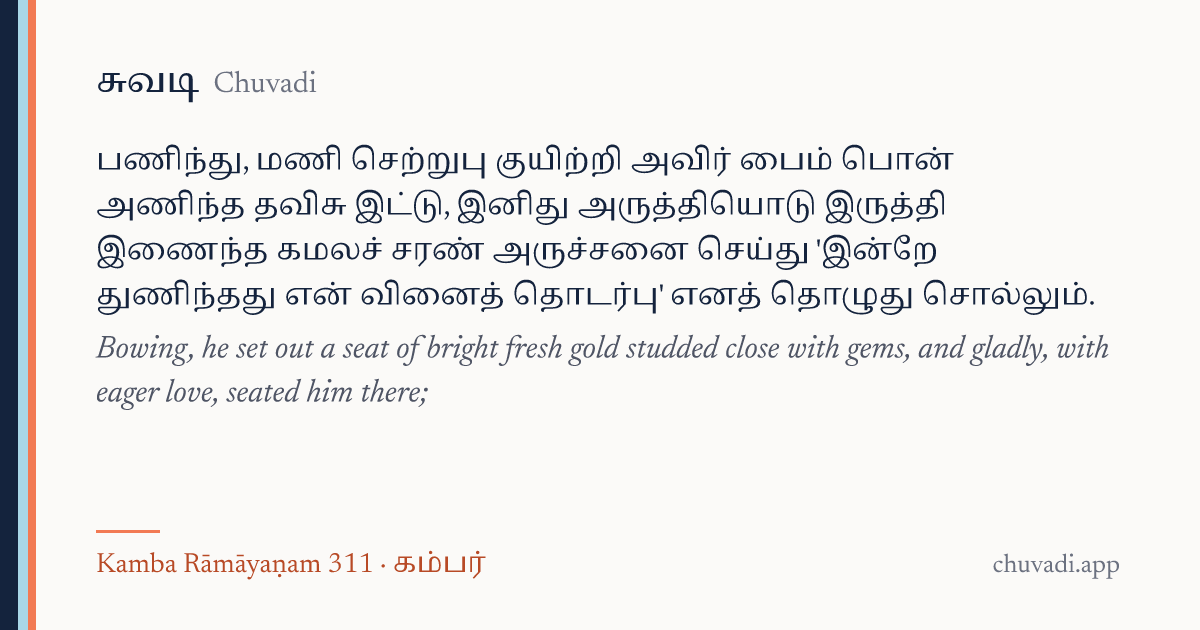
பாடல் · The poem
Tap a word to see its gloss in the commentary and where else it occurs.
பாட வேறுபாடு · Project Madurai reads
பொருள் · Meaning in Tamil
பணிந்து - (தயரத மன்னன் முனிவனை) வணங்கி; மணி செற்றுபு குயிற்றி அவிர் பைம்பொன் அணிந்த தவிசு இட்டு அருத்தியொடு இனிது இருத்தி - மணிகள் நெருங்கப் பதித்து விளங்கும் பொன்னால் அலங்கரிக்கப்பட்ட ஆசனமிட்டு (அதில்) மிக்க ஆர்வத்துடன் முனிவனை இனிதே இருக்கச் செய்து; இணைந்த கமலச் சரண் அருச்சனை செய்து - தாமரை போன்ற இரு பாதங்களையும் அருச்சித்து; என் வினைத் தொடர்பு - எனது வினைப்பயன்களின் தொடர்பு; இன்றே துணிந்தது என - இன்றே நீங்கியது என்று; தொழுது சொல்லும் - அம்முனிவனை வணங்கிக் கூறலானான்.
செற்றுபு: நெருங்க. குயிற்று: பதித்து. பைம்பொன்: (பண்புத்தொகை), பசுமையான பொன். தவிசு: இருக்கை. அருத்தி: ஆசை. சரணம்: பாதம். அருச்சனை: பூசனை. வினைத்தொடர்பு: வினைப்பயன். இருத்தி: பிறவினை. இருவினைப் பலன்களும் ஆம். நல்வினையும் பிறவிக் காரணம் என்பதால் “இருள் சேர் இருவினை” என்றார் திருவள்ளுவரும். பெரியோர் வருகையால் வினைத் தொடர்புகள் நீங்கும் என்பது கருத்து.
ஆங்கிலம் · English translationAI
Translation
- Bowing, he set out a seat of bright fresh gold
- studded close with gems, and gladly, with eager love, seated him there;
- he worshipped the pair of lotus feet, and saying 'This very day
- the chain of my karma is cut,' he bowed and spoke.
What the poem says
Tacarataṉ seats Vicuvāmittiraṉ on a jewelled golden seat and performs pūjā to his feet. He declares that the visit of so great a sage has cut the chain of his karma.
The commentary recalls the Tirukkuṟaḷ's phrase 'the two dark deeds': even good deeds bind one to rebirth.