



கம்பராமாயணம் 312 · பால 6.6
பாடல் · The poem
Tap a word to see its gloss in the commentary and where else it occurs.
பொருள் · Meaning in Tamil
நெடியோய்! நகர் யான் வலம் செய்து வணங்க - நீண்ட தவம் உடையீர்! இந்த நகரத்திலே நான் வலம் வந்து வணங்கும்படியாக; நீ எளிவந்த இது - தாங்கள் எளிமையாக வந்த இந்தச் செயலானது; நிலம் செய்தவம் என்று உணரின் அன்று - இந்த நாடு செய்த தவப்பயன் தானோ எனில் அல்ல; என் நலம் செய்வினை உண்டு எனினும் அன்று - எனது நல்வினை செய்து காட்டிய பயனாலோ என்றால் அல்ல; எம்முந்து குலம் செய்தவம் - எங்களது முந்திய குலத்தினோர் செய்த தவப்பயனே யாகும்; என்று இனிது கூற முனி கூறும் - என்று தயரதன் இனிய முகமன் கூற, அதனைக் கேட்ட முனிவன் கூறுவான்.
நிலம்: இடவாகு பெயராய் மக்களை உணர்த்திற்று. செய்தவம்: வினைத்தொகை. 'தவம்': தவப்பயன் அல்லது புண்ணியமும் ஆம். வலம்: வலம் வருதல். எளிமை: சுலபம். தயரதன் முனிவனை நோக்கி “நெடியோய்” என்றது, நீண்ட தவத்தை உணர்த்தி நின்றது.
ஆங்கிலம் · English translationAI
Translation
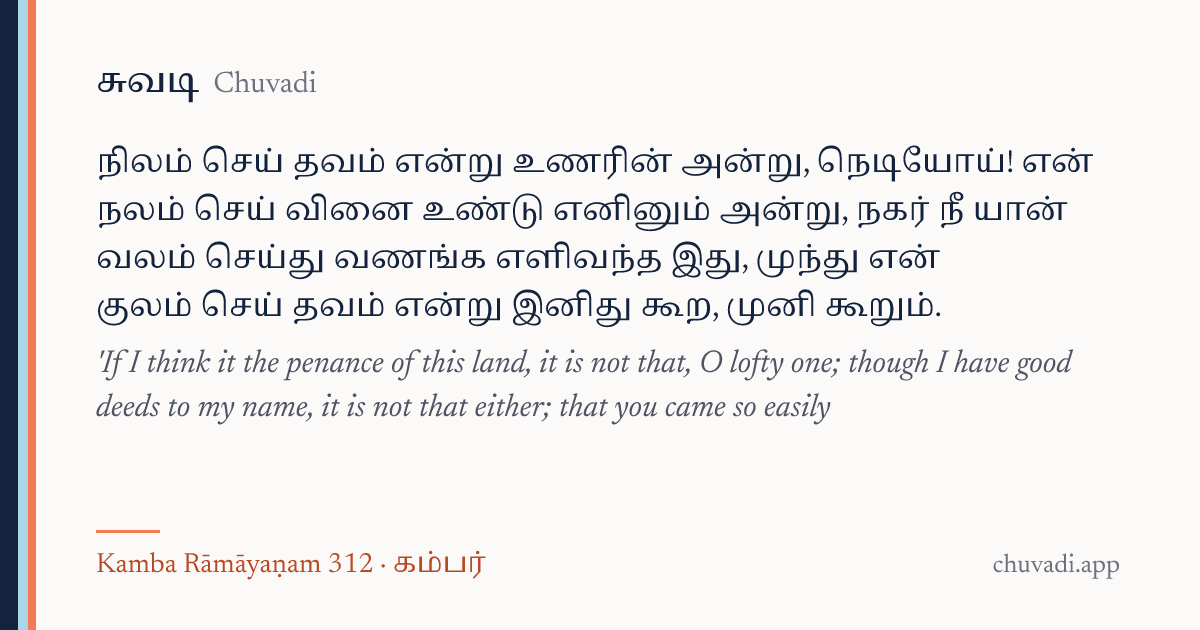
- 'If I think it the penance of this land, it is not that, O lofty one; though I have
- good deeds to my name, it is not that either; that you came so easily
- to this city for me to circle and worship you is the penance
- done long ago by my line,' he said sweetly; and the sage spoke.
What the poem says
Tacarataṉ modestly says that the sage's visit is not due to his own merit or his kingdom's, but to the penance of his ancestors. 'Lofty one' refers to the sage's long austerities.
The sage's reply follows.