



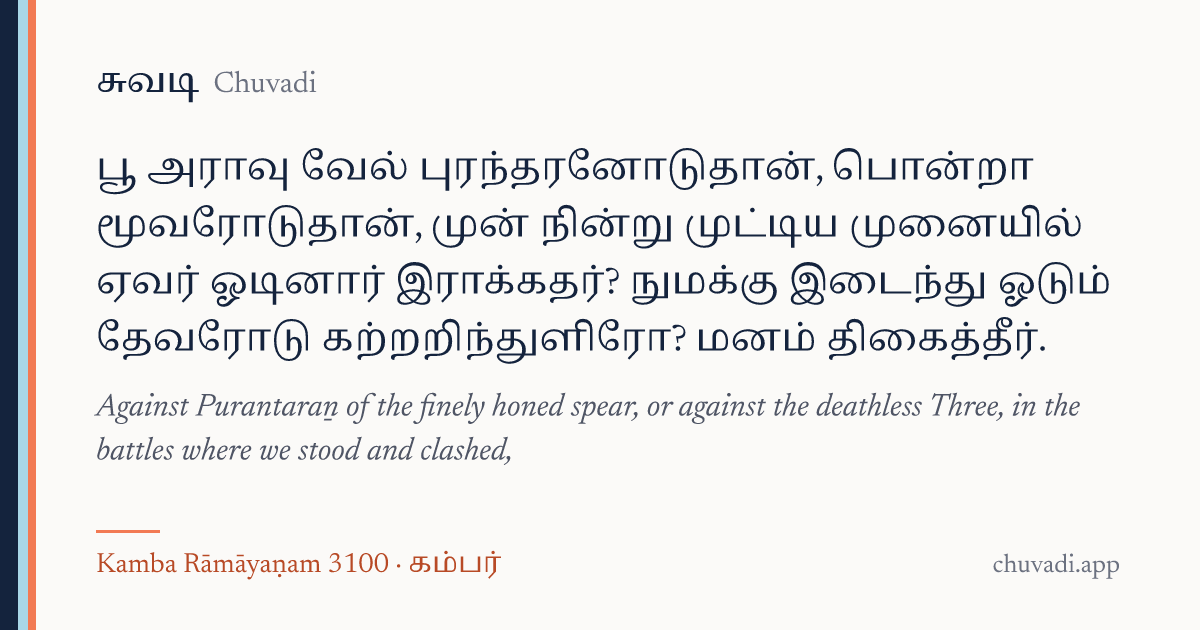
கம்பராமாயணம் 3100 · ஆரணிய 6.143
பாடல் · The poem
Tap a word to see its gloss in the commentary and where else it occurs.
பொருள் · Meaning in Tamil
மனம் திகைத்தீர் - மன உணர்வால் திகைத்தவர்களே; பூ அராவு வேல் - மிகக் கூர்மையாக அராவப்பட்ட வேலையுடைய; புரந்தரனோடு தான் - தேவேந்திரனோடும்; பொன்றா மூவரோடு தான் - அழிவில்லாத மும்மூர்த்திகளுடனும்; முன் நின்று முட்டிய முனையில் - முன்பு எதிர் நின்று தாக்கிய போர்க்களத்தில்; இராக்கதர் ஏவர் ஓடினர் - எந்த அரக்கர்கள் அஞ்சியோடினார்கள்? (யாருமில்லை); நுமக்கு இடைந்து ஓடும் தேவரோடு - (முன்பெல்லாம்) உங்களைக் கண்டு அஞ்சியோடிய தேவர்களிடத்தில்; கற்றறிந்துளிரோ - புறமுதுகு காட்டி அஞ்சியோடுவதைக் கற்று அறிந்து கொண்டீர்களோ?
'தேவர்கள் தலைவனான இந்திரனோடும், முத் தொழில் புரியும் மும்மூர்த்திகளோடும் நேர்ந்த போர்களில் எதிலும் அரக்கர் அஞ்சியோடினதில்லையே! அப்படியிருக்க உங்களுக்கு எதிரே பல முறை அஞ்சியோடின தேவர்களைக் கண்டுகண்டு நீங்களும் அஞ்சிப் புறங்காட்டியோடும் தொழிலைக் கற்றுக் கொண்டீர்களோ? என்றான். அழிவில்லாத வேற்படை தாங்கிய இந்திரனுக்கும், என்றும் அழியாத இயல்புடைய மும்மூர்த்திகளுக்கும் அஞ்சாத உங்களுக்கு எளிய மனிதரைக் கண்டு ஓடுதல் இயற்கைக் குணமாகாது; அது செயற்கைப் பண்பேயாம் என்ற குறிப்பும் புலப்படும். ஏவர் - எவர் என்பதன் நீட்டல் விகாரம். திகைத்தீர் - விளி (திகைத்தவர்களே).
ஆங்கிலம் · English translationAI
Translation
- Against Purantaraṉ of the finely honed spear, or against
- the deathless Three, in the battles where we stood and clashed,
- which demons ever ran? Have you learned it, then,
- from the gods who used to give way before you and run? You have lost your wits!
What the poem says
Tūṭaṇaṉ reminds the demons of their past. When they fought Intiraṉ with his sharp spear, or even the three great gods, Piramaṉ, Tirumāl and Civaṉ, no demon ever ran.
Mockingly he asks whether they have picked up the habit of running from the gods, who so often fled from them. Running from mere humans, he implies, is not in a demon's nature; it can only be something learned.