



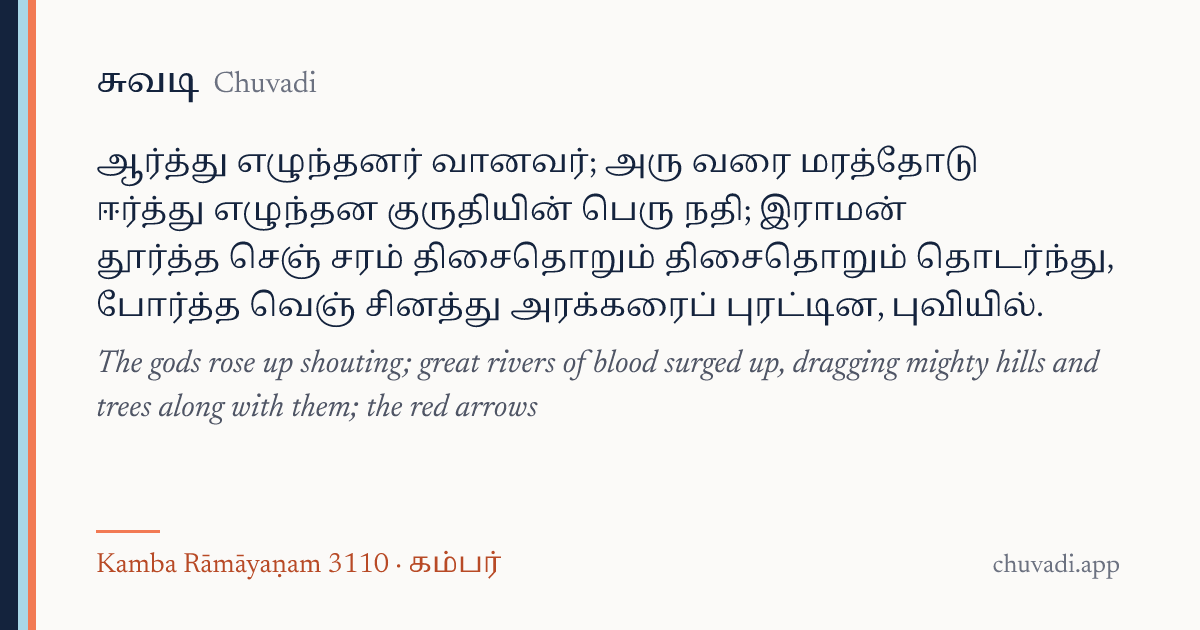
கம்பராமாயணம் 3110 · ஆரணிய 6.153
பாடல் · The poem
Tap a word to see its gloss in the commentary and where else it occurs.
பொருள் · Meaning in Tamil
(அதுகண்டு) வானவர் - தேவர்கள்; ஆர்த்து எழுந்தனர் - (மகிழ்ச்சியால்) ஆரவாரஞ் செய்தார்கள்; குருதியின் பெருநதி - இரத்தப் பேராறுகள்; அருவரை மரத்தோடு - அழித்தற்கரிய மலைகளையும் மரங்களையும்; ஈர்த்து எழுந்தன - இழுத்துக் கொண்டு சென்றன; இராமன் தூர்த்த செஞ்சரம் - இராமபிரான் ஏவி நிரப்பிய செவ்விய அம்புகள்; திசைதொறும் திசைதொறும் தொடர்ந்து - எல்லாத்திக்குகளிலும் தொடர்ந்து சென்று; போர்த்த வெம் சினத்து அரக்கரை - அத் திசைகளைத் (தம் கூட்டத்தால்) மறைத்த கொடிய சினங்கொண்ட இராக்கதர்களை; புவியில் புரட்டின - தரையில் புரளும்படி செய்தன.
இராமனுடைய செஞ்சரம் திசைதொறும் தொடர்ந்து போர்த்த வெஞ் சினத்து அரக்கரைப் புவியில் புரட்டின என்றும் உரைக்கலாம்.
செஞ்சரம் - வளைவில்லாத நேரிய அம்பு; பகைவரின் இரத்தம் தோய்ந்து நுனி சிவந்த அம்பு; தீயவரை அழித்து நன்மை புரியும் அம்பு.
ஆங்கிலம் · English translationAI
Translation
- The gods rose up shouting; great rivers of blood surged up,
- dragging mighty hills and trees along with them; the red arrows
- Irāmaṉ poured out pursued them into every quarter, every quarter,
- and rolled on the ground the demons of cruel wrath who had covered them.
What the poem says
The gods shout for joy. The rivers of blood swell until they sweep away hills and trees.
Irāmaṉ's arrows chase the demons into every direction they had filled and send them rolling on the earth. His arrows are called 'red': they fly straight, their tips are reddened with enemy blood, and they do good by destroying the wicked.