



கம்பராமாயணம் 3140 · ஆரணிய 6.183
பாடல் · The poem
Tap a word to see its gloss in the commentary and where else it occurs.
பொருள் · Meaning in Tamil
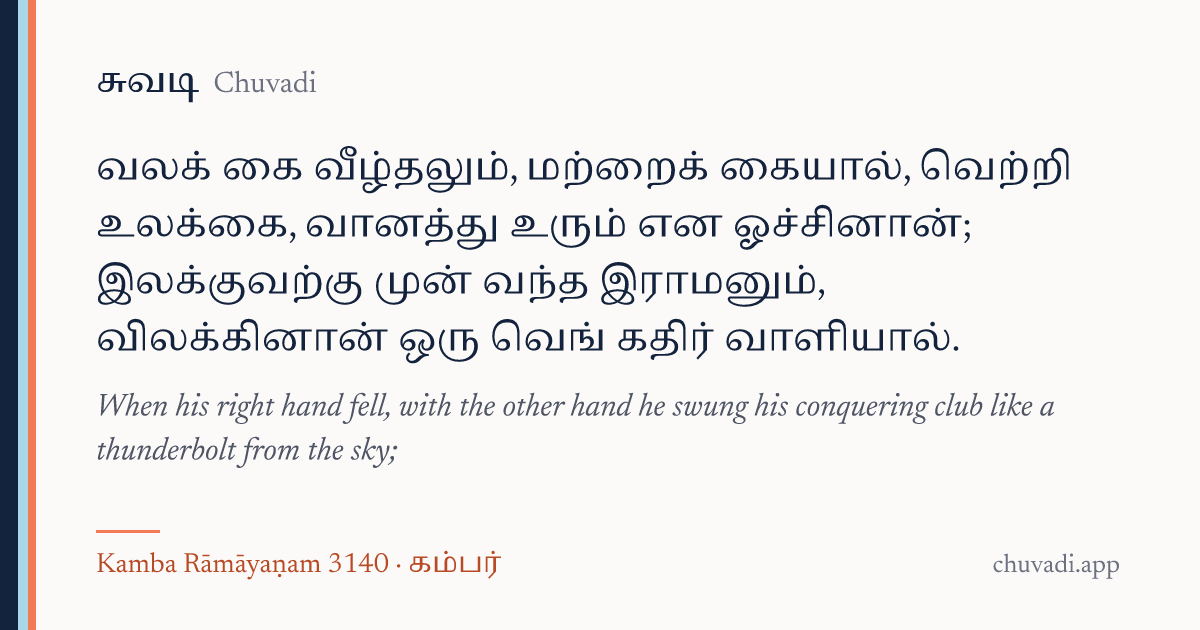
வலக்கை வீழ்தலும் - (தனது) வலக்கை வெட்டுண்டு கீழே விழுந்தவுடனே; மற்றைக் கையால் - (கரன்) இடக் கையினால்; வெற்றி உலக்கை - வெற்றி தரக் கூடிய உலக்கையை; வானத்து உரும் என - மேகத்தினிடையே தோன்றும் இடியைப் போல; ஓச்சினான் - உயரே எடுத்து (இராமன் மேல் வீசினான்; இலக்குவற்கு முன் வந்த இராமனும் - இலக்குவனுக்கு முன்னே பிறந்த இராமனும்; ஒரு வெம் கதிர் வாளியால் - கொடிய ஒளியுடைய ஓர் அம்பினால்; விலக்கினான் - (தன் மேல் படாதவாறு) தடுத்து விலக்கினான்.
வலக் கையை இழந்த கரன் இடக்கையால் உலக்கையை இராமன் மேல் எறிய, அவ் இராமனும் ஓர் அம்பினால் அதைத் தடுத்தான் என்பது. இலக்குவற்கு முன் வந்த இராமன்: இரட்டுற மொழிதலால் இலக்குவனுக்கு முன்னே பிறந்த இராமன் எனவும், போர்க்கெழுந்த இலக்குவனைத் தடுத்து அவனுக்கு முன்னே வந்த இராமன் எனவும் பொருள் கொள்ளலாம்.
ஆங்கிலம் · English translationAI
Translation
- When his right hand fell, with the other hand he swung
- his conquering club like a thunderbolt from the sky;
- and Irāmaṉ, who came before Ilakkuvaṉ,
- turned it aside with a single arrow of cruel radiance.
What the poem says
With his right arm gone, Karaṉ swings his heavy club with his left hand and hurls it like a thunderbolt. Irāmaṉ turns it aside with one blazing arrow.
'He who came before Ilakkuvaṉ' can be read two ways: Irāmaṉ, the elder brother born before Ilakkuvaṉ, or Irāmaṉ, who held his eager brother back and went out ahead of him to fight.