



கம்பராமாயணம் 3139 · ஆரணிய 6.182
பாடல் · The poem
Tap a word to see its gloss in the commentary and where else it occurs.
பொருள் · Meaning in Tamil
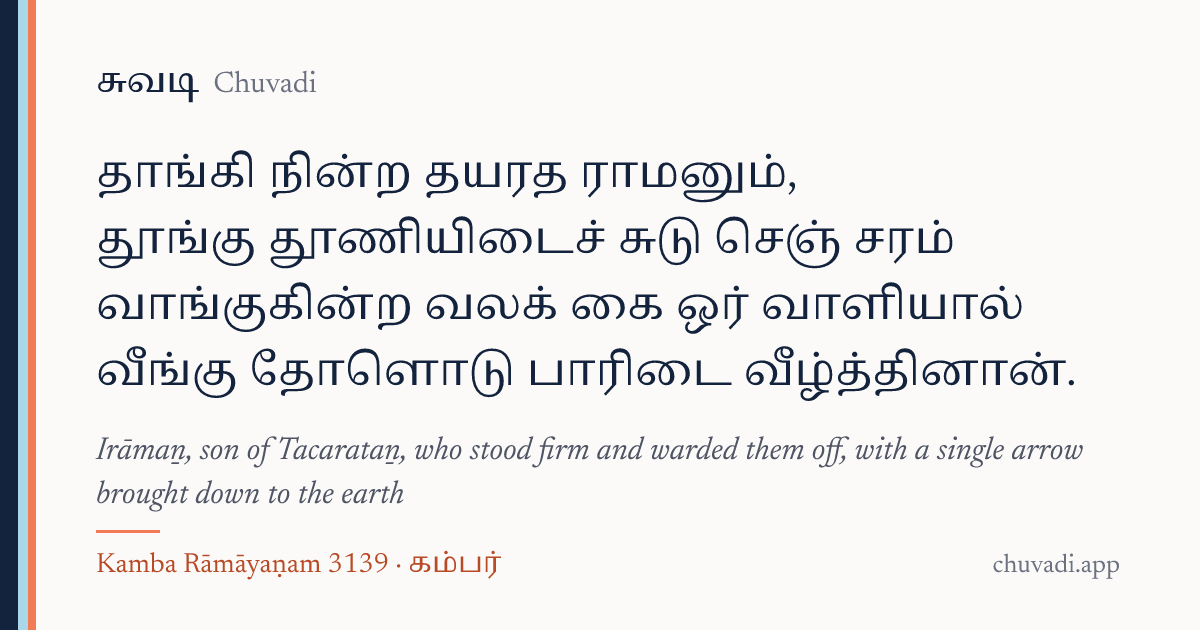
தாங்கி நின்ற தயரத ராமனும் - (கரன் சொரிந்த அம்புகளைத் தன் மேல் விழாதபடி) தடுத்து நின்ற தசரதனின் மைந்தனான இராமபிரானும்; தூங்கு தூணியிடை - (தோளில்) கட்டப்பட்ட அம்பறாத் தூணியிலிருந்து; சுடு செஞ்சரம் வாங்குகின்ற - வெம்மையான சிவந்த அம்புகளையெடுத்து விடுகின்ற; வலக் கை - அக்கரனின் வலக்கையை; வீங்கு தோளொடு - பருத்த தோள்களோடு; ஓர் வாளியால் பாரிடை வீழ்த்தினான் - ஓர் அம்பினால் துண்டித்து நிலத்தின் மேல் விழச் செய்தான். இராமனும் கரனது அம்பு வாங்கும் வலக் கையை ஓர் அம்பினால் தோளோடும் வீழ்த்தினான் என்பது. தூங்குதல் - தொங்குதல்; வாங்குதல் - வெளியே எடுத்தல்.
ஆங்கிலம் · English translationAI
Translation
- Irāmaṉ, son of Tacarataṉ, who stood firm and warded them off,
- with a single arrow brought down to the earth
- the right hand that kept drawing burning red arrows from the hanging quiver,
- together with its swelling shoulder.
What the poem says
Irāmaṉ holds off the shower of arrows. Then, with one shaft, he cuts off the right arm Karaṉ uses to draw arrows from the quiver hanging at his shoulder, and brings it down to the ground, shoulder and all.