



கம்பராமாயணம் 3210 · ஆரணிய 7.61
பாடல் · The poem
Tap a word to see its gloss in the commentary and where else it occurs.
பாட வேறுபாடு · Project Madurai reads
பொருள் · Meaning in Tamil
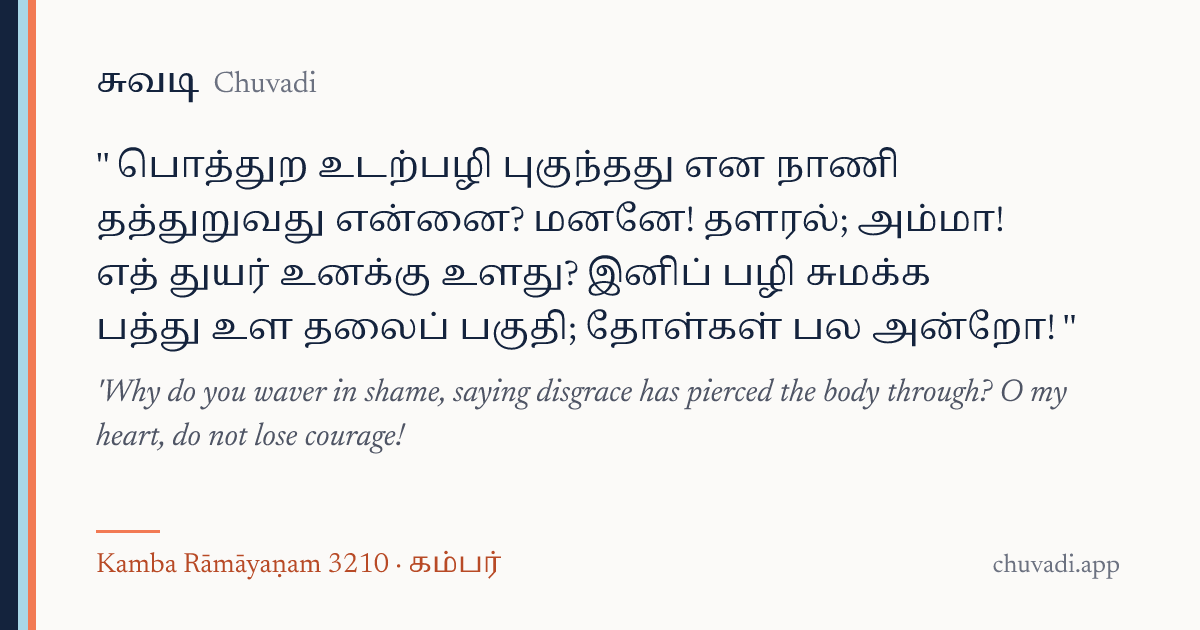
மனனே - என் உள்ளமே! உடல் பொத்துறப் பழி புகுந்தது - உடலையும் துளைத்துப் பழி சென்று நின்றது; என நாணி - என்று வெட்கமுற்று; தத்துறுவது என்னை? - ஏன் தடுமாறுகிறாய்?; தளரல் - சோர்வடையாதே; உனக்கு எத்துயர் உளது? - உனக்கு அவமானம் சுமக்கும் எவ்விதத் துன்பமும் வேண்டியதில்லை (ஏனெனில்); இனிப் பழி சுமக்க - இனிமேல் அப்பழியைத் தாங்க; பத்துள தலைப்பகுதி - தலைகள் பத்து உள்ளன; தோள்கள் பல அன்றோ - தோள்களும் பல உள்ளன அன்றோ?
அம்மா - இடைச் சொல். பழி தீர்க்க வேண்டிய தலைப் பாரமும், தோள் வலிமையும் உண்டென மொழிகின்றான்.
ஆங்கிலம் · English translationAI
Translation
- 'Why do you waver in shame, saying disgrace has pierced the body through?
- O my heart, do not lose courage!
- What grief is there for you? To carry this disgrace from now on
- there are ten heads, and are there not many shoulders!'
What the poem says
Irāvaṇaṉ now addresses his own heart in grim irony. Why should it be ashamed and falter because disgrace has pierced him? It need not suffer, he says, since he has ten heads and twenty shoulders to carry the burden of shame.
The sarcasm cuts both ways: the heads and shoulders that should carry the disgrace are also the strength with which he means to wipe it out.