



கம்பராமாயணம் 3224 · ஆரணிய 7.75
பாடல் · The poem
Tap a word to see its gloss in the commentary and where else it occurs.
பொருள் · Meaning in Tamil
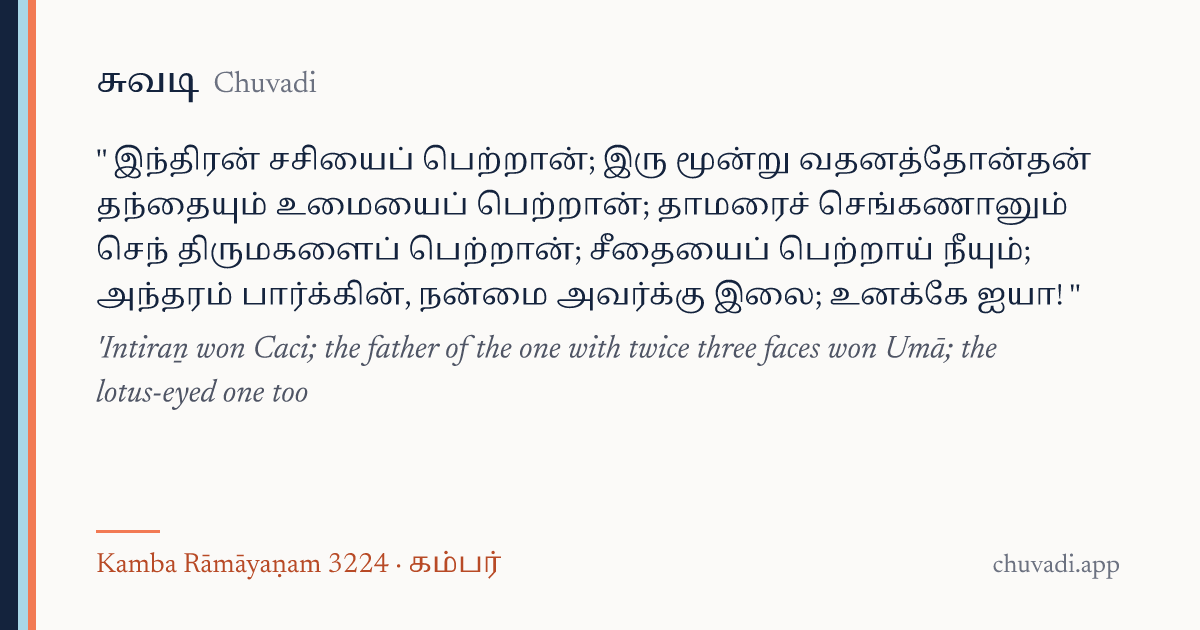
ஐயா - ஐயனே; இந்திரன் சசியைப் பெற்றான் - தேவேந்திரன் சசியை மனைவியாகப் பெற்றான்; இருமூன்று வதனத்தோன் தன் தந்தையும் - ஆறுமுகங்களை உடைய முருகனின் தந்தையாகிய சிவபெருமானும்; உமையைப் பெற்றான் - உமையம்மையாரைத் துணைவியாகப் பெற்றான்; தாமரைச் செங்கணானும் - செந்தாமரைக் கண்ணோனான திருமாலும், செந்திருமகளைப் பெற்றான் - சிவந்த இலக்குமி தேவியை மனைவியாக அடைந்தான்; நீயும் சீதையைப் பெற்றாய் - (இராவணனாகிய) நீயும் சீதையை மனைவியாக அடைந்து விட்டாய்; அந்தரம் பார்க்கின் - (உங்களுள்) அழகிய உயர்வுற்றார் யாரெனப் பார்த்தால்; நன்மை உனக்கே - (சீதையைப் பெறுவதால் கிடைக்கும்) நலங்களெல்லாம் உன்னையே அடைந்தன; அவர்க்கு இல்லை - (முன்னர் குறித்த) தேவர்களுக்கு இத்தகைய பேறு வாய்க்கவில்லை.
பிற தெய்வ மாதர்களினும் சீதை உயர்ந்தவள் எனச் சுட்டிக் காட்டினாள். இன்னும் சீதையை இராவணன் அடையாத போதும் 'பெற்றாய்' என இறந்த காலத்தால் பேசினாள். அவளை அடைய வேண்டும் விரைவை உணர்த்தும் முறையிலும், இராவணன் நினைத்தால் அவளை அடைவது திண்ணம் என அவன் வலிமையை உணர்த்தும் முறையிலும் இவ்வாறு கூறினாள் சூர்ப்பணகை.
குறிப்பு மொழியாக, 'அந்தரம் பார்க்கின் நன்மை அவர்க்கு! உனக்கு இலை:' என்றும் பிரித்துப் பொருள் கொள்ளுமாறு பாடல் அமைந்துள்ளது.
ஆங்கிலம் · English translationAI
Translation
- 'Intiraṉ won Caci; the father of the one with twice three faces
- won Umā; the lotus-eyed one too
- won the radiant Lady Tiru; and you have won Cītai;
- if you weigh the difference, the good is not theirs; it is yours alone, my lord!'
What the poem says
Cūrppaṇakai compares Irāvaṇaṉ with the great gods and their consorts: Indra has Śacī, Śiva, father of six-faced Murukaṉ, has Umā, and lotus-eyed Viṣṇu has Lakṣmī. Irāvaṇaṉ, she says, has 'won' Cītai, and so he is the most fortunate of them all.
She speaks in the past tense as if the deed were already done, to urge him on and to suggest that with his strength it is certain. The words can also be split differently to mean the opposite, 'the good is theirs, not yours', a hidden hint of the ruin that awaits him.