



கம்பராமாயணம் 3465 · ஆரணிய 8.63
பாடல் · The poem
Tap a word to see its gloss in the commentary and where else it occurs.
பொருள் · Meaning in Tamil
அரண் தரு திரள் தோள் சால உள எனின் ஆற்றல் உண்டோ - காவலைச் செய்யும் திரண்ட தோள்கள் மிகுதியாக உள்ளன என்றால் அவற்றிற்கு வலிமை மிகுதி உள்ளதா? கரண்ட நீர் இலங்கை வேந்தைச் சிறை வைத்த கழற்கால் வீரன் - நீர்க் காகங்கள் வாழும் கடல் சூழ்ந்த இலங்கை அரசனாம் இராவணனைச் சிறையில் அடைத்த வீரக்கழல் பூட்டிய கார்த்த வீரியார்ச்சுனனின்; திரண்ட தோள் வனத்தை எல்லாம் - பருத்த ஆயிரம் தோள்களாம் காட்டையெல்லாம்; சிறியது ஓர் பருவம் தன்னில் - தனது இளம் பருவத்தில்; இரண்டு தோள் ஒருவன் மழுவினால் எறிந்தான் அன்றோ என்றாள் - இரு தோள்களை உடைய பரசுராமன் தன் கைக் கோடரியால் வெட்டி எறிந்தான் அல்லவா எனச் சீதை கேட்டாள்.
தோள்கள் இருபதாயினும் ஆயிரம் தோளுடைய கார்த்த வீரியார்ச்சுனனால் சிறை வைக்கப்பட்டான் இராவணன். எனவே, அவன் வலிமை பயனற்றது என்பது விளங்கும். மேலும், அவ்வாயிரந்தோளுடையவனோ இரு தோளுடைய பரசுராமன் மழுவினால் வெல்லப்பட்டான். பரசுராமனோ இராமனுக்குத் தோற்றான். இதனால் இராவணனை இராமன் வெல்வது உறுதி என்பதைச் சீதை கூறாமல் கூறினாள்.
அரண்தரு தோள் - உடலைக் காப்பன தோளாம். 'மெய் சென்றுதாக்கும் வியன் கோல் அடி தன் மேற் கை சென்று தாங்கும்' (நன்னெறி 3) என்பது காட்டும், காட்டைக் கோடரி வெட்டுவது போல் ஆயிரம் தோளாம் காட்டைப் பரசுராமனின் கோடரி வெட்டியது என்பது உருவக அணி. 'உயிர் உற்றது ஓர் மரம் ஆம் என ஓர் ஆயிரம் உயர் தோள் வயிரப் பணைதுணிய, தொடு வாள் மழு உடையான் (1274) எனப் பாலகாண்டத்தில் பரசுராமப் படலத்தில் இக்கதை வருதல் காண்க.
ஆங்கிலம் · English translationAI
Translation
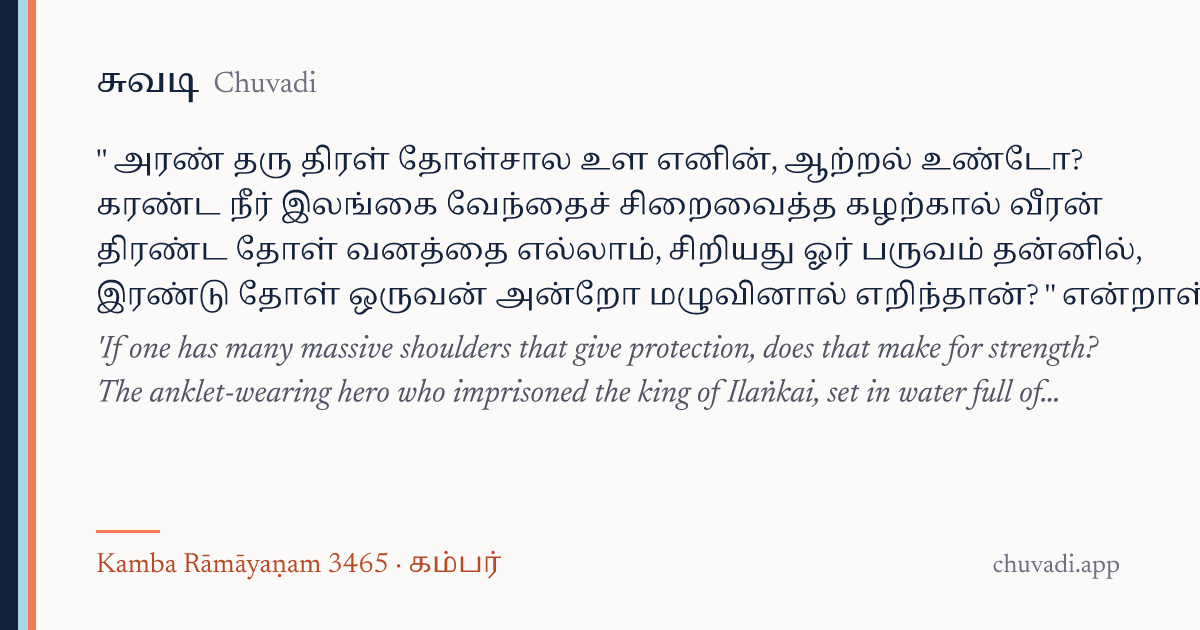
- 'If one has many massive shoulders that give protection, does that make for strength?
- The anklet-wearing hero who imprisoned the king of Ilaṅkai, set in water full of sea-crows,
- the whole forest of his massive shoulders, at a tender age,
- was it not a man with two shoulders who hewed it down with his axe?' she said.
What the poem says
Cītai answers boldly with a story. Having many arms is no proof of strength. Kārtavīryārjuṉaṉ, who had a thousand arms, once threw the king of Ilaṅkai into prison.
Yet Paraśurāma, a man with only two arms, cut down that forest of arms with his axe while still young. And Paraśurāma himself was defeated by Irāmaṉ. Without saying so outright, she is telling him that Irāmaṉ will surely defeat Irāvaṇaṉ.