



கம்பராமாயணம் 3467 · ஆரணிய 8.65
பாடல் · The poem
Tap a word to see its gloss in the commentary and where else it occurs.
பாட வேறுபாடு · Project Madurai reads
பொருள் · Meaning in Tamil
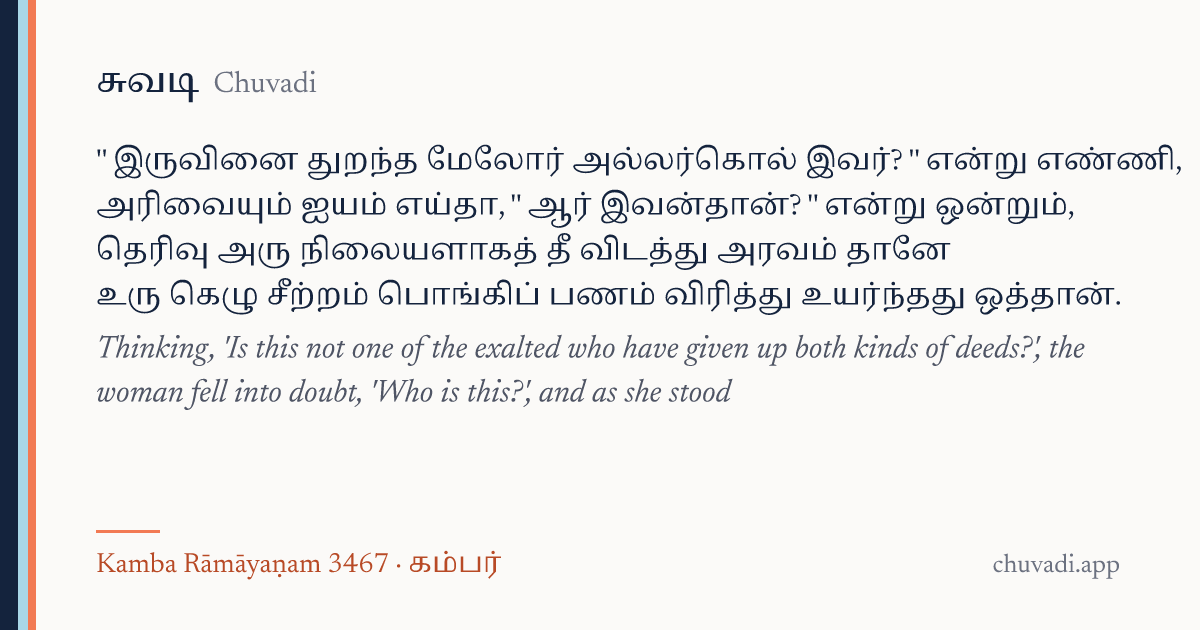
அரிவையும் - சீதையும்; இவர் இருவினை துறந்த மேலோர் அல்லர் கொல் என்று எண்ணி - இத்தவ வேடம் கொண்டவர் நல்வினை தீவினை எனும் இருவேறுபட்ட செயல்களையும் விட்டு நீங்கிய துறவி அல்லர் என நினைத்து; ஐயம் எய்தா - சந்தேகம் கொண்டு; ஆர் இவன் தான் என்று ஒன்றும் தெரிவு அருநிலையளாக - இத்தகையோன் யார் என எதுவும் அறிதற்கு முடியாத நிலையுடையவளாகி நிற்க; தீவிடத்து அரவம் - கொடிய நஞ்சுள்ள பாம்பு; தானே உருகெழு சீற்றம் பொங்க - தானாக அச்சமூட்டும் வகையில் கோபம் மேற்கிளம்ப; பணம் விரித்து உயர்ந்தது ஒத்தான் - தன் படம் விரித்து எழுந்து உயர்ந்தது போல (இராவணன்) விளங்கினான்.
இராவணனின் துறவித் தோற்றமே சீதையின் உள்ளத்தில் ஐயமின்றிப் பதிந்திருந்ததால் 'மேலோர் என்ற நினைவே முதலில் வருகிறது. பின்னர் அவனது உருவ மாற்றத்தைக் கண்டு 'மேலோர் அல்லர் கொல்' என ஐயுறுகிறாள். அப்போதும் 'யார் என எண்ணம் கொண்டாளே ஒழிய அரக்கர் மாறுவேடமிட்டு வந்தார் என நினைக்கவில்லை. இராவணன் பத்துத் தலைகளுடன் இருபது கைகளுடன் சினந்தோங்கிய நிலையில் எழுந்த தோற்றம் பல தலைகளையுடைய நச்சுப் பாம்பு தன் படம் விரித்து எழுந்தது போல் தோன்றுகிறது.
ஆங்கிலம் · English translationAI
Translation
- Thinking, 'Is this not one of the exalted who have given up both kinds of deeds?',
- the woman fell into doubt, 'Who is this?', and as she stood
- unable to make out anything at all, he was like a snake of deadly venom
- that, its fearsome anger surging, spreads its hood and rears up.
What the poem says
Cītai is bewildered. Until now she firmly believed he was a holy man, and only now does she begin to doubt it. Even so she wonders only who he can be; she still does not think of a demon in disguise.
Irāvaṇaṉ towers over her with his ten heads and twenty arms, like a many-headed cobra rearing up in rage with its hood spread.