



கம்பராமாயணம் 3489 · ஆரணிய 8.87
பாடல் · The poem
Tap a word to see its gloss in the commentary and where else it occurs.
பாட வேறுபாடு · Project Madurai reads
பொருள் · Meaning in Tamil
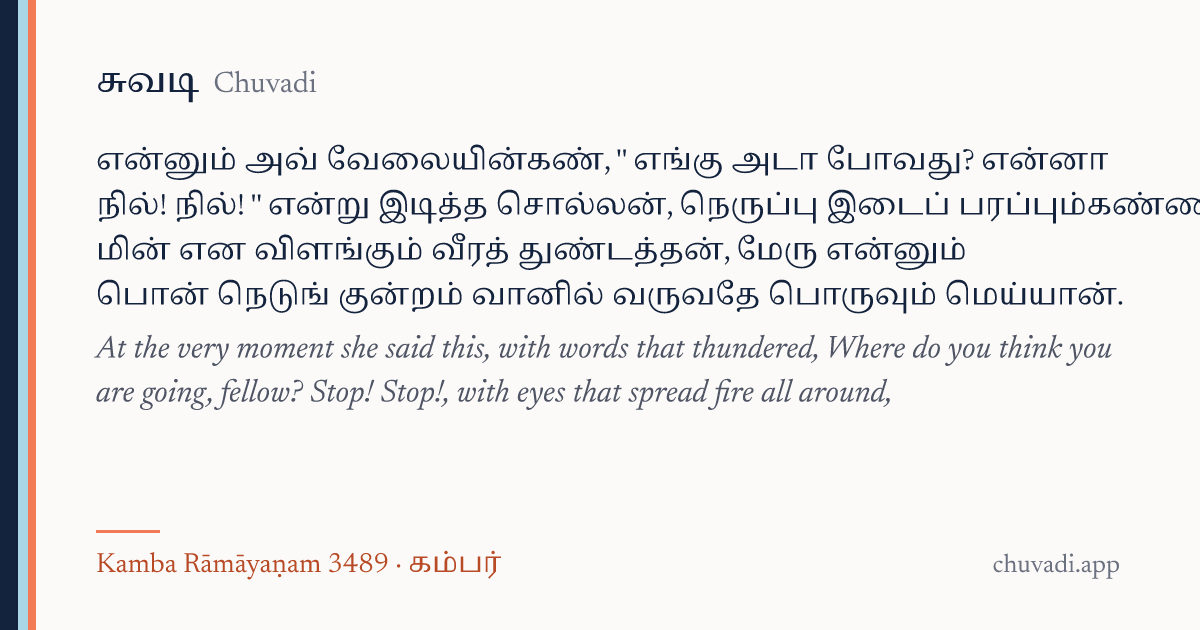
என்னும் அவ்வேலையின்கண் - என்று (சீதை) சொல்லிய அந்தச் சமயத்தில்; எங்கு அடா போவது - எங்கே அடா (என்னைத் தப்பி நீ போவது; என்னா - என்று; நில்நில் என்று இடித்த சொல்லன் - நில் நில் என்று இடியோசை போல் ஒலிக்கும் உரத்த சொற்களை உடையவனும், நெருப்பு இடைபரப்பும் கண்ணன் - சினத் தீயைத் தம்மிடம் பரவச் செய்த கண்களை உடையவனும்; மின் என விளங்கும் வீரத்துண்டத்தன் - மின்னலைப் போல் (ஒளி) விளங்கும் வீரவலி பொருந்திய அலகை உடையவனும்; மேரு என்னும் பொன் நெடுங்குன்றம் - மேரு என்று கூறுகிற பொன்னால் ஆகிய பெரிய குன்று; வானில் வருவதே பொருவும் மெய்யான் - வானத்தில் பறந்து வருவது போன்ற (பேருடம்பினை உடையவனும் - ஆகிய ("எருவையின் மன்னன்" என்ற 6ஆம் பாடலில் பொருள் முடிக்க).
இப்பாடலில் சடாயுவின் கண், அலகு, மேருமலை போன்ற உடம்பு ஆகியவை கூறப்பட்டன. என்னும் அவ்வேலையின் கண் என்பது, முன் படல இறுதிப் பாடற் கருத்தை உட்கொண்டு கூறியது. இப்பாடல் முதல் வரும் ஆறு பாடல்கள் பல பாட்டு ஒருவினை கொள்ளும் குளகம். வேலை - வேளை, சொல்லன், கண்ணன், துண்டத்தன், மெய்யான் என்னும் குறிப்புவினைகள் "எருவையின் மன்னன் வந்தனன்" என்னும் ஆறாம் செய்யுளில் முடியும். வீரத்துண்டத்தன் - வலிய அலகினை உடையவன் என்க.
ஆங்கிலம் · English translationAI
Translation
- At the very moment she said this, with words that thundered, Where do you think you are going, fellow?
- Stop! Stop!, with eyes that spread fire all around,
- with a mighty beak that gleamed like lightning, with a body
- like the tall golden mountain called Mēru come flying through the sky,
What the poem says
The canto of Caṭāyu's death begins. Just as Cītai finishes her retort, a voice like thunder cries out to Irāvaṇaṉ to stop. It is Caṭāyu, king of the vultures and an old friend of Irāmaṉ's father Tacarataṉ.
This verse opens a run of six verses that together form a single sentence, all describing the newcomer: blazing eyes, a beak flashing like lightning, a body as huge as golden Mount Mēru flying through the air. The main verb, the king of vultures came, arrives only in the sixth verse.