



கம்பராமாயணம் 3490 · ஆரணிய 8.88
பாடல் · The poem
Tap a word to see its gloss in the commentary and where else it occurs.
பாட வேறுபாடு · Project Madurai reads
பொருள் · Meaning in Tamil
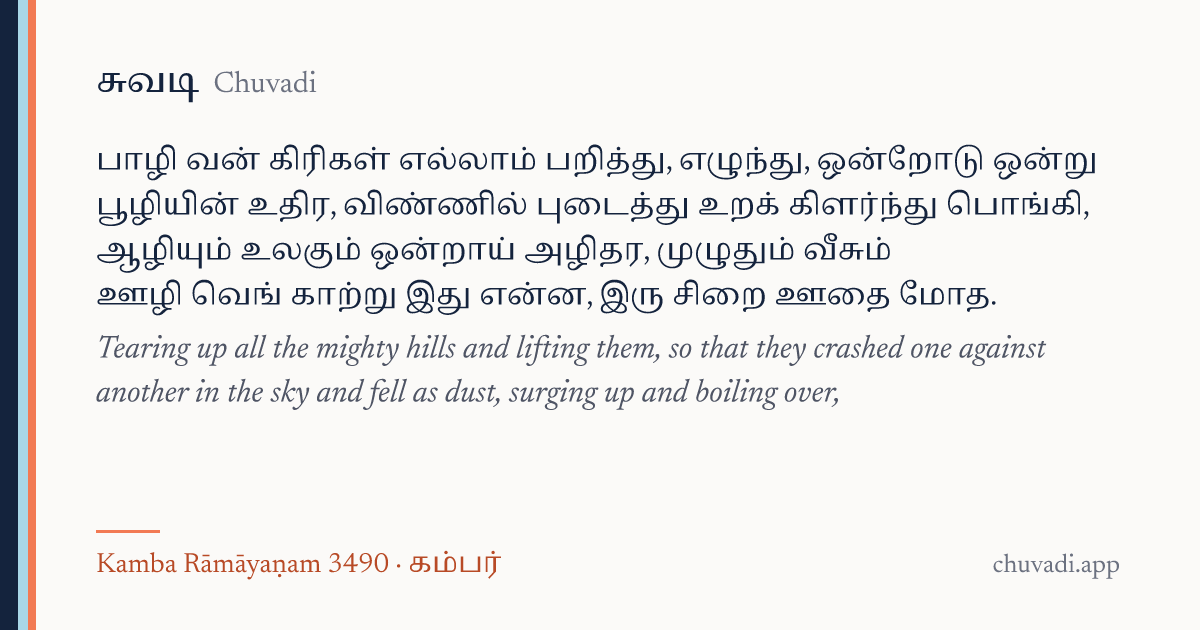
பாழிவன் கிரிகள் எல்லாம் - பெரு வலி உடைய மலைகள் எல்லாம்; பறித்து எழுந்து - வேருடன் பறிக்கப்பட்டு மேல் எழுந்து; ஒன்றோடு ஒன்று விண்ணில் புடைத்து - ஒன்றுடன் ஒன்று ஆகாயத்தில் மோத; பூழியின் உதிர - புழுதி போலப் பொடியாய்ச் சிந்திச் சிதற; உறக் கிளர்ந்து பொங்கி - மிகுதியாக எழுந்து பொங்கி; ஆழியும் உலகும் ஒன்றாய் அழிதர - கடலும் உலகமும் ஒன்றாகி அழிந்து பட, முழுதும் வீசும் ஊழி வெங்காற்று - உலகம் முழுவதும் வீசும் ஊழிக் காலத்துக் கொடிய காற்று; இது என்ன - இது தான் என்று சொல்லுமாறு; இரு சிறை ஊதை மோத - (தன்) இரு சிறகுகள் (அடித்தலால்) (உண்டாகும்) பெருங்காற்று வீச.
சடாயு இராவணனை எதிர்த்துத் தடுக்க வரும்போது ஊழிக் காலத்துப் பெருங்காற்றுப் போல் இரு சிறை ஊதை மோதியதால் மலைகள் நிலை பெயர்ந்து ஒன்றோடு ஒன்று தாக்கிப் பொடிபட்டன. கடலும் பூமியும் ஒன்றாகி அழிந்து பட்டன என்றவாறு. பாழி - வலிமை. பூழி - பொடி, புழுதியுமாம். சிறை - சிறகு, ஊதை - காற்று. பாழிவன் - ஒரு பொருட் பன்மொழி.
ஆங்கிலம் · English translationAI
Translation
- Tearing up all the mighty hills and lifting them, so that they crashed
- one against another in the sky and fell as dust, surging up and boiling over,
- so that sea and land were merged in one ruin, like the fierce wind
- of the world's end that blows over everything, the wind of his two wings struck.
What the poem says
The description of Caṭāyu's arrival continues. The wind from his two great wings is like the wind that blows at the end of an age: it tears up whole mountains, smashes them against each other in mid-air until they fall as dust, and seems to merge sea and earth in a single ruin.
The exaggeration conveys the sheer force of the vulture king as he hurls himself at Irāvaṇaṉ.