



கம்பராமாயணம் 3520 · ஆரணிய 8.118
பாடல் · The poem
Tap a word to see its gloss in the commentary and where else it occurs.
பாட வேறுபாடு · Project Madurai reads
பொருள் · Meaning in Tamil
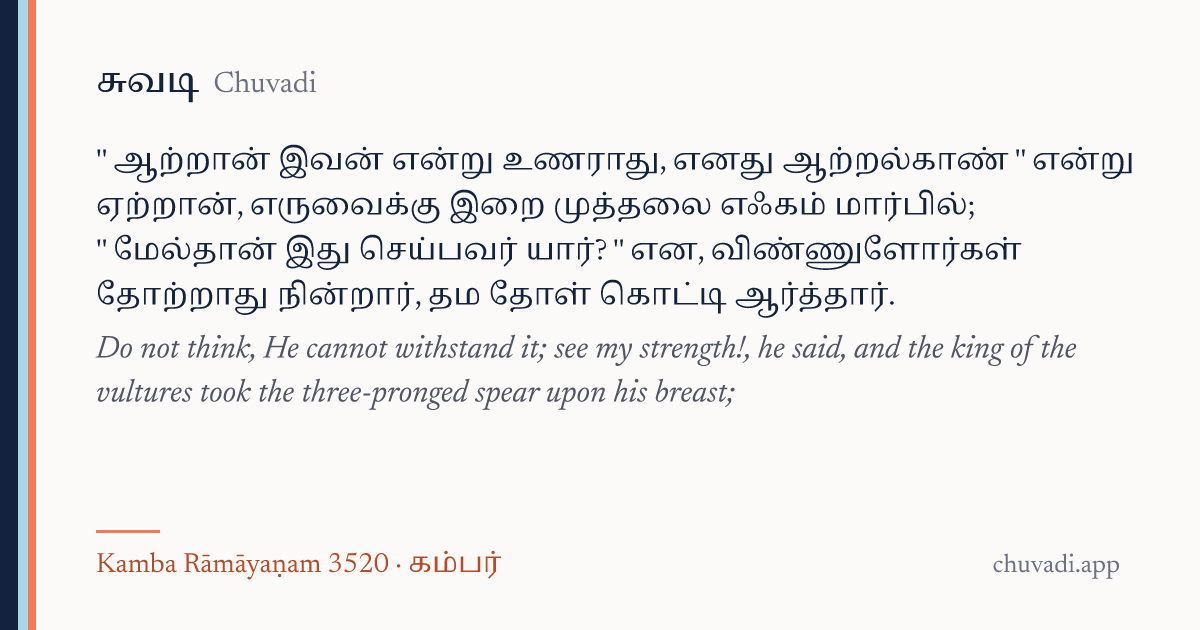
எருவைக்கு இறை - கழுகுகளுக்குத் தலைவன் ஆகிய சடாயு; இவன் ஆற்றான் என்று உணராது - இவன் (இச்சூலத்திற்கு) ஆற்றான் என எண்ணாதே; எனது ஆற்றல் காண் - எனது வலிமையைப் பார்; என்று - என்று கூறி; முத்தலை எஃகம் - (இராவணன் வீசிய) மூன்று தலைகளை உடைய அச் சூலத்தை; மார்பில் ஏற்றான் - (தன்) மார்பில் ஏற்றுக் கொண்டான்; தோற்றாது நின்றார் விண்ணுளோர்கள் - (இராவணனிடம் கொண்ட அச்சத்தால்) வெளிப்படாமல் மறைந்திருந்த தேவர்கள்; மேல் தான் இது செய்பவர் யார் என - இனிமேல் இத்தகு செயலைச் செய்பவர் யாவர் என்று கூறி; தம தோள் கொட்டி ஆர்த்தார் - (மகிழ்ச்சியால்) தங்கள் தோள்களைக் கொட்டிப் பேரொலி செய்தனர்.
சடாயு இராவணனை நோக்கி 'இவன் நம் சூலத்துக்கு ஆற்றான்' என எண்ணாதே என் வலிமையைக் காண்பாயாக என்று சொல்லி அவன் வீசிய முத்தலைச் சூலத்தை மார்பில் ஏற்றுக் கொண்டான். அது கண்டு இவ்வீரச் செயல் செய்பவர் யாருளர் எனத் தேவர்கள் மகிழ்ந்து தோள் கொட்டிப் பேரொலி செய்தனர். தோற்றாது - கண்ணில்படாமல்.
ஆங்கிலம் · English translationAI
Translation
- Do not think, He cannot withstand it; see my strength!, he said,
- and the king of the vultures took the three-pronged spear upon his breast;
- Who hereafter could do such a thing?, said the gods
- who had stayed out of sight, and they slapped their shoulders and roared.
What the poem says
Caṭāyu dares Irāvaṇaṉ not to suppose he cannot bear the trident, and deliberately takes the three-pointed weapon full on his chest. The gods, who had been keeping out of sight for fear of Irāvaṇaṉ, are thrilled: who else could ever perform such a feat? They slap their shoulders and cheer.