



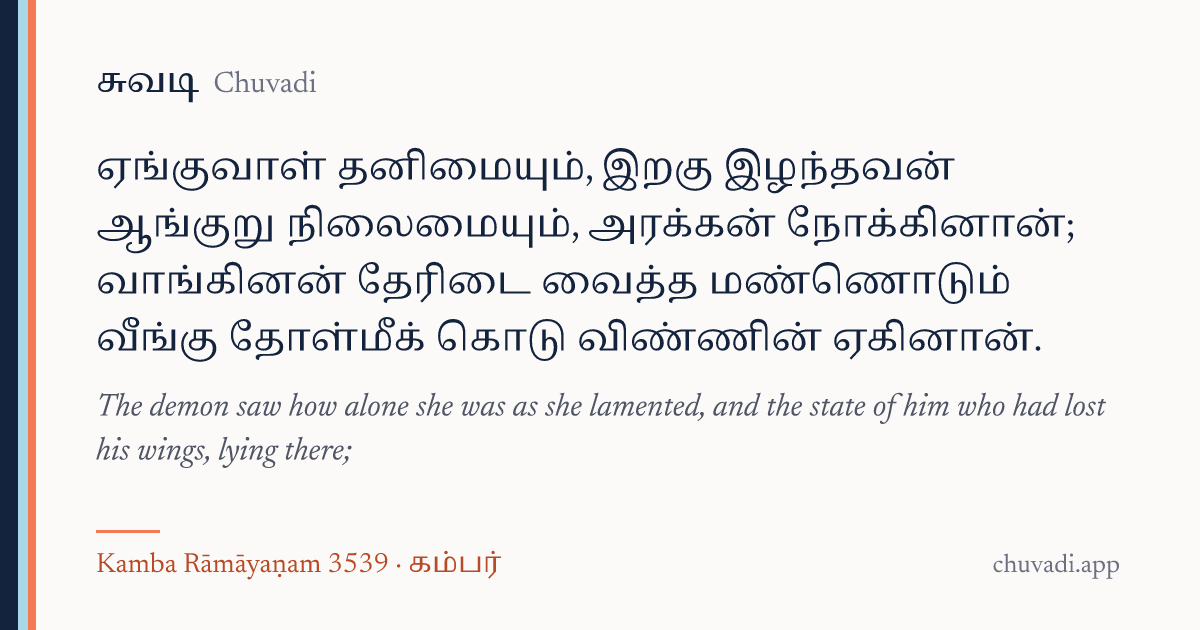
கம்பராமாயணம் 3539 · ஆரணிய 8.137
பாடல் · The poem
Tap a word to see its gloss in the commentary and where else it occurs.
பாட வேறுபாடு · Project Madurai reads
பொருள் · Meaning in Tamil
ஏங்குவாள் தனிமையும் - (முன் சொன்ன படி) புலம்புகின்றவள் ஆகிய சீதையினது துணையில்லாத தனிமையையும், இறகு இழந்தவன் ஆங்குறு நிலைமையும் - சிறகு இழந்தவன் ஆகிய சடாயு அவ்விடத்து அடைந்த நிலைமையையும்; அரக்கன் நோக்கினான் - அரக்கனாகிய இராவணன் பார்த்து; தேரிடை வைத்த மண்ணொடும் வாங்கினன் - (இனித் தடுப்பார் இல்லை என எண்ணி) தேரின் மேல் பெயர்த்து எடுத்து வைத்த நிலத்தோடு சீதையை எடுத்து; வீங்கு தோள் மீக்கொடு - (தன்) பருத்த தோள்களின் மேல் வைத்துக் கொண்டு; விண்ணின் ஏகினான் - ஆகாய வழியில் (இலங்கையை நோக்கிச்) சென்றான். சடாயு தேர்க் குதிரைகளைக் கொன்று (3438) தேர்ப் பாகனையும் அழித்தமை (3430) யால் இராவணன் சீதையைத் தேரில் கொண்டு செல்ல முடியாமையால் நிலத்தொடு பருத்த தோள் மீது ஏந்தி இலங்கையை நோக்கிச் சென்றான் என இப்பாடலில் கவிஞர் கூறியுள்ளார். மீ - மேல், மண் - பர்ண சாலையொடு பெயர்த்து எடுக்கப்பட்ட மண். இதனை "கண்டான் நிலம் யோசனை கீழொடு மேல் (3390) கொண்டான் உயர் தேர் மிசை (3391) என்ற கவிஞர் வாக்கால் அறிக.
ஆங்கிலம் · English translationAI
Translation
- The demon saw how alone she was as she lamented,
- and the state of him who had lost his wings, lying there;
- he took her up with the earth that had been placed on the chariot,
- set it on his swelling shoulders, and went off through the sky.
What the poem says
Irāvaṇaṉ sees that Cītai is utterly alone and that Caṭāyu, wingless, can no longer stop him. Since Caṭāyu has killed his horses and charioteer and wrecked the chariot, he lifts Cītai together with the slab of earth he had dug up around her hut, hoists it onto his massive shoulders, and flies off through the sky towards Ilaṅkai.