



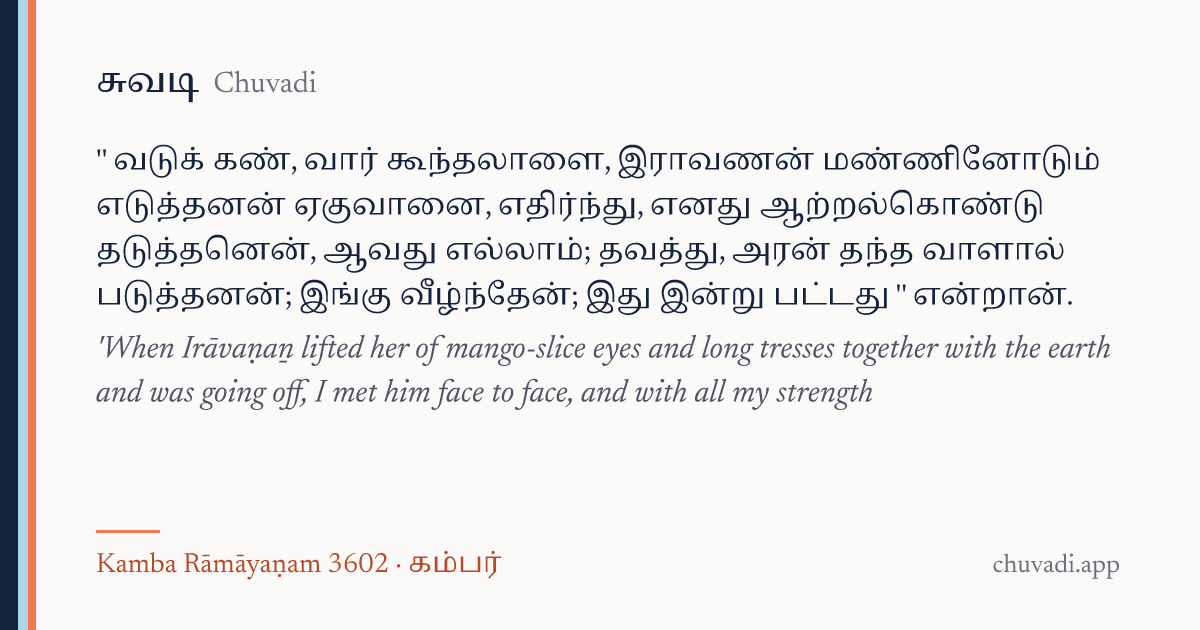
கம்பராமாயணம் 3602 · ஆரணிய 8.200
பாடல் · The poem
Tap a word to see its gloss in the commentary and where else it occurs.
பொருள் · Meaning in Tamil
வடுக்கண் - மாவடுவின் பிளந்தது போன்ற கண்களையும்; வார் கூந்தலாளை - நீண்ட கூந்தலையும் உடைய சீதையை; இராவணன் மண்ணினோடும் - இராவணன் நிலத்தோடு; எடுத்தனன் ஏகுவானை - எடுத்துக் கொண்டு செல்லும் போது அவனை; எதிர்ந்து - (நான்) எதிர்ப்பட்டு; எனது ஆற்றல் கொண்டு - எனது வலிமையின் துணை கொண்டு; ஆவது எல்லாம் தடுத்தனென் - ஆன மட்டும் தடுக்க முனைந்தேன்; தவத்து அரன் தந்த வாளால் - (இறுதியில் அவன்) தன் தவம் கருதிச் சிவபிரான் கொடுத்த (சந்திரகாசம் என்னும்) வாளினால்; படுத்தனன் - (என்னை) வெட்டி வீழ்த்தினான்; இங்கு வீழ்ந்தேன் - இவ்விடத்தில் விழுந்து விட்டேன்; இது இன்று பட்டது - இச் செயல் இன்று நடந்தது; என்றான் - என்று (சடாயு இராமனிடம்) கூறினான்.
வடு - மாவடு. வார் - நீண்ட; வார் கூந்தல் - பண்புத் தொகை. கூந்தலாள் - குறிப்பு வினையாலணையும் பெயர். எடுத்தனன் - முற்றெச்சம், ஆவது எல்லாம் - ஒருமை பன்மை மயக்கம்.
ஆங்கிலம் · English translationAI
Translation
- 'When Irāvaṇaṉ lifted her of mango-slice eyes and long tresses together with the earth
- and was going off, I met him face to face, and with all my strength
- I held him back as far as I could; but with the sword that Araṉ gave him for his penance
- he cut me down; here I fell; this is what happened today,' he said.
What the poem says
Caṭāyu now tells his own part. Irāvaṇaṉ carried Cītai away by lifting her together with the ground she stood on; Caṭāyu flew at him and fought him with all his strength.
In the end Irāvaṇaṉ struck him down with the sword Candrahāsa, which Civaṉ, here called Araṉ, had given him as a reward for his austerities. The old vulture fell where the brothers found him. Cītai's eyes are compared to slices of tender mango, a classic image for long, tapering eyes.