



கம்பராமாயணம் 3623 · ஆரணிய 8.221
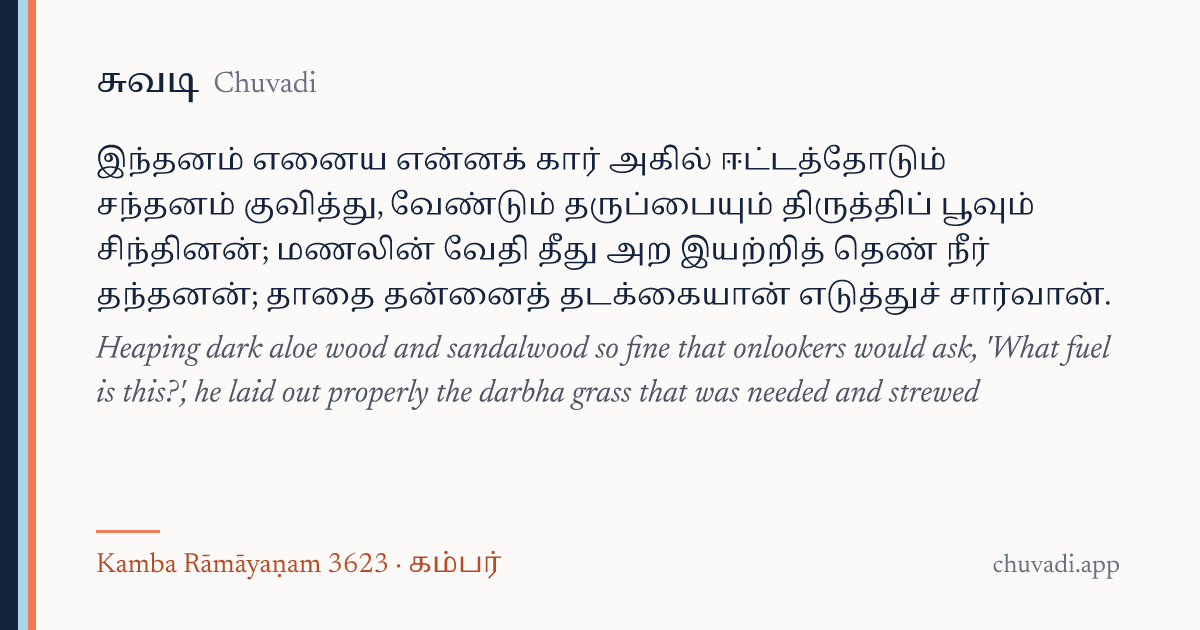
பாடல் · The poem
Tap a word to see its gloss in the commentary and where else it occurs.
பொருள் · Meaning in Tamil
எனைய - எத்தன்மை உடைய; இந்தனம் என்ன - விறகுகள் என்று கண்டவர் வியக்கும் படி; கார் அகில் ஈட்டத் தோடும் - கரிய அகில் கட்டைகளின் தொகுதியுடன்; சந்தனம் குவித்து - சந்தனக் கட்டைகளையும் சேர்த்துக் குவித்து; வேண்டும் தருப்பையும் திருத்தி - தேவையான தருப்பைப் புற்களையும் திருத்தமாக அமைத்து; பூவும் சிந்தினன் - பூக்களையும் கொண்டு வந்து (சடாயுவின் மீது) தூவினான்; மணலின் வேதி தீது அற இயற்றி - (வேத முறைப்படி) மணலினால் மேடையைக் குற்றம் இல்லாமல் அமைத்து; தெண் நீர் தந்தனன் - தெளிந்த நீரினையும் கொண்டு வந்து சேர்த்து; தாதை தன்னை - (தன்) தந்தையாகிய சடாயு தன்னை; தடக்கையான் எடுத்து - பெரிய கைகளால் எடுத்துக் கொண்டு; சார்வான் - இறுதிச் சடங்கு செய்யப்படுதற்கு உரிய மணல் வேதிகைக்குச் சென்று சேர்ந்தான்.
இறுதிச் சடங்கு செய்தற்குரிய விறகு, தருப்பை, பூ, தண்ணீர் ஆகியவற்றைச் சேர்த்து வைத்து, அதற்காக மணல் மேடை அமைத்ததையும் இப்பாடல் விளக்குகிறது. இந்தனம் - விறகு, கார் - கரிய; மணலின் வேதி - மணல் மேடை.
ஆங்கிலம் · English translationAI
Translation
- Heaping dark aloe wood and sandalwood so fine that onlookers would ask, 'What fuel is this?',
- he laid out properly the darbha grass that was needed and strewed
- flowers; he built an altar of sand without flaw and brought clear water;
- then he lifted his father in his great arms and went to it.
What the poem says
Irāmaṉ prepares the funeral with his own hands. He builds the pyre not of ordinary firewood but of fragrant black aloe wood and sandalwood, so rich that anyone would marvel at such fuel.
He arranges the sacred darbha grass, scatters flowers, raises a sand altar according to ritual rule, fetches clear water, and then carries Caṭāyu, his 'father', in his arms to the pyre.