



கம்பராமாயணம் 3633 · ஆரணிய 9.6
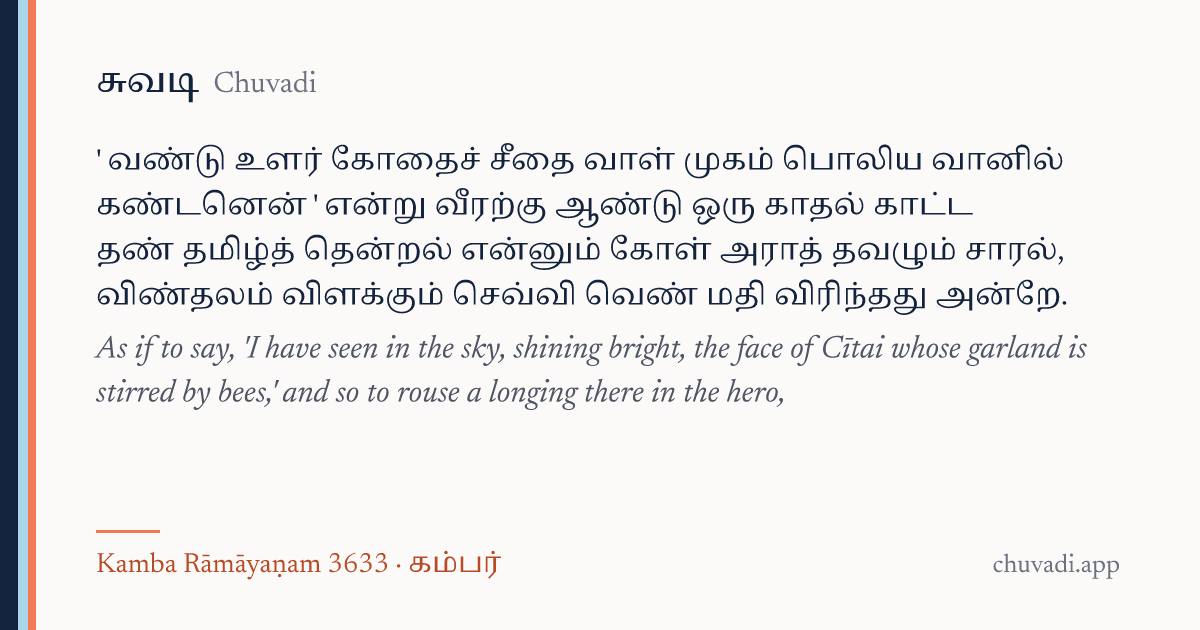
பாடல் · The poem
Tap a word to see its gloss in the commentary and where else it occurs.
பொருள் · Meaning in Tamil
வண்டு உளர் கோதைச் சீதை - வண்டுகள் மொய்த்து ஒலிக்கிற மாலையை அணிந்த சீதையினது; வாள்முகம் - ஒளியுடைய முகத்தை; வானில் பொலியக் கண்டனென் என்று - ஆகாயத்தில் அழகு விளங்கக் கண்டேன் என்று; வீரற்கு - வீரனாகிய இராமனுக்கு; ஆண்டு ஒரு காதல் காட்ட - அவ்விடத்து ஓர் ஆசையை உண்டாக்கிக் காட்டுமாறு; தண் தமிழ்த் தென்றல் என்னும் - குளிர்ந்த இனிமையான தென்றல் காற்று என்று கூறப்படுகிற; கோள் அராத் தவழும் சாரல் - குறிதவறாமல் கொள்ளும் தன்மை உள்ள பாம்பு ஊர்கிற பக்க மலையில்; விண்தலம் விளக்கும் - ஆகாயத்தின் இடத்தைத் தன் (ஒளியால்) விளங்கச் செய்யக்கூடிய; செவ்வி - அழகுடைய; வெண் மதி விரிந்தது - வெண்மையான நிலவு கதிர் வீசிப் பரவியது.
சீதையைக் காணாது வருந்திய இராமன் அவளது திருமுகம் கண்டேன் என்று ஆசை கொள்ளுமாறு சந்திரன் உதித்தான் என்றார். பிரிவின் கண் பெரும் பிழை தருவது தென்றல் ஆகலின் அதனைக் கோளரவாக உருவகித்தார். தண் தமிழ்த் தென்றல் - குளிர்ந்த இனிமை உடைய தென்றல், தமிழ் போல் இனிய தென்றல், தமிழ் நாட்டு இனிய தென்றல் என்று பலவாறு பொருள் தரும். தமிழ் - இனிமை என்னும் பொருளும் தரும், தண் தமிழ்த் தென்றல் - கம்பரின் மொழிப் பற்றைத் தெளிவுறக் காட்டும் சான்றாகும். அகத்தியப் படலத்தில்
"தழற் புரை சுடர்க் கடவுள் தந்த தமிழ்", 3, 3, 41 "என்றும் உள தென் தமிழ் இயம்பி இசை கொண்டான்" (2671)
என்று வந்துள்ள வரிகள் கம்பர் பெருமானின் தமிழ்ப் பற்றை விளக்குவனவாகும் என்பதையும் எண்ணுக. உளர்தல் - ஒலித்தல், வாள் - ஒளி, சாரல் - பக்க மலை. கோள் - முதல் நிலை நீண்ட தொழிற் பெயர். அன்றே - ஈற்றசை.
ஆங்கிலம் · English translationAI
Translation
- As if to say, 'I have seen in the sky, shining bright, the face of Cītai whose garland is stirred by bees,'
- and so to rouse a longing there in the hero,
- on the slope where the seizing serpent called the cool Tamil southern breeze comes creeping,
- the lovely white moon that lights up the expanse of heaven spread out its rays.
What the poem says
The moon rises over the mountain. To the lovesick Irāmaṉ it seems to announce, 'I have seen Cītai's face', since her face is so often compared to the moon, and it stirs his longing.
The cool southern breeze, which in Tamil love poetry torments separated lovers, is pictured as a serpent that never misses its prey. Kampaṉ calls it the 'cool Tamil breeze', which can mean sweet, sweet like Tamil, or from the Tamil country; the phrase shows the poet's love of his language.