



கம்பராமாயணம் 3632 · ஆரணிய 9.5
பாடல் · The poem
Tap a word to see its gloss in the commentary and where else it occurs.
பொருள் · Meaning in Tamil
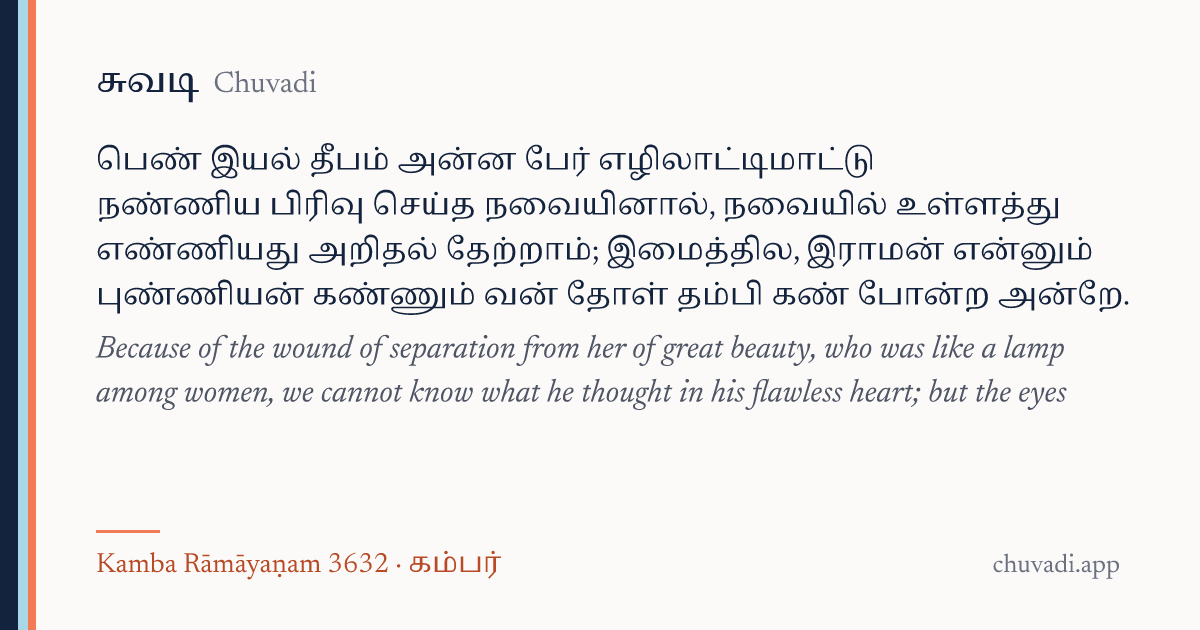
பெண் இயல் தீபம் அன்ன - பெண்களில் விளக்கை ஒத்த; பேர் எழிலாட்டி மாட்டு - பேரழகு உடைய சீதையின் காரணமாக (ஏற்பட்ட), நண்ணிய பிரிவு செய்த - பொருந்திய பிரிவு தனக்குச் செய்த; நவையினால் - பெருவருத்தத்தினையுடைய (இராமனால்), நவையில் உள்ளத்து - (தன்) குற்றமற்ற உள்ளத்தில்; எண்ணியது அறிதல் தேற்றாம் - நினைத்தது (எது என்பதை) யாம் அறியக் கூடவில்லை; இராமன் என்னும் புண்ணியன் கண்ணும் - இராமன் (என்னும் பெயர் கொண்ட அந்த) நல்வினையை உடையவனுடைய கண்களும்; இமைத்தில - மூடி உறங்காதனவாய்; வன்தோள் தம்பி கண் போன்ற அன்றே - வலிமை உடைய தோள்களை உடைய (அவன்) தம்பியாகிய இலக்குவனின் கண்களையே ஒத்து விளங்கின.
பதினான்கு ஆண்டுகள் நயனம் இமைக்காது காத்த இலக்குவன் கண்களைப் போல இராமனது கண்களும், மானம், சினம், துயரம், ஆகிய உணர்ச்சிகளால் அலைக்கழிக்கப்பட்டு உறங்காவாயின என்றவாறு. பெண் இயல் தீபம் அன்ன பேர் எழிலாட்டி - தன்னையும் பிற சுற்றுப் புறப் பொருள்களையும் விளக்கிக் காட்டும் விளக்கினைப் போல், சீதை தன் பிறந்த குலம், புகுந்த குலம், பெண் குலம் ஆகியவற்றின் பெருஞ் சிறப்பை விளங்க வைப்பவளாதலால் "தீபம் அன்ன" என்றார். இதனைச் சுந்தர காண்டத்தில் வரும்.
"உன் பெருந்தேவி என்னும் உரிமைக்கும், உன்னைப் பெற்ற மன் பெரு மருகி என்னும் வாய்மைக்கும், மிதிலை மன்னன் தன் பெருந் தனயை என்னும் தகைமைக்கும், தலைமை சான்றாள் - என்பெருந் தெய்வம் ஐயா! இன்னமும் கேட்டி என்பான் (6032)
உன் குலம் உள்ளது ஆக்கி, உயர் புகழ்க்கு ஒருத்தி ஆய தன் குலம் தன்னது ஆக்க," (6034)
என்ற பாடல்களோடு ஒப்பிட்டு நயம் காணலாம். அன்று ஏ - ஈற்றசைகள்.
ஆங்கிலம் · English translationAI
Translation
- Because of the wound of separation from her of great beauty, who was like a lamp among women,
- we cannot know what he thought in his flawless heart; but the eyes
- of the holy one called Irāmaṉ did not blink,
- and became like the eyes of his strong-shouldered younger brother.
What the poem says
Irāmaṉ lies awake all night. Ilakkuvaṉ is famous in the tradition for never closing his eyes during the fourteen years of exile, keeping watch over his brother and Cītai; tonight Irāmaṉ's eyes become like his, open and sleepless, tossed by shame, anger and grief.
Cītai is called a lamp among women: as a lamp lights up itself and all around it, she brings glory to her father's house, her husband's house and to womanhood itself, a thought the poet echoes later in the Cuntara Kāṇṭam.