



கம்பராமாயணம் 3652 · ஆரணிய 9.25
பாடல் · The poem
Tap a word to see its gloss in the commentary and where else it occurs.
பொருள் · Meaning in Tamil
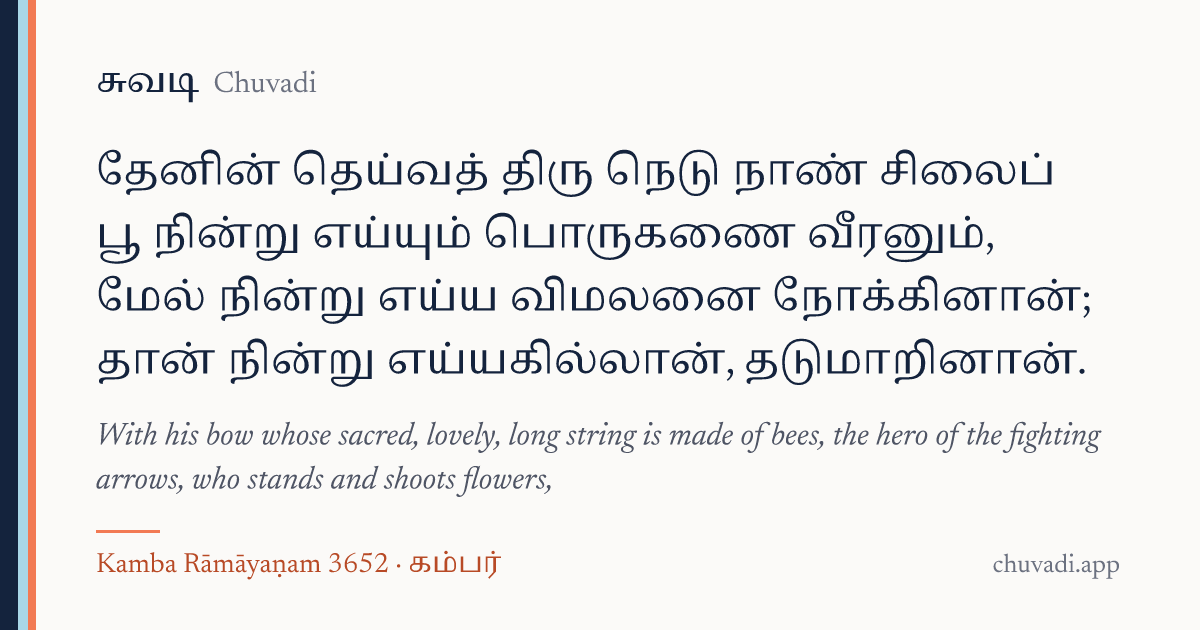
தேனின் தெய்வத் திருநெடு நாண் - வண்டுக் கூட்டங்களாகிய தெய்வத் தன்மை பொருந்திய அழகிய நீண்ட நாணினை உடைய; சிலைப் பூ - கரும்பு வில்லில் மலர் அம்புகளை; நின்று எய்யும் - எதிர் நின்று தொடுக்கின்ற; பொருகணை வீரனும் - போர் செய்கின்ற அம்புகளைக் கையில் கொண்ட வீரனாகிய மன்மதனும்; மேல் எய்ய விமலனை நின்று நோக்கினான் - (இராமன் மேல் அம்பினை எய்வதற்காகக் குற்றமற்றவனான அவனை உற்றுப் பார்த்தான்; தான் நின்று எய்யகில்லான் தடுமாறினான் - (அவ்வாறு உற்றுப் பார்த்துத்) தான் எதிர் நின்று எய்ய மாட்டாமல் தடுமாற்றமடைந்தான்.
மன்மதன் இராமன் மீது அம்பு தொடுக்க முயன்று தொடுக்க முடியாமல் தடுமாறினான் என்க. தேன் - வண்டு, மன்மதனுக்குக் கரும்பை வில்லாகவும், மலரை அம்பாகவும், வண்டுக் கூட்டத்தை நாணாகவும் கூறினார் என்க. இப்பாடலில் வரும் முதல் இரண்டு அடிகளில் உள்ள சிலைப் பூ என்பதற்கு மலர் வில் என்று பொருள் கொண்டு மன்மதனுக்குக் கருப்பு வில்லேயன்றிக் காம நூல் என்னும் பூ வில்லும் உண்டு என்று கூறுவதும் உண்டு.
ஆங்கிலம் · English translationAI
Translation
- With his bow whose sacred, lovely, long string is made of bees,
- the hero of the fighting arrows, who stands and shoots flowers,
- gazed at the Spotless One, to shoot at him from where he stood;
- but standing there he could not shoot, and faltered.
What the poem says
Kāmaṉ, the god of love, now comes to torment the lovesick Irāmaṉ. His bow is sugarcane, its string a line of humming bees, and his arrows are flowers.
He takes aim and stares at Irāmaṉ, but cannot bring himself to shoot at the Spotless One and falters. Some read 'flower bow' as hinting that Kāmaṉ has a second, flowery bow besides the cane one.