



கம்பராமாயணம் 3756 · ஆரணிய 10.28
பாடல் · The poem
Tap a word to see its gloss in the commentary and where else it occurs.
பாட வேறுபாடு · Project Madurai reads
பொருள் · Meaning in Tamil
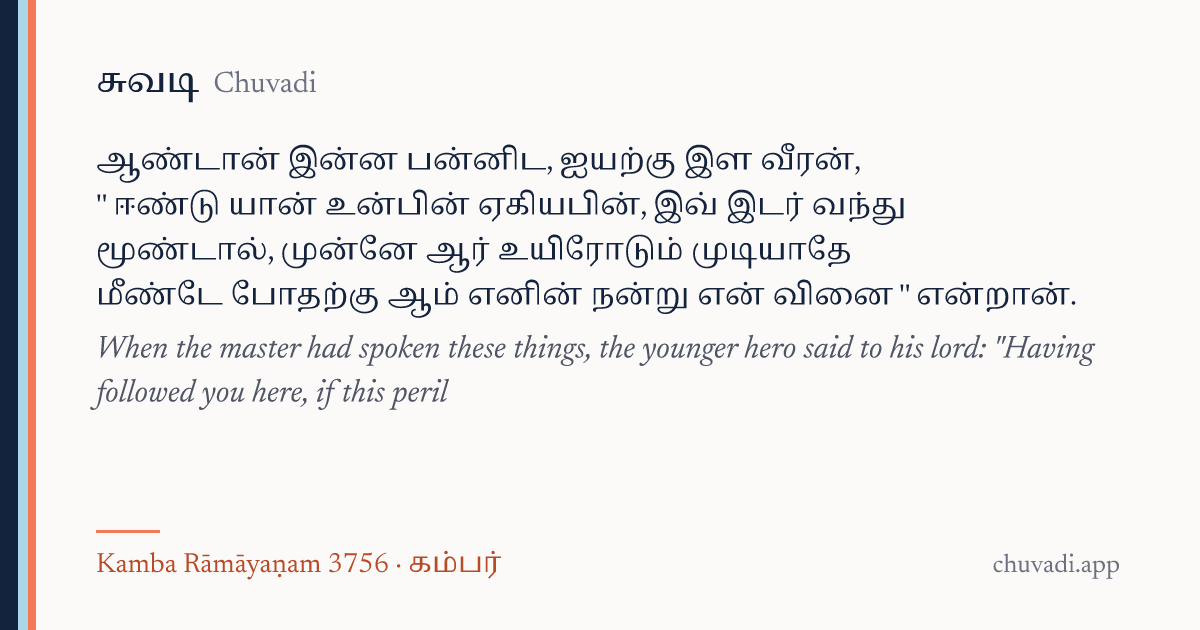
ஆண்டான் - யாவரையும் ஆட்கொண்ட இறைவனாகிய இராமன்; இன்ன பன்னிட - இவ்வாறு சொல்ல; ஐயற்கு இள வீரன் - அந்த இராமபிரானுக்கு இளையவனாகிய இலக்குவன்; யான் உன்பின் ஈண்டு ஏகியபின் - யான் உன்னைத் தொடர்ந்து இக் கானகத்துக்கு வந்தபின்; இவ் இடர் வந்து மூண்டால் - இந்தத் துன்பம் வந்து நேரிட்டால்; முன்னே - உனக்கு முன்னதாக; ஆர் உயிரோடும் முடியாதே - அரிய உயிரோடு வாழ்க்கையை முடித்துக்கொள்ளாமல்; மீண்டே போதற்கு ஆம் எனின் - உயிரோடு திரும்பவும் அயோத்திக்கு நான் போகலாம் என்றால்; 'நன்று என் வினை' என்றான் - அவ்வாறு திரும்பிச் செல்லும் என் செயல் 'நன்று நன்று' என்றான்.
'என்னை ஆள் உடையவன் (194), என்னை ஆளுடைய ஐயன் (204) எனத் திருமாலைக் கவிக் கூற்றால் முன்னம் குறித்தவர், இங்கே இராமனை, 'ஆண்டான்' எனக் குறித்திடும் இயைபு நலம் உணரற்பாலது. நன்று என் வினை என்னும் தொடர், 'என் செயல் பழியும் பாவமும் நிறைந்ததாகும்' எனக் குறிப்பு நயம் உடையதாய் விளங்குகிறது. "மன்னும் நகர்க்கே இவண் வந்திடின் வா; அது அன்றேல் முன்னம் முடி" (1752) என்று தன் தாய் சுமித்திரை கூறியதை இலக்குவன் மறந்திலன் என்பதை இச் செய்யுள் உணர்த்துகிறது.
ஆங்கிலம் · English translationAI
Translation
- When the master had spoken these things, the younger hero said to his lord:
- "Having followed you here, if this peril
- comes upon us and I do not die first, before you, with my precious life,
- but can go back again, a fine deed that would be of mine!" he said.
What the poem says
Ilakkuvaṉ rejects the suggestion that he should escape. He came to the forest to follow his brother, and his mother Cumittirai told him to come home only with Irāmaṉ, or otherwise to die before him. If he ran away now and went home alive, it would be a "fine deed" indeed, said with bitter irony, meaning a deed full of shame.
The poet calls Irāmaṉ "the master", the one who rules all beings, a title used earlier for Viṣṇu.