



கம்பராமாயணம் 3775 · ஆரணிய 10.47
பாடல் · The poem
Tap a word to see its gloss in the commentary and where else it occurs.
பாட வேறுபாடு · Project Madurai reads
பொருள் · Meaning in Tamil
பரமேட்டி - எல்லாவற்றினும் மேலான நிலையில் உள்ளவனே; மண்பால் அமரர் - பூசுரர் எனப்படும் வேதியர்கள்; வரம்பு ஆரும் காணாத எண்பால் உயர்ந்த - முடிவெல்லையாக அமைந்து எவராலும் காண இயலாத எட்டுத் திசைகளிலும் மேம்பட்ட; எரி ஓங்கும் நல் வேள்வி - ஓமத் தீயில் பெருமையால் உயர்ந்த வேள்வியுணவை (அவியுணவை); உண்பாய் நீ - உண்பவன் நீயே, ஊட்டுவாய் நீ - (அவியுணவை உனக்கு ஊட்டுவோர்க்கும்) ஊட்டுகின்றவனும் நீயே!; இரண்டும் ஒக்கின்ற பண்பு - உண்பவனும் ஊட்டுவோனுமாக இரண்டு நிலைகளும் உன்னிடம் ஒன்றியுள்ள பண்பினை; ஆர் அறிவார் - எவர்தாம் அறிவர்?; பகராய் - சொல்.
வேதியர்களைப் பூசுரர் (மண்ணுலகத் தேவர்) என்பது ஒரு மரபு. பரமேஷ்டி என்ற வடசொல் பரமேட்டி என நின்றது. எண் பால் - கருத்தளவால் (அளவிட முடியாத) பாங்கு எனலுமாம். உண்பானும் ஊட்டுபவனுமாய் இருக்கின்ற அரு மாயை நிலை நம்மனோரால் அறியும் நிலையதன்று என்பது கருத்து. 'நீ அறிதி எப்பொருளும்; அவை உன்னை நிலை அறியா; மாயை இது என்கொலோ? வாராதே வரவல்லாய் (2570), துறந்தாயும் ஒத்தி; துறவாயும் ஒத்தி; ஒரு தன்மை சொல்ல அறியாய் - பிறந்தாயும் ஒத்தி; பிறவாயும் ஒத்தி... ஆர் இவ் அதிரேக மாயை அறிவார்' (6259), 'எறிந்தாரும் ஏறுபடுவாரும்....... எனல் ஆய தன்மை தெரிகின்றது உன்னது இடையே பிறிந்தார் பிறிந்த பொருளோடு போதி, பிறியாது நிற்றி... ஆர் இவ் அதிரேக மாயை அறிவார் (8261) என்ற கவிஞர் வாக்குகளையும் ஒப்பிட்டு உணர்க.
ஆங்கிலம் · English translationAI
Translation
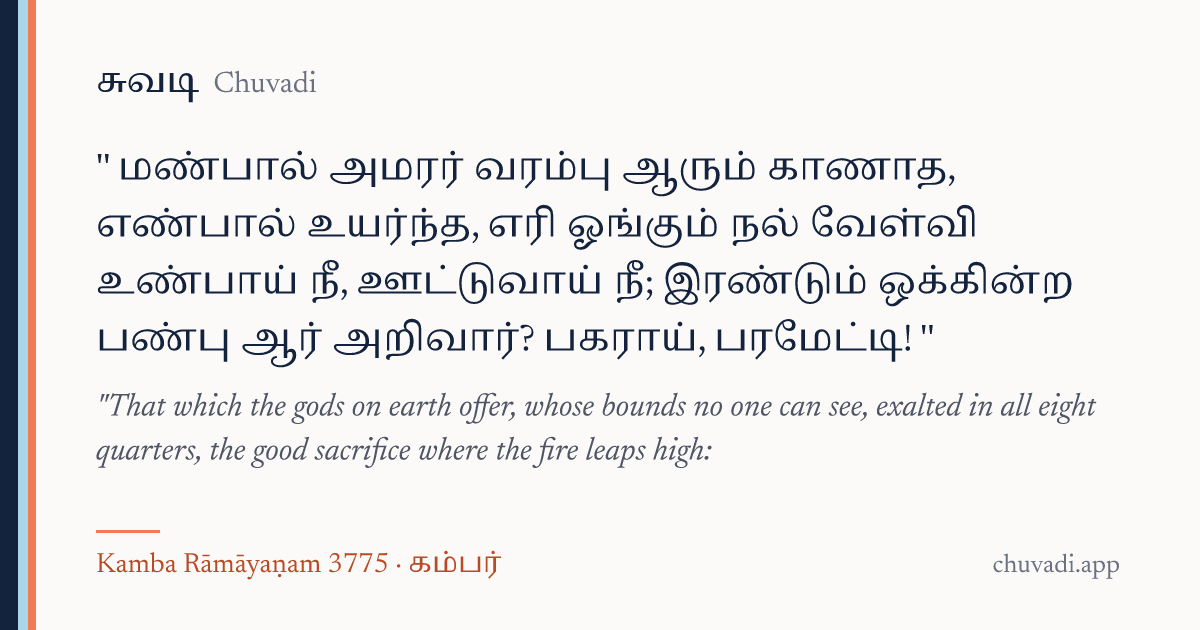
- "That which the gods on earth offer, whose bounds no one can see,
- exalted in all eight quarters, the good sacrifice where the fire leaps high:
- you are the one who eats it, and you the one who feeds it; how the two agree in you,
- who can know that nature? Tell me, O Highest One!"
What the poem says
Kavantaṉ turns to Vedic sacrifice. The priests, called "gods on earth", pour offerings into the fire for the gods. Yet the Lord is both the one who receives the offering and the one who enables it to be given. How he can be both at once is a mystery no one can grasp. The commentary points to several later passages in which the poet returns to this idea of God as an unfathomable union of opposites.