



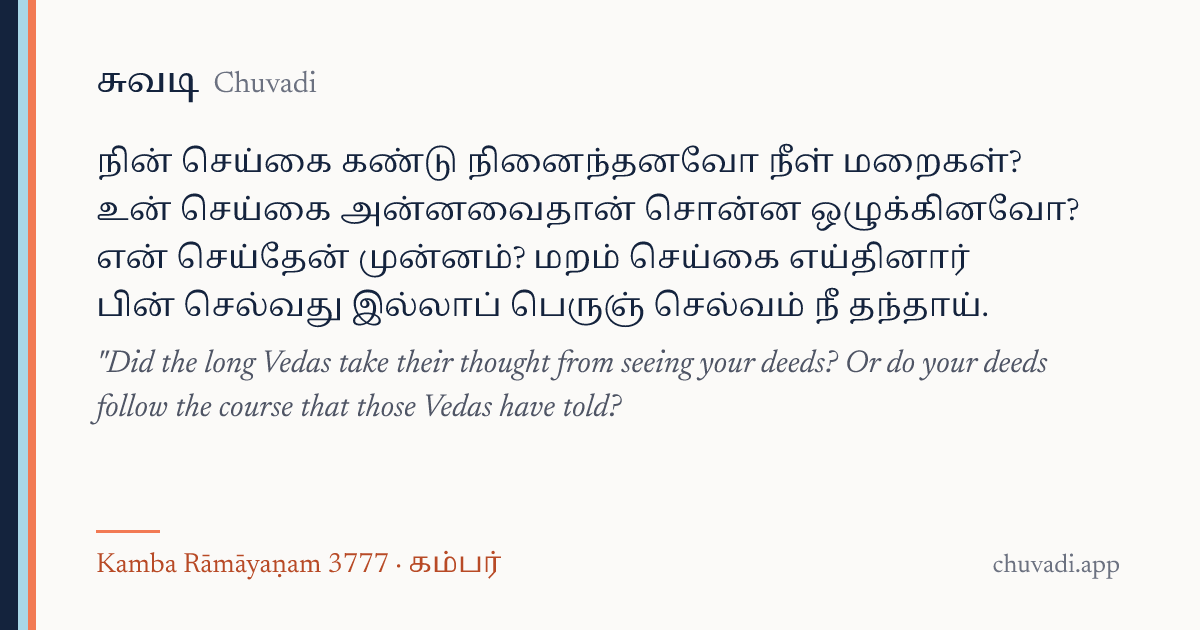
கம்பராமாயணம் 3777 · ஆரணிய 10.49
பாடல் · The poem
Tap a word to see its gloss in the commentary and where else it occurs.
பொருள் · Meaning in Tamil
நீள் மறைகள் - பெரு வேதங்கள்; நின் செய்கை கண்டு நினைந்தனவோ - உன் செய்கைகளை உணர்ந்த அனுபவத்தால் நினைந்து செய்யப்பட்டனவோ; (அன்றி); உன் செய்கை தான் - உன் செய்கைகள் தான்; அன்னவை சொன்ன ஒழுக்கினவோ - அவ்வேதங்கள் சொன்ன முறையிலே அமைந்தனவோ?; மறம் செய்கை எய்தினார் பின் செல்வது இல்லாப் பெருஞ்செல்வம் - அறநெறிப் படாத தீவினைகளைச் செய்வோரின் பின்னாலே செல்லாத பெரிய செல்வத்தை; நீ தந்தாய் - எனக்கு நீ தந்தருளினாய்; முன்னம் என் செய்தேன் - இத்தகைய அருள் நலத்தை அடியேன் இப்பிறவியில் பெறுவதற்கு முன்னைப் பிறவிகளிலே என்ன நல்வினை செய்தேனோ?
வேதங்கள் உன் செய்கைகளை உணர்ந்ததன் விளைவா, அன்றி உன் செயல்கள் வேதங்களின் சொல் வழியை விளக்குவனவா என்ற பிணைவினாக்கள் தேவ நெறியும் இறைநிலையும் வெவ்வேறு அல்ல என்பதை உணர்த்தின.
முற்பிறப்புகளில் நல்வினை செய்திருந்தாலன்றி இந்தப் பேறு இப்போது வாய்த்திராது என்பது குறிப்பு. 'என்ன புண்ணியம் செய்தனை நெஞ்சமே இருங்கடல் வையத்து முன்னம் நீ புரி நல்வினைப் பயனிடை முழு மணித்தரளங்கள் மன்னு காவிரி சூழ்திரு வலஞ்சுழி வாணனை வாயாரப் பன்னி ஆதரித்து ஏத்தியும் பாடியும் வழிபடும் அதனாலே....... ' என்ற திருஞானசம்பந்தர் வாக்கிலே இக் கருத்து அமைதல் கருதத்தக்கது.
ஆங்கிலம் · English translationAI
Translation
- "Did the long Vedas take their thought from seeing your deeds?
- Or do your deeds follow the course that those Vedas have told?
- What did I do in times past? To those who have turned to wrongdoing
- it never goes: that great wealth you have given me."
What the poem says
Kavantaṉ wonders whether the Vedas were composed by observing what the Lord does, or whether the Lord acts by following the Vedas. Either way, scripture and God are not separate.
He then marvels at his own good fortune. He has received a treasure, liberation and the sight of God, that never comes to the wicked, and he asks what good deeds in past lives could have earned it. The commentary compares a hymn of Tiruñāṉacampantar that asks the heart what merit it once performed.