



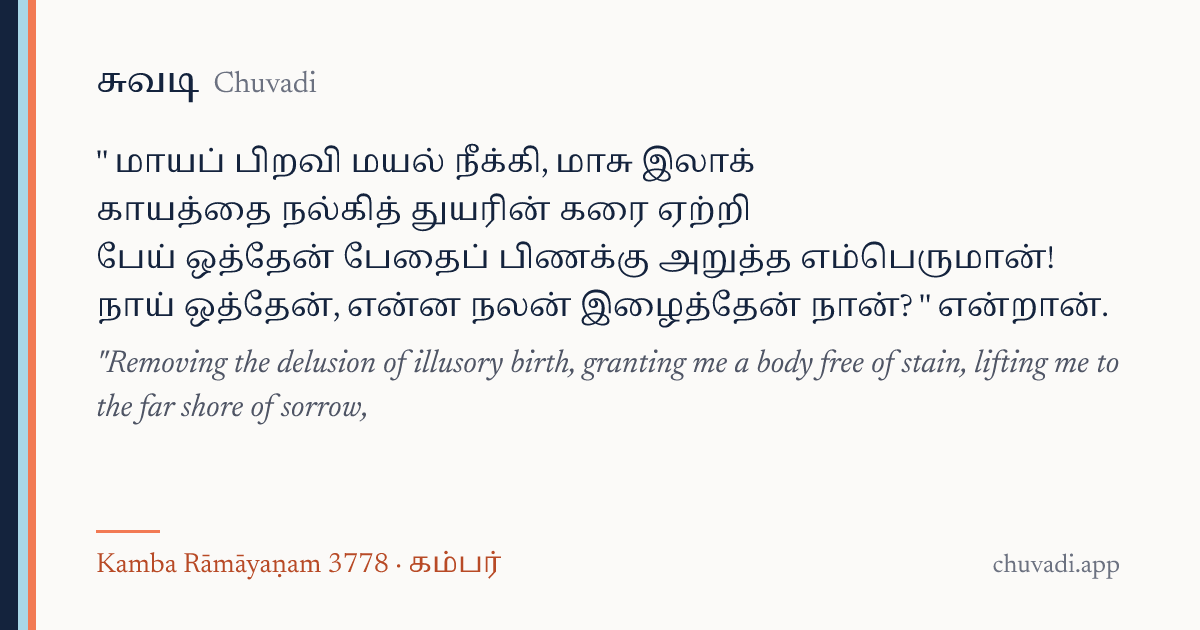
கம்பராமாயணம் 3778 · ஆரணிய 10.50
பாடல் · The poem
Tap a word to see its gloss in the commentary and where else it occurs.
பொருள் · Meaning in Tamil
மாயப் பிறவி மயல் நீக்கி - மாயை சூழ்ந்த பிறவியின் மயக்கத்தைப் போக்கி; மாசு இலாக் காயத்தை நல்கி - குற்றம் இல்லாத உடலைத் தந்தருளி; துயரின் கரை ஏற்றி - துயர்க்கடலின் கரையிலே ஏற்றுவித்து; பேய் ஒத்தேன் பேதைப் பிணக்கு அறுத்த எம்பெருமான் - நெறி மாறித் திரிதலில் பேயை ஒத்தவனாகிய என் அஞ்ஞானத் தொடர்பை அறுத்தருளிய எம் பெருமானே; நாய் ஒத்தேன் நான் - கீழ்மையில் நாய் போன்றவனாகிய யான்; என்ன நலன் இழைத்தேன் - (எக் காரணமும் இல்லாமல் நீ என்னை ஆட்கொண்டு அருளுவதற்கு) அப்படி என்ன நல்வினைகளைச் செய்துவிட்டேன்! என்றான்.
'என் அளவில் - யான் அறிந்தவரை - இப்பிறப்பில் எந்த நல்வினையும் செய்ததாக உணர இயலவில்லை; எனினும் என் அஞ்ஞானத்தை அழித்து ஞானம் அடைதற்கு ஒத்த நல்லுடம்பை உதவித் துன்பக் கடலின் கரை சேர்த்தாய். இவ்வளவு புண்ணியப் பயனை எனக்கு நீ அருளுதற்கு என்ன புண்ணியமும் யான் செய்ததாகத் தெரியவில்லையே! காரணம் இன்றியும் கருணை புரிந்திட எளிவந்தருளும் நின் பாங்கு இருந்தவாறு என்னே' என வியந்து கூறுகிறான், கவந்தன். மடிமாங்காய் இட்டுத் திருடன் என்று கூறி வலிய ஆட்கொள்ளும் திறன் உடையான் பரமன் என வைணவர்கள் போற்றும் திறம் இங்கு உணரத்தக்கது.
ஆங்கிலம் · English translationAI
Translation
- "Removing the delusion of illusory birth, granting me a body
- free of stain, lifting me to the far shore of sorrow,
- my Lord, who cut away the foolish tangles of me, who was like a demon!
- What good have I done, I who am like a dog?" he said.
What the poem says
Kavantaṉ closes his hymn. The Lord has freed him from the delusion of birth, given him a pure body and carried him across the sea of suffering. He sees himself as wild as a demon and low as a dog, and he can think of no good deed that could have earned such grace.
The commentary says this shows grace given without cause, and recalls a Vaiṣṇava saying that the Lord, like a man who plants a mango in someone's lap and then calls him a thief, finds a pretext to claim a soul as his own.