



கம்பராமாயணம் 3780 · ஆரணிய 10.52
பாடல் · The poem
Tap a word to see its gloss in the commentary and where else it occurs.
பாட வேறுபாடு · Project Madurai reads
பொருள் · Meaning in Tamil
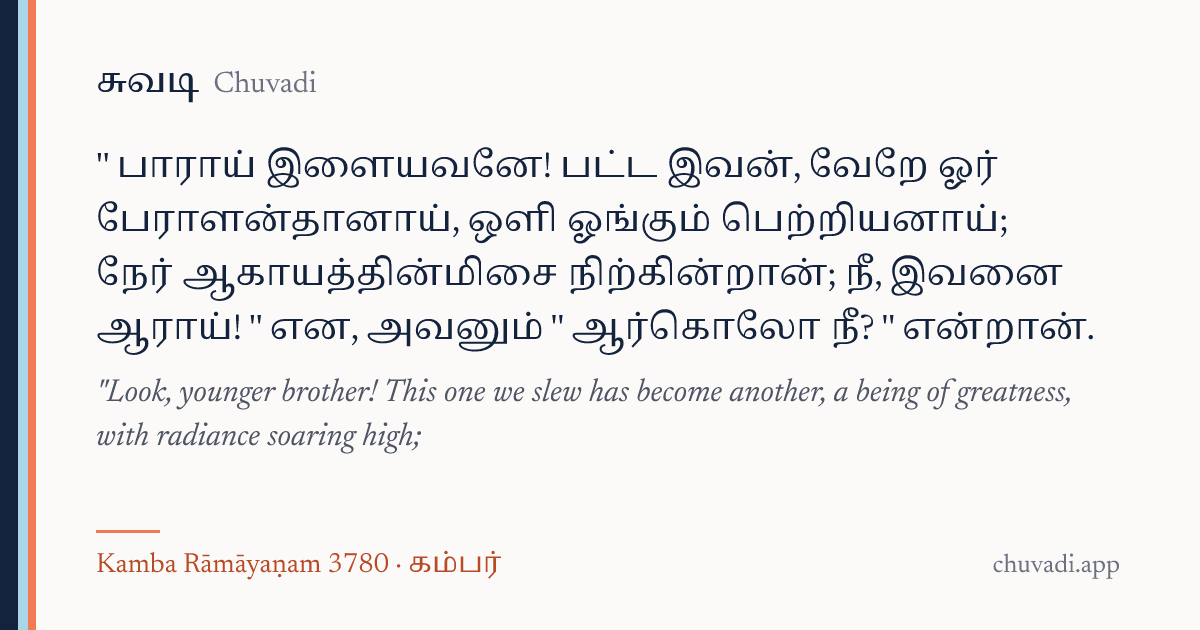
இளையவனே - தம்பீ; பாராய் - மேலே நிற்பவனைப் பார்; பட்ட இவன் - இறந்து போன இவன்; வேறே ஓர் பேராளன் தானாய் - மற்றொரு வடிவம் கொண்டு பெருமையை ஆள்பவனாயும், ஒளி ஓங்கும் பெற்றியனாய் - ஒளி பெருகும் தன்மை உடையவனாயும்; நேர் - நேராக நம் முன்னே; ஆகாயத்தின்மிசை நிற்கின்றான் - விண் மீது நிற்கின்றான்; நீ இவனை ஆராய் - இவனைப் பற்றிய விவரங்களை நீ ஆராய்ந்து அறிவாயாக; என - என்று இராமன் சொல்ல; அவனும் - இளவலாகிய இலக்குவனும்; 'ஆர்கொலோ நீ - நீ யார்'; என்றான் - என்று கவந்தனை வினவினான்.
ஆங்கிலம் · English translationAI
Translation
- "Look, younger brother! This one we slew has become another,
- a being of greatness, with radiance soaring high;
- he stands right before us, up in the sky; you, find out
- about him!" At this, Ilakkuvaṉ too asked, "Who are you?"
What the poem says
Irāmaṉ, playing his human part, points out to Ilakkuvaṉ that the monster they killed has turned into a shining being standing in the sky, and asks his brother to find out who he is. Ilakkuvaṉ puts the question directly. The poem keeps up the fiction that Irāmaṉ does not know, even though Kavantaṉ has just recognized him as God.