



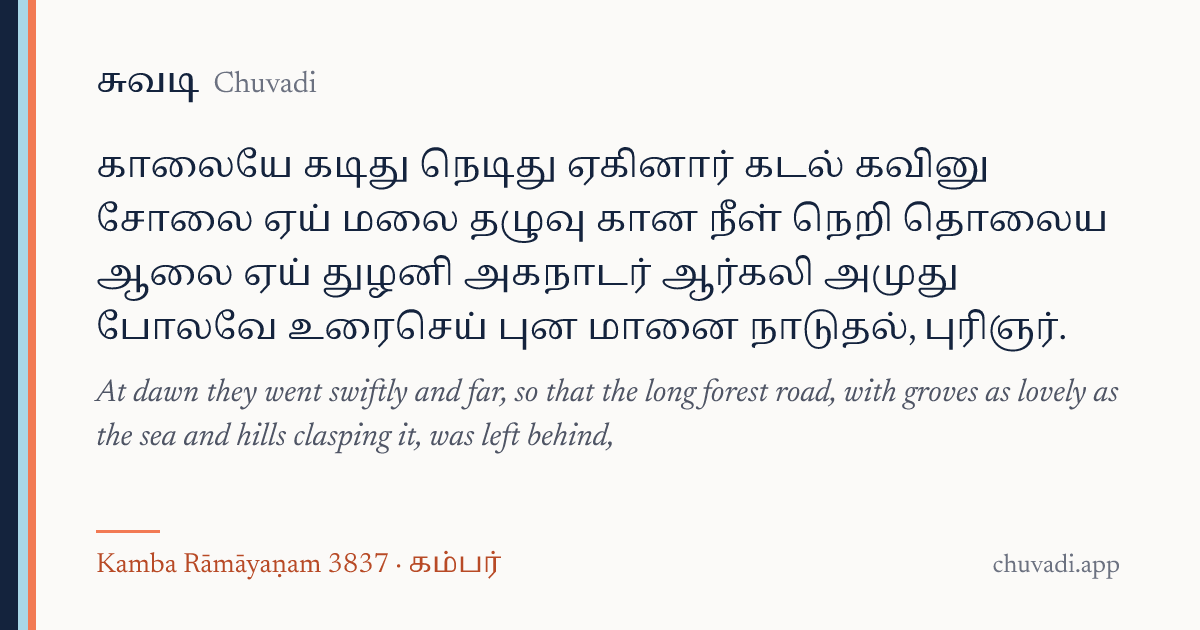
கம்பராமாயணம் 3837 · கிட்கிந்தா 1.42
பாடல் · The poem
Tap a word to see its gloss in the commentary and where else it occurs.
பாட வேறுபாடு · Project Madurai reads
பொருள் · Meaning in Tamil
ஆலை ஏய் துழனி - கரும்பாலைகளால் நிறைந்த ஓசையை யுடைய; அகல் நாடர் - பரந்த கோசலநாட்டிற்குரிய இராமலக்குவர்; ஆர்கலி அமுதுபோலவே - ஒலிக்கும் பாற்கடலில் தோன்றிய அமுதம் போல; உரைசெய் - இனிமையாகப் பேசுகின்ற; புன மானை - காட்டில் உள்ள பெண்மானை ஒத்த சீதையை, நாடுதல் புரிஞர் - தேடுபவர்களாய்; கடல் கவினு சோலை ஏய் - கடல்போன்ற சோலைகள் பொருந்தியதும்; மலை தழுவும் - மலைகள் தழுவப் பெற்றதுமான; கான நீள்நெறி - காட்டின் நீண்ட வழிகள்; தொலைய - நீங்குமாறு; கடிதுநெடிது ஏகினார் - விரைந்து நெடுந்தூரம் சென்றனர்.
கரும்பாலைகளின் ஒலிமிகுதியைக் கூறியதால் கோசலநாட்டின் வளம் புலனாயிற்று. 'ஆலை பாய் அமலை, ஆலைச் சாறுபாய் ஓதை' (34) என நாட்டு வர்ணனையில் கூறியுள்ளார். இப்போது ஆலையிட்ட கரும்புபோல இராமலக்குவர் துன்பங்கள் அனுபவித்தாலும், பின்னர்க் கரும்பிலிருந்து பெறும் சக்கரை போல அரக்கர்களை வென்று அறத்தை நிலைநாட்டி இன்பம் அளிப்பர் என்பது குறிப்பாகும். சீதையின் சொல்லுக்கு அமுது உவமை. 'அஞ்சொற்கள் அமுதில் அள்ளிக்கொண்டவள்' என்றார் முன்னரும். (3130) குளிர்ச்சியாலும், நிறத்தாலும், பரப்பாலும் சோலை கடலை ஒக்கும்.
துழனி - ஒலி; ஆர்கலி - அன்மொழித்தொகை.
ஆங்கிலம் · English translationAI
Translation
- At dawn they went swiftly and far, so that the long forest road,
- with groves as lovely as the sea and hills clasping it, was left behind,
- the men of the broad land loud with sugar-cane presses, seeking
- the forest doe whose speech is like the nectar from the roaring ocean.
What the poem says
At daybreak the two brothers set out again and cover a long stretch of forest, hills and sea-wide groves, searching for Cītai, the doe of the woods whose words are sweet as the nectar churned from the Ocean of Milk.
They are called men of a land loud with sugar-cane presses, recalling the rich Kōcala country. The commentary sees a hint in this: like cane crushed in the press the brothers now suffer, but like the sugar it yields they will in the end destroy the demons and bring joy to the world. This verse closes the Pampai Paṭalam.