



கம்பராமாயணம் 3842 · கிட்கிந்தா 2.5
பாடல் · The poem
Tap a word to see its gloss in the commentary and where else it occurs.
பாட வேறுபாடு · Project Madurai reads
பொருள் · Meaning in Tamil
தேவருக்கு - தேவர்களுக்கெல்லாம்; ஒரு தலைவர் ஆம் - ஒப்பற்ற தலைவர்களாகிய; முதல் தேவர் எனின், மூவர் - முதன்மையான தேவர்களோ என்றால், அவர்கள் மூவராவர்; இவர் இருவர் - இவர்கள் இருவராய் இருக்கின்றனர்; மூரிவில்கரர் - (அவர்கள் சூலம், திகிரி, வேதம் ஏந்தியிருக்க) இவர்கள் வில்லைத் தாங்கிய கரத்தினர்; இவரை ஒப்பவர் - இவர்களை ஒத்தவர்கள்; உலகில் யாவர் - உலகில் யாருளர்?; இவர்க்கு அரிய பொருள் - இவர்களுக்குச் செய்தற்கு அரிய செயல்தான்; யாது - யாது உளது?; கேவலத்து - எளிதாக; இவர் நிலைமை - இவர்கள் நிலைமையை; எக்கிழமை கொடு - எந்தத் தகுதியைக் கொண்டு; தேர்வது - தெளிவது?
மும்மூர்த்திகட்கும் இராமலக்குவர்க்கும் உள்ள வேற்றுமை கூறப்பட்டது. முத்தேவர் அல்லாதவராயினும் யாவர்க்கும் மேலானவர்களாகத் தோன்றியதால் 'இவரை ஒப்பார் யார்? யாது இவர்க்கு அரிய பொருள்' என அனுமன் கருதினான். உணர்தற்கரிய பெரியர் ஆதலின் எக்கிழமை கொண்டு தேர்வது என மயங்கினான். இப்பாடலால் இராமலக்குவர் தமக்கு நிகர் இல்லாதவர் செயற் கருஞ்செயல் புரிபவர்; உயிர்களால் உணர்தற்கரிய இயல்பினர் என்பன புலப்படுகின்றன.
ஆங்கிலம் · English translationAI
Translation
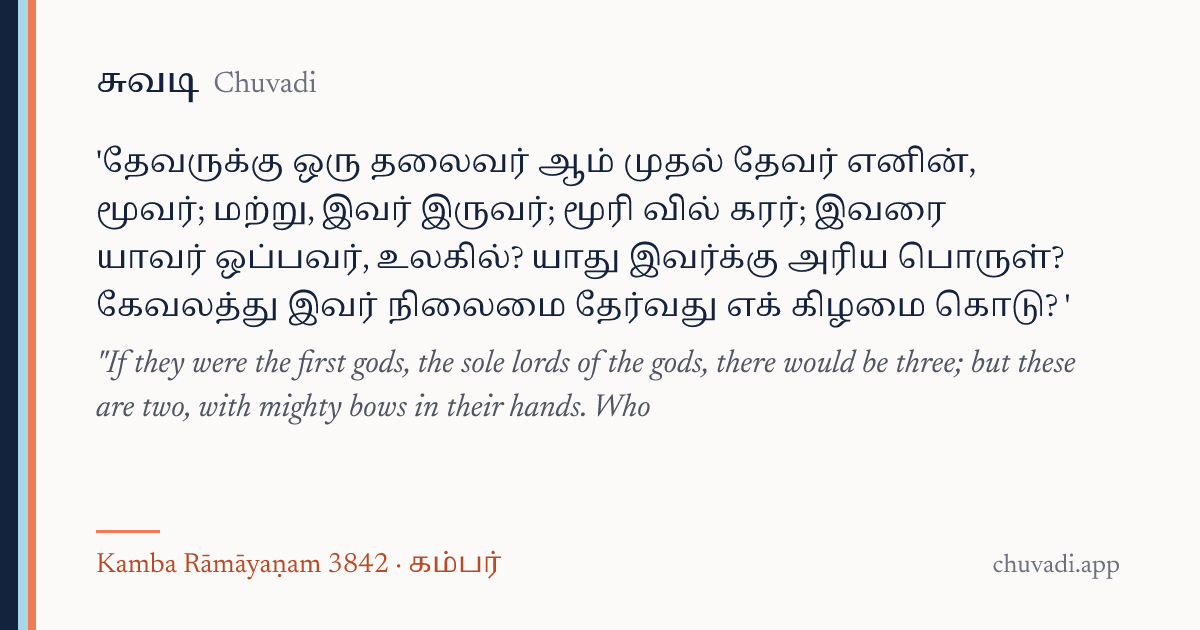
- "If they were the first gods, the sole lords of the gods,
- there would be three; but these are two, with mighty bows in their hands. Who
- in the world could equal them? What thing is too hard for them?
- By what right could one easily make out what they truly are?"
What the poem says
Aṉumaṉ reasons with himself. Could they be the three supreme gods, Brahmā, Viṣṇu and Civaṉ? But those are three and carry trident, discus and Veda; these are two and carry bows. Still, no one in the world seems their equal, and nothing seems beyond them.
He concludes that beings so great cannot simply be sized up; the verse quietly suggests their divine nature.