



கம்பராமாயணம் 3844 · கிட்கிந்தா 2.7
பாடல் · The poem
Tap a word to see its gloss in the commentary and where else it occurs.
பொருள் · Meaning in Tamil
தருமமும் தகவும் இவர் - தருமமும் நல்லொழுக்கமுமாகவே இவர்கள் கொள்ளத்தக்கவர்; தனம் எனும் தகையர் - தமக்குரிய செல்வமாக தருமத்தையும் தகவையும் எண்ணும் தன்மையுடையவர்கள்; இவர் கருமமும் - இவர்களது செயலும்; பிறிது ஓர் பொருள் - வேறொருபொருளை; கருதி அன்று - கருதியது அன்று; அது கருதின் - அது குறித்து ஆராய்ந்து பார்த்தால்; அருமருந்து அனையது - பெறுதற்கரிய அமிழ்தம் போன்ற பொருளிற்கு; இடை அழிவு வந்துளது - இடையிலே அழிவு வந்திருக்கின்றது; அதனை - அந்த அரிய பொருளையே; இவர்கள் - ; இருமருங்கிலும் - இரண்டு பக்கங்களிலும்; நெடிது துருவுகின்றனர் - நெடிதாகப் பார்வையைச் செலுத்தித் தேடுகிறார்கள்.
அனுமன் சூரியனிடம் எல்லாக்கலைகளையும் கற்றவனாதலின் இராமலக்குவரின் முகக்குறிப்புகளால் அவர்களின் நிலையை ஊகித்து அறிந்தனன்.
தருமமும் தகவும் செல்வமாகும் என்பதை 'அறத்தினூஉங்கு ஆக்கமும் இல்லை' (குறள் - 32) என வள்ளுவரும் குறித்தார். அருமருந்து - கிடைத்தற்கரிய தேவ அமுதம்; சீதை அம்மருந்து போன்றவள். 'மருந்து அனையதேவி' (5350) என்றது காண்க.
ஆங்கிலம் · English translationAI
Translation
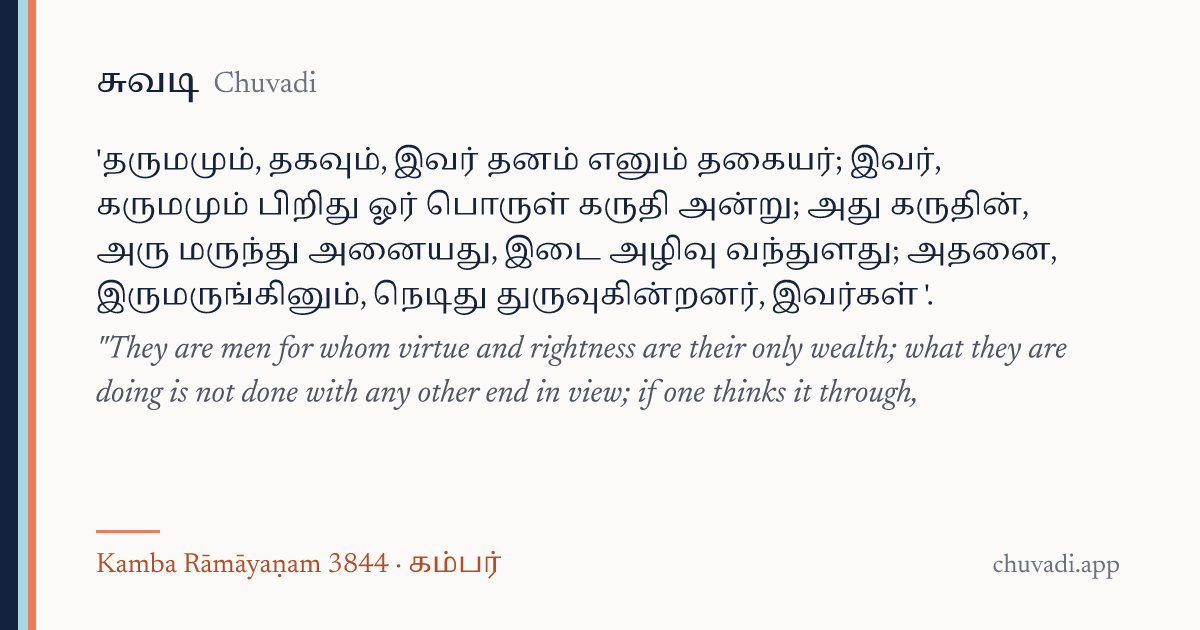
- "They are men for whom virtue and rightness are their only wealth; what they are doing
- is not done with any other end in view; if one thinks it through,
- something precious as the rare nectar has been lost to them along the way; that
- is what they are searching for so long, looking on both sides."
What the poem says
Aṉumaṉ, who learned every art from the Sun, reads the brothers' faces. They are men whose only treasure is righteousness and good conduct; their journey has no selfish purpose. Something as precious to them as the nectar of the gods has been lost, and they scan both sides of the path as they go, searching for it.
The precious thing is Cītai, whom the poet elsewhere also calls "the lady like nectar."