



கம்பராமாயணம் 3847 · கிட்கிந்தா 2.10
பாடல் · The poem
Tap a word to see its gloss in the commentary and where else it occurs.
பொருள் · Meaning in Tamil
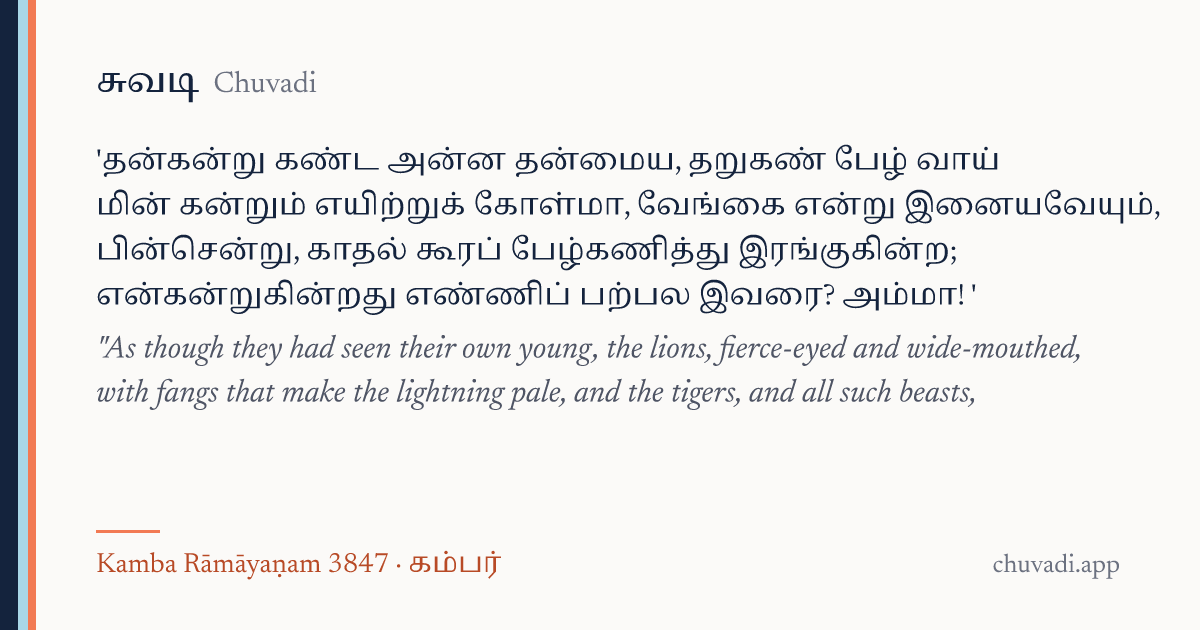
தறுகண் - கொடிய கண்ணையும்; பேழ்வாய் - பெரிய வாயினையும்; மின்கன்றும் எயிற்று - மின்னலும் ஒளிகுன்றி வருந்தும் படியான பற்களையும் உடைய; கோள்மா - சிங்கம்; வேங்கை - புலி; என்று இனையவேயும் - என்ற இவைபோன்ற கொடிய விலங்குகளும் (இராமலக்குவரைக் கண்டு), தன் கன்று - தத்தம் கன்றுகளை; கண்ட அன்ன தன்மைய - கண்டாற்போன்ற தன்மையனவாய்; பின்சென்று காதல்கூர - இவர்கள் பின்னால் சென்று காதல் மேலிட; பேழ் கணித்து இரங்குகின்ற - மருண்டு விழித்து உள்ளம் உருகுகின்றன; இவரைப் பற்பல எண்ணி - (இங்ஙனம் இருக்க) இவர்களைப் பகைவர்களாகப் பலவாறு எண்ணி; கன்றுகின்றது ஏன்? - வருந்துவது ஏன்?
கொடிய விலங்குகளும் தம் கொடுமை நீங்கி, இராமலக்குவர் மாட்டு அன்புகாட்டி உருகுமாயின், இவர்களைப் பகைவர்களாக எண்ணி அஞ்சுவதற்குக் காரணம் இல்லை என்பது பெறப்படுகிறது. கொடிய விலங்குகளும் தம் கன்றுகளுக்கு அன்பு காட்டல் இயல்பு ஆதலின் இராமன்மாட்டு அன்புகாட்டும் விலங்குகளுக்கு அவற்றை உவமை கூறினார். இதனால் இராமலக்குவரின் உயர்வு புலனாகிறது. 'தன் கன்று கண்ட அன்ன தன்மைய' என்றது ஒருமை பன்மை மயக்கம். அம்மா - வியப்பிடைச்சொல்.
ஆங்கிலம் · English translationAI
Translation
- "As though they had seen their own young, the lions, fierce-eyed and wide-mouthed,
- with fangs that make the lightning pale, and the tigers, and all such beasts,
- follow behind them, and, overcome with love, gaze wide-eyed and melt;
- why am I troubling myself with so many thoughts about these men? Ah!"
What the poem says
Aṉumaṉ notices that even the savage lions and tigers of the forest follow the brothers with tenderness, as a mother animal follows her own young. If fierce beasts lose their cruelty and melt with love in their presence, there is no reason to fear them as enemies.
He chides himself for his many suspicious thoughts. The image of beasts loving them as their own young shows how great the brothers are.