



கம்பராமாயணம் 3854 · கிட்கிந்தா 2.17
பாடல் · The poem
Tap a word to see its gloss in the commentary and where else it occurs.
பொருள் · Meaning in Tamil
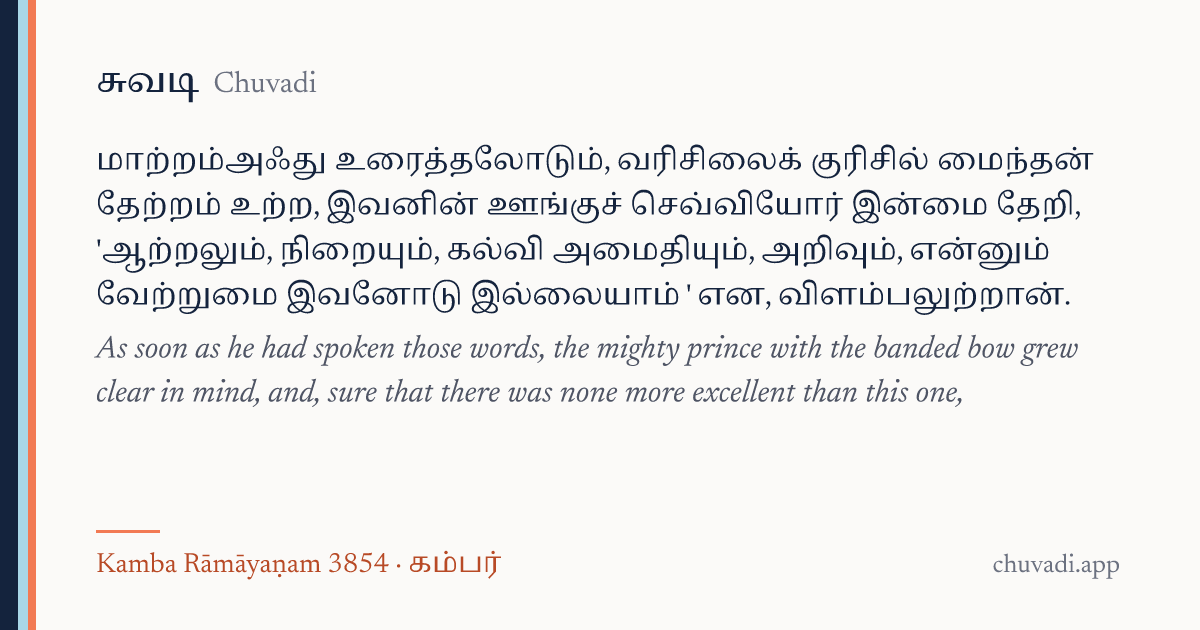
மாற்றம் அஃது - அந்த மறுமொழியை; உரைத்தலோடும் - அனுமன் சொன்ன அளவில்; வரிசிலைக்குரிசில் மைந்தன் - கட்டமைந்த வில்லை உடைய வலியோனாகிய இராமன்; தேற்றம் உற்று - தெளிவடைந்து; இவனின் ஊங்கு - இவ்வனுமனைக் காட்டிலும்; செவ்வியோர் இன்மைதேறி - செம்மைக் குணம் உடையோர் பிறர் இன்மையைத் தெளிந்து; ஆற்றலும் - திறமையும்; நிறைவும் - நிறைந்த குணங்களும்; கல்வி அமைதியும் - கல்வியால் வரும் அடக்கமும்; அறிவும் - அறிவும்; என்னும் - என்று சொல்லக் கூடியன அனைத்தும்; வேற்றுமை இவனோடு இல்லையாம் - இவனோடு வேறுபாடு உடையனவாக இல்லை; என - என்று நினைத்து; விளம்பலுற்றான் - (இலக்குவனுக்குச்) சொல்லத் தொடங்கினான்.
அனுமனைவிட நற்குணம் உடையார் இல்லையெனவும், எல்லா மேன்மைப் பண்புகளும் அவனிடம் அமைந்திருத்தலும் தெளிவாக அறிந்தான் இராமன் என்பதைத் 'தேற்றமுற்று' என்ற தொடர் புலப்படுத்துகிறது. ஆற்றல், அருங்குணங்கள், கல்வி, அறிவு ஆகியவற்றின் வடிவமாகவே அனுமனை இராமன் கண்டான். அறிவு என்பது இயற்கை அறிவு. கல்வி என்பது செயற்கையால் வந்த அறிவாகும். 'புலமிக்கவரைப் புலமை தெரிதல், புலமிக்கவர்க்கே புலனாம்' (பழமொழி 7) என்றவாறு இராமன் அனுமனை அறிந்து கொண்டான்.
ஆங்கிலம் · English translationAI
Translation
- As soon as he had spoken those words, the mighty prince with the banded bow
- grew clear in mind, and, sure that there was none more excellent than this one,
- thinking, "Strength, fullness of virtue, the poise that learning gives, and wisdom:
- none of these is anything apart from him," began to speak.
What the poem says
Aṉumaṉ's few words are enough for Irāmaṉ. He is now certain that there is no one finer than this messenger: strength, virtue, the modesty that comes of learning, and natural wisdom are not merely qualities Aṉumaṉ has, they are what he is made of.
The commentary distinguishes natural wisdom from acquired learning, and quotes a proverb: only the learned can recognise learning in another. Irāmaṉ then turns to speak to Ilakkuvaṉ.