



கம்பராமாயணம் 3855 · கிட்கிந்தா 2.18
பாடல் · The poem
Tap a word to see its gloss in the commentary and where else it occurs.
பாட வேறுபாடு · Project Madurai reads
பொருள் · Meaning in Tamil
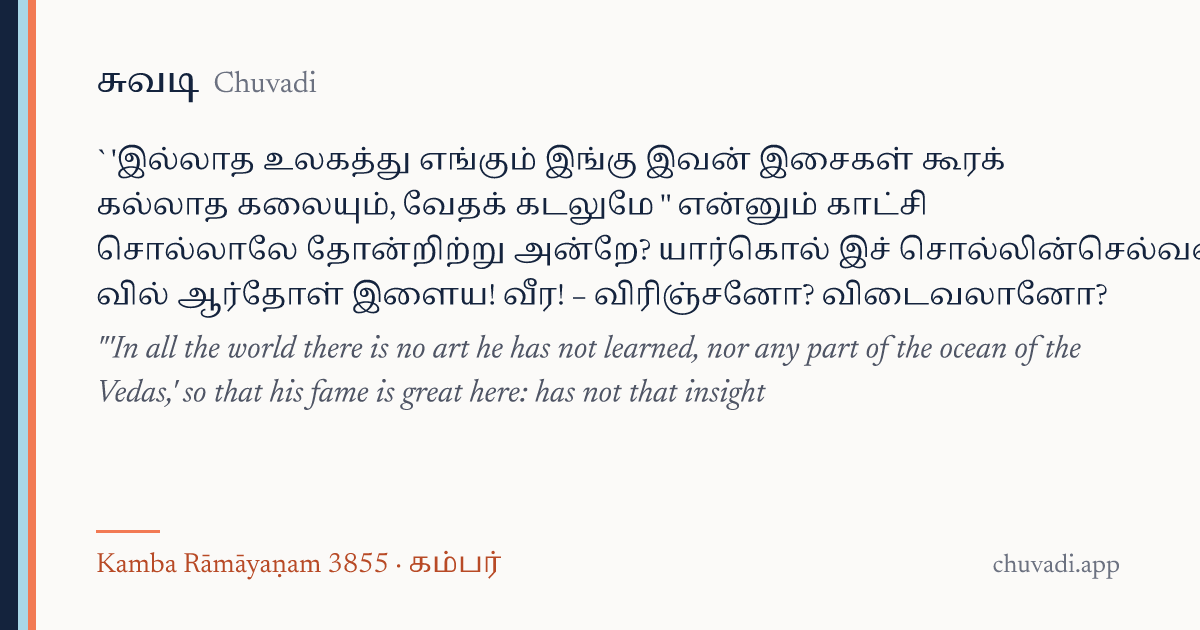
வில்லார் தோள் இளைய வீர - வில் அமைந்த தோளைஉடைய இளைய வீரனே! இங்கு இவன் இசைகள் கூர - இங்கு இவன் புகழ் மிகும்படி; கல்லாத கலையும் - கற்றுக்கொள்ளாத கலைகளும்; வேதக் கடலும் - வேதமாகிய கடலும்; உலகத்து எங்கும் இல்லாத - உலகத்தில் எங்கும் இல்லாதனவே; என்னும் காட்சி - என்று சொல்லுமாறு (இவன் பெற்றிருக்கும்) அறிவுத்தெளிவு; சொல்லாலே - இவன் பேசிய சொல்லாலேயே; தோன்றிற்று அன்றே - வெளிப்பட்டதன்றோ?; இச்சொல்லின் செல்வன் - இத்தகைய சொல்லின் செல்வனாக விளங்கும் இவன்; விரிஞ்சனோ - நான்முகனோ?; விடைவலானோ - விடை ஏறி நடத்த வல்ல சிவனோ? யார்கொல் - யாராக இருத்தல் கூடும்.
இவன் கல்லாத கலையும் வேதக்கடலும் உலகத்து இல்லாதனவே என்றதால் அனுமன் எல்லாக்கலைகளையும் எல்லா வேதங்களையும் நன்கு கற்றவன் என்பது புலனாம். வேதத்தின் விரிவைப்புலப்படுத்த வேதக்கடல் என உருவகம் அமைந்தது. இராமனுக்கு இடையூறு நேரிடுமோ என எப்போதும் கவனத்தோடு இருப்பது பற்றி 'வில்லார் தோள் இளைய! வீர' - என இராமன் விளித்தான் என்க. 'வில்லை ஊன்றி கையோடும் வெய்துயிர்ப்போடும் வீரன். . . . கங்குல் எல்லை காண்பளவும் நின்றான், இமைப்பிலன் நயனம்' (2344) என்பது காண்க. பிரமனின் அமிசமாகவோ, உருத்திரனின் அமிசமாகவோ இருந்தாலன்றி இத்தகைய சொல்லின் செல்வம் பெற இயலாது. எனவே இச்செல்வம் பெற்ற அனுமன் அவ்விருவருள் யார் அமிசமாவான் என வியந்து இராமன் பாராட்டியதாகும். திருமூர்த்திகளுள் இராமபிரான் திருமால் அவதாரமாதலின், தன்னை விடுத்து மற்ற இருவருள் யாரோ என ஐயுற்றான் என்றும் கூறுவர்.
ஆங்கிலம் · English translationAI
Translation
- "'In all the world there is no art he has not learned, nor any part of the ocean of the Vedas,'
- so that his fame is great here: has not that insight
- shown itself in his words alone? Who can this master of speech be,
- young hero with the bow on your shoulder? Is he Brahmā? Is he the one who rides the bull?"
What the poem says
Irāmaṉ marvels to Ilakkuvaṉ. From those few words alone it is clear that there is no art and no part of the vast Vedas that Aṉumaṉ has not mastered. Such mastery of speech could belong only to Brahmā or to Civaṉ; he wonders which of them this can be.
This verse gives Aṉumaṉ his famous title, "the master of speech." Irāmaṉ, being himself Tirumāl, names only the other two of the three great gods. He calls Ilakkuvaṉ the young hero with the bow on his shoulder because he is always on guard for his brother.